Caleb Clarkson
When birds dip, dive, run, or fly in the natural world, things are bound to get messy, especially when it comes to securing a potential future meal. For many bird species, their greatest hunting weapon is their beak, which they use to grab prey and consume it as efficiently as possible. Unfortunately, as hunting usually goes, things can get chaotic. Catching prey often means getting their beak (and their very fragile face) right into the fray. But unlike us, birds don’t have to worry as much about their eyes, all thanks to a third eyelid.
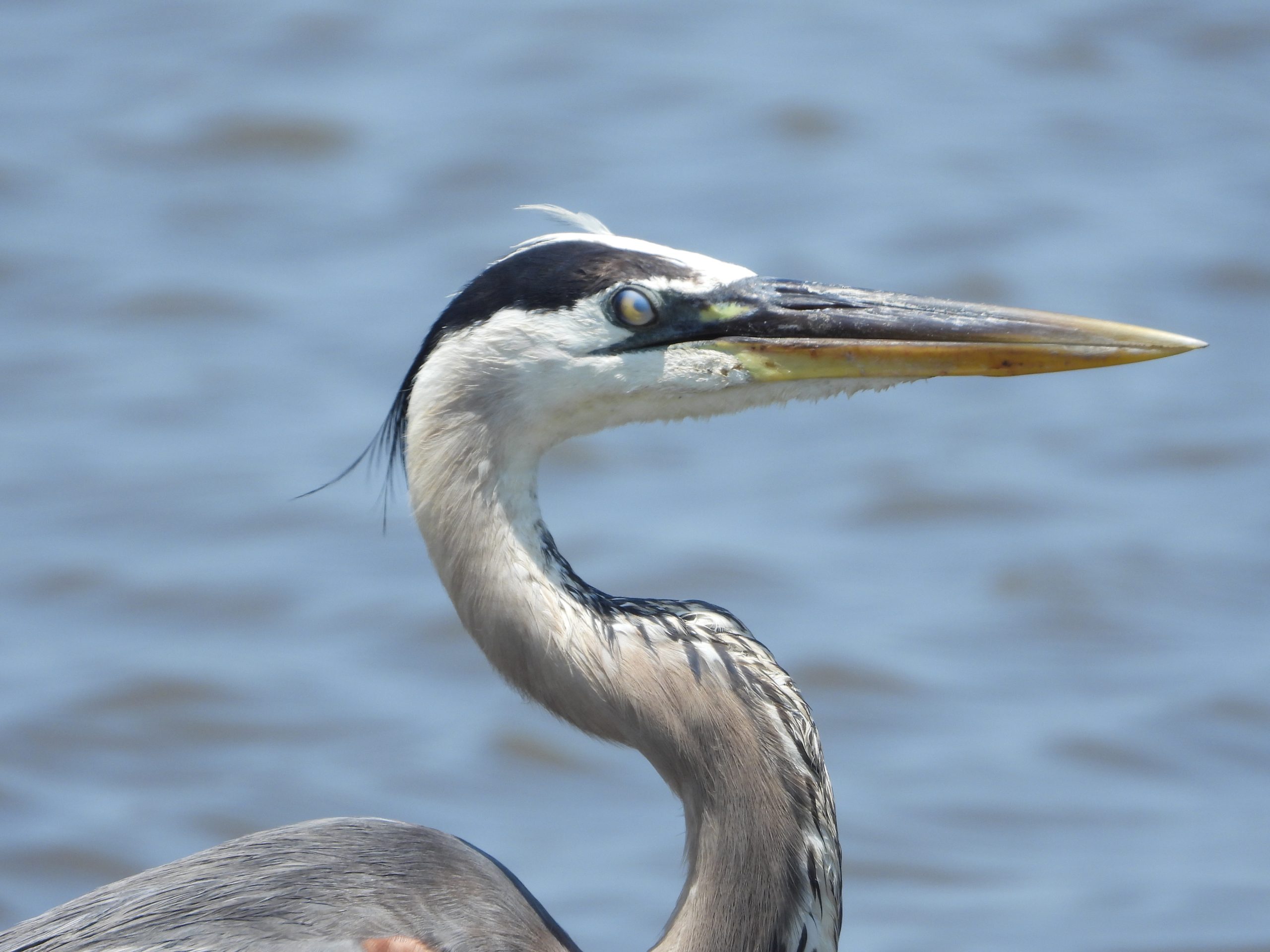
A semi-translucent nictitating membrane closes across the bird’s eye sideways. This membrane protects the eyes from many potential sources of discomfort, such as the brackish water when an egret accelerates its head into the water to catch a fish, the layer of twigs and leaves a hawk may have to punch through to catch a scurrying critter, or the extreme rush of air and spray of feathers as a falcon hunts on the wing.
The nictitating eyelid isn’t reserved just for birds, however. Other animals have it as well, including reptiles, fish, amphibians, and mammals. The structure of the nictitating membrane dates back to a very early vertebrate ancestor, an animal that existed long before birds, reptiles, or mammals branched off on the evolutionary tree. Humans no longer have a functional nictitating membrane, but we still carry evidence that our distant ancestors once did. The small fold of pink tissue in the inside corner of your eye is the plica semilunaris, a remnant of a third eyelid that lingered long after our lineage evolved away from using it.
Those animals that do have a nictitating membrane use special muscles that can close or open it in a fraction of a second, far faster than a traditional eyelid. In some species, the membrane can sweep across the eye in as little as one one-hundredth of a second, which is quick enough to protect the eye even during high-speed dives or sudden lunges. The membrane often closes reflexively as animals move and hunt across the landscape. Ospreys deploy it before diving into the water to catch a fish, and sharks automatically close it as they open their mouths and bare their teeth for a bite.
The nictitating membrane isn’t just useful for aggressive hunting. It has other extremely helpful uses too, such as keeping wind-blown sand out of a shorebird’s eyes on a gusty day or helping keep a newborn bird’s eyes clean and moist. With every sweep of the membrane, the eye is refreshed with a thin layer of moisture that helps remove any contaminants that might have gotten through. And because the membrane is semi-translucent, birds can still see through it the entire time.
On the Gulf Coast of Texas, you can see many species that rely on a nictitating membrane. Obvious users include the egrets mentioned earlier and birds of prey such as falcons, hawks, and ospreys, but plenty of less assuming birds use them too. Pelicans, Black Skimmers, and shorebirds close it when working close to the tempestuous Gulf and its wind, water, and sand. Even vultures on the side of the road use it before spelunking headfirst into the body of roadkill. It may not look like much, but the nictitating membrane is one of the many small adaptations that let birds handle whatever nature throws at them. In just the blink of an eye, they’re ready to go wherever life takes them.
Photo: A Great Blue Heron blinking with its nictitating membrane. By Celeste Silling

