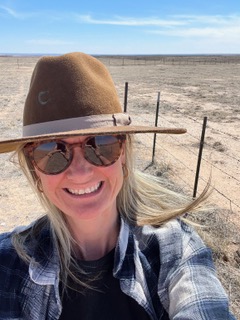
By Suzanne Bellsnyder, The Texas Rural Reporter
Last week, while driving across parts of rural West Texas, I spoke with Nick Troiano, the executive director of Unite America. Our conversation focused on something most rural Texans likely aren’t aware of, which is a lawsuit in Amarillo that could determine who is allowed to participate in the Republican Primary, which in many rural counties, effectively decides all local leadership.
The case, Hunt v. Texas, seeks to close Texas Republican primaries and limit participation to “registered Republicans” only. It’s part of a broader national push, but its consequences would land squarely on rural voters. Most rural counties do not have competitive general elections. School board members, county commissioners, sheriffs, and judges are usually decided long before November. If primaries are closed, many rural Texans — including independents and our Democrat neighbors who regularly vote in GOP primaries because that’s where elections are decided — would lose their only meaningful vote.
What Texans Think A new statewide poll commissioned by Unite America shows overwhelming support for keeping primaries open. The poll found that Texans across the political spectrum oppose closing primaries and most Republican primary voters favor the current system. It also found that Texas voters widely reject party registration requirements and they value choosing the primary ballot that best fits their community.
Troiano summarized it clearly: “Voters want the freedom to vote for whomever they support in every taxpayer-funded election.”
That matters also because Texas primaries are funded and administered by the State of Texas — by all taxpayers, including those who would be barred from participating.
In rural communities, where broad coalitions shape public life more than strict party lines, excluding neighbors from the only election that counts would fundamentally rewrite how representation works.
Who Is Pushing for Closed Primaries?
I asked the obvious question, “If Texans aren’t asking for this, who is”?
According to Troiano: “It’s a combination of party activists and special interests trying to consolidate their own power… It comes down to ideological purity and political power.”
This trend isn’t unique to Texas. In several Republican-controlled states, internal factions — not general voters — are pushing to narrow who gets a say in primary elections.
In a highly unusual move, on this issue Texas Attorney General Ken Paxton has aligned himself not with Texans, but with the Texas GOP in an effort to close the state’s primaries through the courts—a change that should only happen through the Legislature and a vote of our elected representatives. After lawmakers failed to pass a bill to close primaries, Paxton and the Texas GOP turned to the judiciary instead, filing their case in Amarillo, a venue widely known for political “forum shopping” to secure favorable outcomes. As a result, the State of Texas—through Secretary of State Jane Nelson—is now being forced to defend itself in court. It’s an anti-democratic process aimed at achieving an anti-democratic result, bypassing public debate, legislative scrutiny, and the will of Texas voters.
What Happens When Primaries Close? Wyoming Offers a Warning
Wyoming closed its Republican primaries for the 2024 election cycle. The results were dramatic. Nearly 20% of sitting Republican legislators were defeated by challengers aligned with a far-right faction. The Freedom Caucus gained control of the Wyoming House and legislative gridlock increased as representation narrowed.
Troiano explained: “When you close primaries, the electorate becomes much less representative. Activists can weaponize the primary to elect candidates who only need to appeal to less than 10% of voters.”
That shift reshaped state politics almost overnight — and not for the better.
Louisiana Shows the Opposite Outcome
For decades, Louisiana used a nonpartisan, all-candidate primary system. Research shows that model has reduced legislative polarization, increased responsiveness to majority voters and enabled policy outcomes that benefited rural communities, including Medicaid expansion. Louisiana’s experience demonstrates what can happen when elections are designed for broad participation rather than gatekeeping.
The Economic Stakes for Texas
The Perryman Group analyzed the economic impact of closing primaries and increasing political instability. They found potential consequences including billions in lost annual economic output, more than 219,000 fewer jobs statewide, and major reductions in state and local revenue. Perryman’s conclusion: democratic instability and exclusion tend to deter investment and harm local economies — and rural areas feel those effects first.
What This Means for Rural Texas
Rural politics has always relied on relationships, not rigid labels. People cross party lines based on trust, family ties, community history, and shared priorities. Closing primaries would move Texas away from that tradition and toward narrower ideological control, decision-making driven by factions rather than communities and fewer Texans having a meaningful voice in who represents them. This isn’t a small procedural shift. It is a fundamental redefinition of who gets to participate in rural self-government.
At its core, the question is simple: Who gets to choose the people who lead rural Texas? The answer will shape our representation, our policymaking, and the future of rural communities across the state.
About the Author
Suzanne Bellsnyder is editor and publisher of the Hansford County Reporter-Statesman and Sherman County Gazette. A former Capitol staffer with decades of experience in Texas politics and policy, she now focuses on how state decisions shape rural life through her newspapers and the Texas Rural Reporter. You can subscribe to the newsletter at www.TexasRuralReporter.Substack.com

