By Celeste Silling
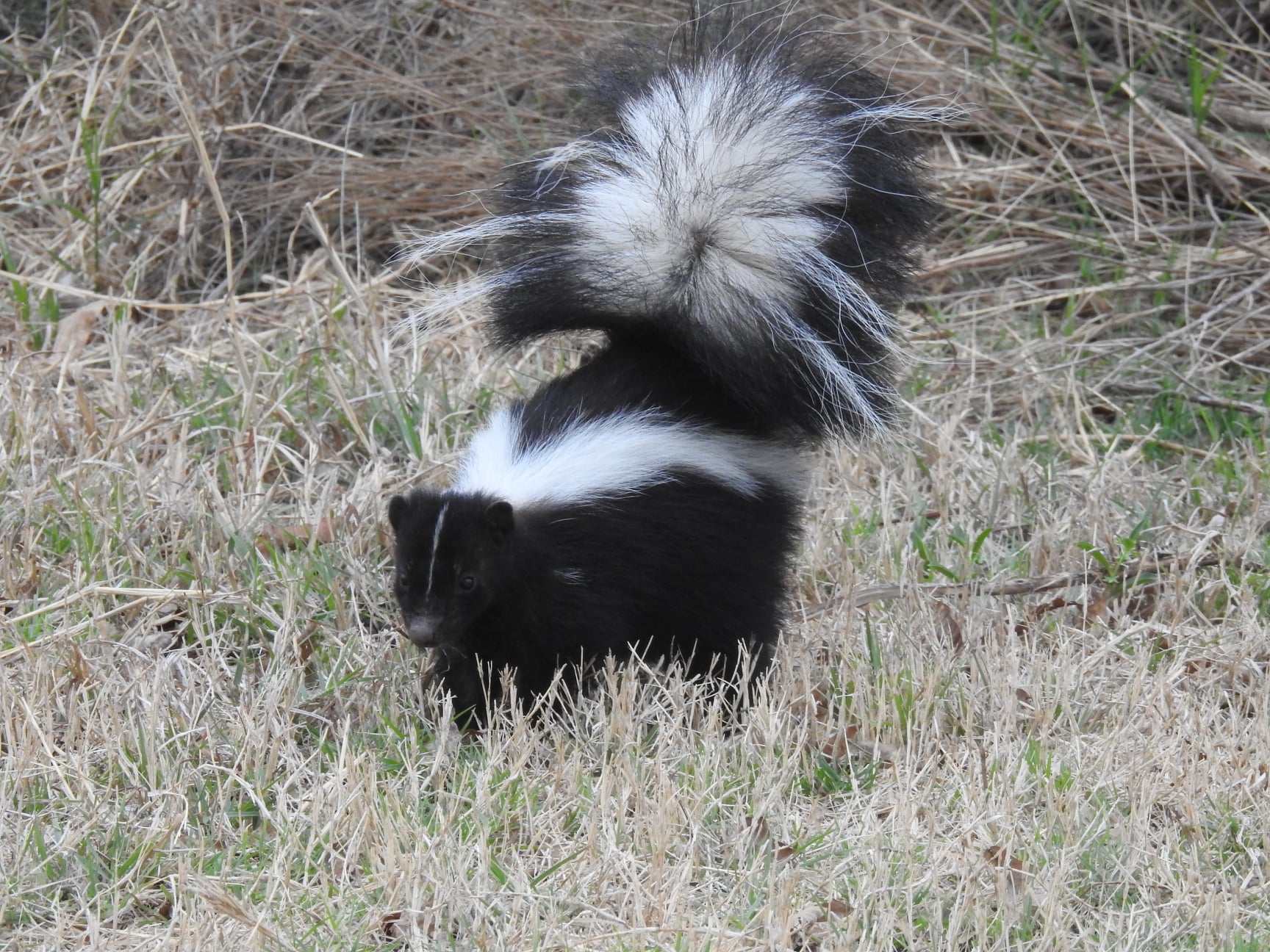
Texas has five native species of skunk, more than any other state in the nation. These species are the Striped Skunk, Western Spotted Skunk, Eastern Spotted Skunk, Hog-nosed Skunk, and Hooded Skunk. The Striped Skunk is the most well-known species of the five, with a black body and two white stripes down its back. The Spotted Skunks are slightly smaller, with black bodies with white spots. The Hog-nosed Skunk has a longer snout and only one white stripe running down its back. And finally, the Hooded Skunk looks much like its Striped Skunk cousin, but with longer fur and a hood of long hair on its neck.
Skunks are crepuscular, meaning they are most active during dawn and dusk. They are usually solitary and shelter in burrows during the daytime. Their diet consists of both plants and meat, including leaves, berries, nuts, bees and other insects, worms, rodents, lizards, frogs, snakes, and eggs. They catch bees by scratching at bee hives until the insects come out, using their thick fur to protect against stings. To find their worms and grubs, skunks use their long claws to dig in the ground or break open rotting logs. They can also be found eating garbage out of trash cans (who can resist a half-eaten burrito?).
The feature that skunks are most known for is, of course, their spray. Skunks use their spray as a defense mechanism, expelling a mixture of chemicals from two scents glands at their rear. The chemical mixture is foul-smelling, thanks to the presence of sulfur, and also happens to be highly flammable. This odious spray can be enough to ward of predators, such as bears, and perceived threats such as curious children.
An average skunk maintains enough mixture in its scent glands for about five or six sprays. If this ammo is depleted, it takes about ten days for them to replenish their supply. With this in mind, a skunk will usually do its best to warn predators away, so as not to waste any supply. The skunk will hiss, stamp its feet, raise its tail, and pose with the glands pointed threateningly. A skunk’s reputation usually proceeds it, as foxes, wolves, and other native predators tend to stay away from the black and white menaces.
If you see a skunk walking around your neighborhood here on the Upper Texas Coast, odds are that it’s a striped skunk. They are the most prevalent type and tend to move around conspicuously. The Spotted skunks can climb trees with more ease, and they are more active at night, so are harder to spot. The Hooded Skunk is far more prevalent in the Southern part of the state, and the Hog-nosed is found more easily in the Hill County. Still, the next time you see a skunk, you might want to check what species it is; take a close look, but not too close!
Photo: Striped Skunk
Credit: Sue Heath

