
By Martin Hagne
Waterfowl, or ducks as most folks know them by, have always been around on the Upper Texas Coast as far we have records. Although less plentiful than years gone by, they are still here year-round, and more so in winter months as many species winter all along the Gulf Coast.
But speak to someone that’s been around here for a while…and they all agree… those whistling ducks sitting in trees are kinda newcomers! Mexican Tree Duck, Whistling Tree Duck… they are known by many names, but their official name now is the Black-bellied Whistling-Duck.
These ducks didn’t appear on the Upper Texas Coast scene until the mid-1970’s in small numbers here and there. They expanded their local range into the 80’s, but it wasn’t until the early 2000’s when they became numerous here. Now they are everywhere, and you might even have seen them line the roof ridge of a neighborhood house, or balance on telephone wires!
Black-bellied Whistling-Ducks didn’t even arrive in the United States until the 1950’s. They expanded their range north from Mexico into the Rio Grande Valley of Texas, and slowly have been spreading north, east, and west ever since. The first breeding records in Texas were probably around the mid to late 1950’s, and they had established small populations by early 1960’s.
They slowly grew in populations through the 60’s and 70’s, moving up the southern Texas coast. Then in the 1980’s their population exploded. Much like White-winged Doves, they steadily expanded their range, using stock tanks, reservoirs, urban and suburban park ponds, and golf course ponds built over those years. They have expanded ever since as far east as Florida and north to Wisconsin.
In the early 1970’s, the late Harold Burgess, with US Fish & wildlife Service, started to place nest boxes along the Rio Grande, and other water ways in the Lower Rio Grande Valley to entice the species to establish more in Texas. I’m sure Harold didn’t expect their eventual massive expansion. He would often chuckle when I spoke to him (in his later years) about risking his life in the wild and inhospitable places, bees chasing him that had taken up in the nest boxes, and general hardships of getting that program going.
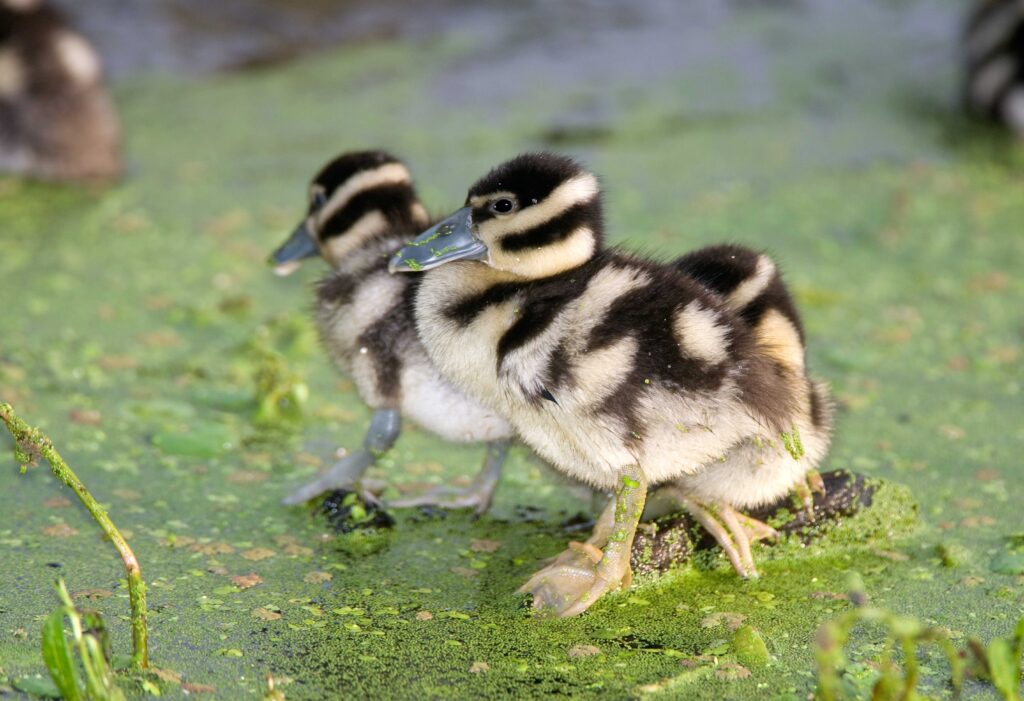
Today Black-bellied Whistling-Ducks are here in big numbers, at times counted in the thousands in one flock. They use all sorts of habitats as long as there is water nearby, including urban areas. They nest in old trees with cavities, or in nest boxes provided for them or owls. The females lay their eggs, and other females will “dump” their eggs as well in the seam nest. That leaves one parent the task of sometimes raising 15-20 ducklings! The young little ducklings jump from the box and the parents walk them to the nearest water, which at times is far away, crossing highways and other dangers. At times, a few other females will join and help raise the flock of young communally.
These are a rather striking looking birds, loud and gregarious at times, but surely enjoyable to behold! Enjoy their company as we do here at the Gulf Cost Bird Observatory where they raid the seed feeders daily!
Photo 1 – And adult Black-bellied Whistling-Duck standing on a backyard fence.
By Mike Williams
Photo 2 – Newly hatched Black-bellied Whistling-Duck ducklings heading for the water for the first time.
By Mike Williams

