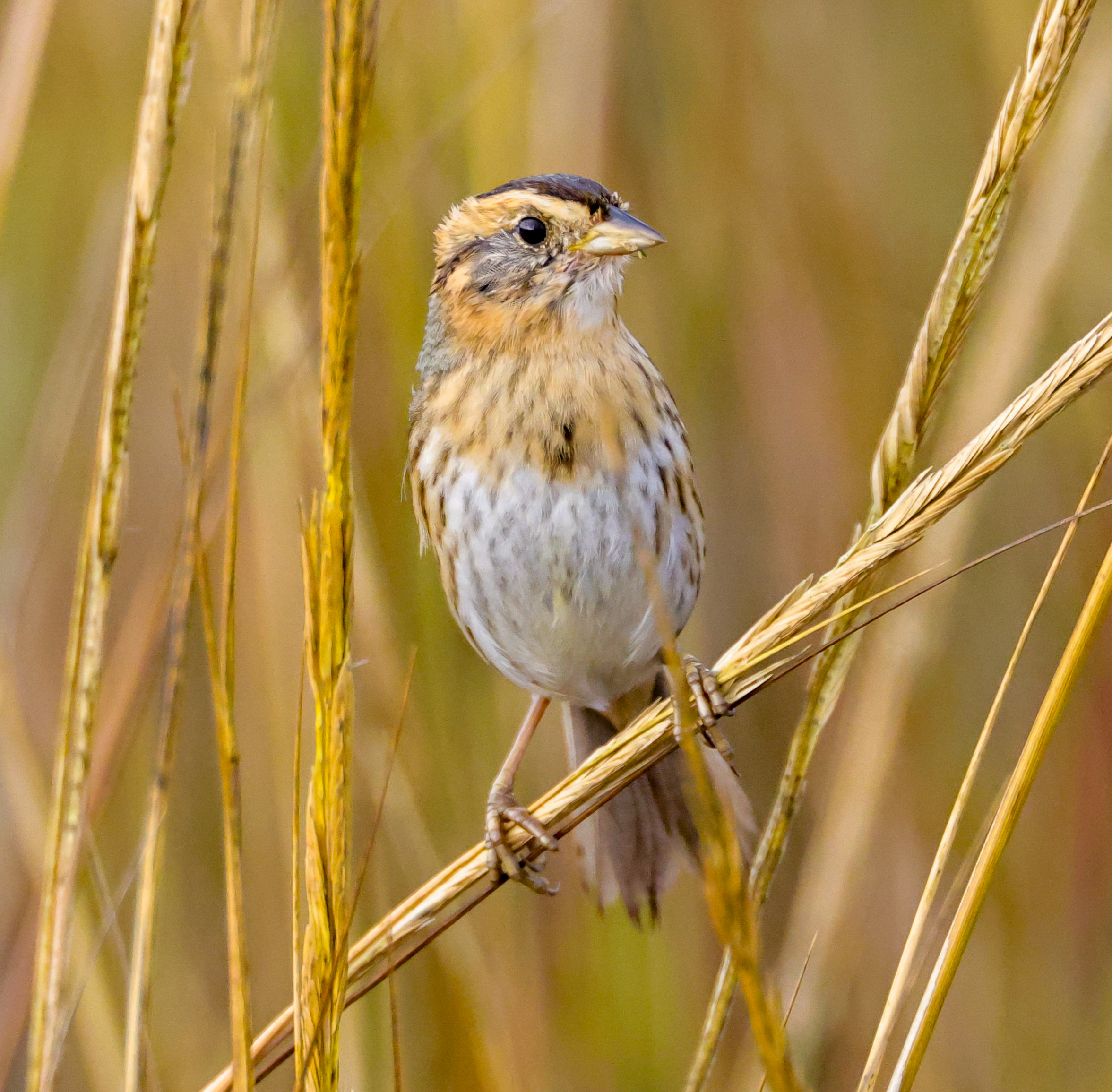
by Martin Hagne
The habitats of the coastal areas along the gulf are diverse with wildlife, and bird species in particular are rather abundant. From the ever-present gulls to the much less noticed wrens, the ancient looking Brown Pelicans to the tall and stately Great Blue Herons. They are also the nursery grounds for fish, shrimp and crabs to name a few, and they protect us against storm surge! Just a bit further inland lives a whole different group of birds such as the raptors and songbirds. This huge species diversity is due to the several “layers” of habitat types that starts with the ocean and moves inland from there. It goes something like this: the ocean waters of the gulf, the shorelines and beaches, the sand dunes, the coastal marshes and wetlands, the coastal prairies, and eventually the bottomland forests. The coastal marshes and wetlands, coastal prairies, and bottomland forests are also intersected by numerous bayous, sloughs, and rivers adding more habitat types. No wonder our birdlife is so diverse.
One type of habitat that is less known about by many people are the coastal marshes and wetlands. Unless you bird watch, are a biologist, or hunt or fish, there is not much reason to visit such places for most folks. They may even look uninviting, be very muddy, and have sharp saw grasses. But in them lives many bird species that thrive in these rather harsh environments.
As you move inland, the salty coastal environment is eventually mixed with fresh water from the bayous, rivers and rainfall. Here the habitat changes into the more mixed salt and fresh water marshes with ponds and winding bayous. The freshwater and slight elevation change allows for an entirely different plant life to thrive. The dominant species are smooth cordgrass and sea ox-eye daisy. Others include sedges, rushes, grasses, and small woody shrubs.
As hostile as this environment seems, many bird species call it home. These are often very secretive birds, never leaving the confines of the marshy land and very thick plant life which they use for cover. With a little luck and knowledge, you can spy some of the following species.
Sedge Wrens and Marsh Wrens are some of the tiniest birds. They sport cryptic brown plumages and flit deep in the thick vegetation, at times landing in the open for a brief glimpse. As with most of these coastal marsh birds they are best detected when they call or sing. There are several species of rails also. In sized order they are King, Clapper, Virginia’s, Sora, Yellow, and Black Rails. The last two are super hard to find as they are the most secretive. Few birders ever get to add them to their life list of birds seen.
A few sparrows also call these places home. Nelson’s Sparrow and Seaside Sparrow are about as cryptic, but beautiful, as wrens and behave much the same. Once again, the call alerts you to their presence. One warbler, the Common Yellowthroat, is fairly common in these environs and it can be seen along the edges near water at times. Even with it being common and quite colorful, it can be hard to find due to its cryptic and skulking behaviors.
These are just a few of the many bird species that thrive in the coastal marshes, which also houses heron and egrets, ibises, spoonbills, bitterns, and even blackbirds and grackles. That shows just how diverse and very important such habitats are. With increased development, we are encroaching into these “bad lands” along the coast. A GCBO study electronically tracked a Black Skimmer from the Dow Colony as it fed daily, and the data showed that it mostly used these coastal marshlands to feed itself and its young. It is important to conserve, or at least leave alone, these lands for our avian friends living an already tough life, and for all the other benefits. That is one of the many goals of the Gulf Coast Bird Observatory’s conservation work. Hopefully next time you see those extensive “brown and ugly” marshlands, you can see their beauty for what they are, a hardworking and important ecosystem.

