By Celeste Silling
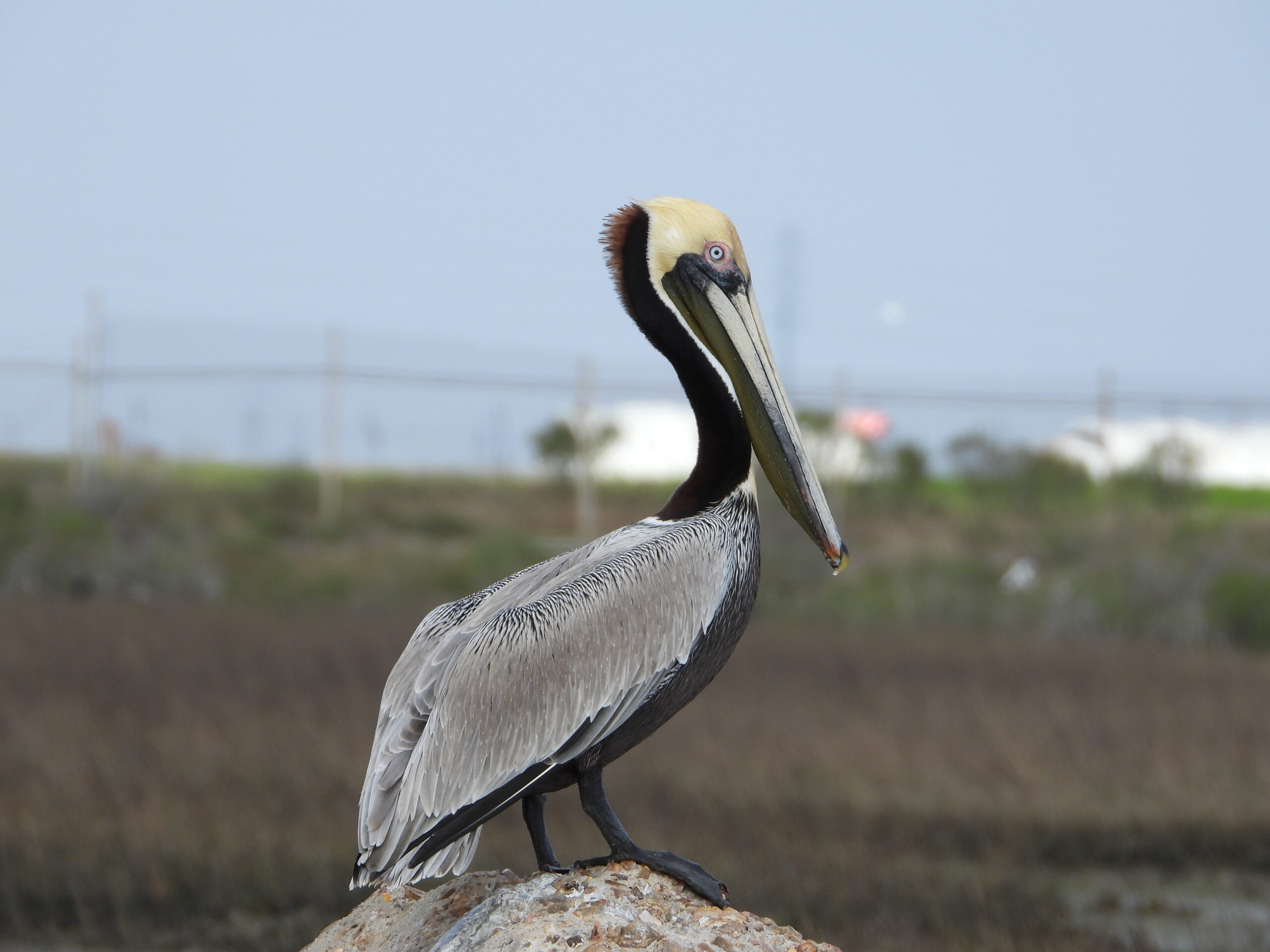
Brown Pelicans are one the most iconic coastal birds here in America, especially in Texas and along the Gulf Coast. Their large bill, brown feathers, and heavy build are easily identifiable, either on the water, in the sky, or printed on coastal décor. But this large bird, now commonplace on Texas beaches, was not always so abundant. In fact, in recent history, they came pretty close to extinction.
In the 1950s through the 1970s, Brown Pelicans, along with many other species of birds, were rapidly disappearing. This steep plunge in the avian population was eventually revealed to be a result of slow, wide-spread poisoning from pesticides. One pesticide called endrin would cause the pelicans to die directly, while the pesticide DDT would cause a slower, more insidious problem. The pelicans would survive exposure to DDT, but their eggs, when they laid them, would be so fragile that they would crack under the incubating bird’s weight.
Eventually, because the eggs weren’t able to successfully hatch, there were only an estimated 50 Brown Pelicans in the whole state of Texas. Compared to the abundance of pelicans that we see now, this low number is devastating! Fortunately, after publications such as Rachel Carson’s “Silent Spring” brought light to the effects of these pesticides on wildlife, DDT was banned in 1972 and the use of endrin was reduced.
The Brown Pelican was listed as an endangered species in 1970, and conservationists rallied around them, trying to save the species. Initiatives to conserve habitat, along with efforts to relocate birds from healthy populations to struggling ones, were carried out across the coast. With the pesticide problem now addressed, and multiple conservation efforts put in place, the Brown Pelican populations began to bounce back.
In the late 1990s, the Brown Pelican populations were back to where they had been before the widespread pesticide exposure. Once endangered, the species is now thriving and is listed as “low-concern.” You can see these iconic birds flying in large “V” or “L” shaped formations over the coast of Texas, often bobbing with the changing winds or swooping down to land in the water. They are a common sight on fishing piers or swimming in the gulf.
The Brown Pelican is a true conservation success story and goes to show what wildlife research and protections can accomplish. This is a heartening thing to remember, especially as wild bird populations continue to decline more and more. When people come together to help a species, it can be brought back from the brink!
There are several coastal bird species in Texas that are being conserved right now. American Oystercatchers, Black Skimmers, Wilson’s Plovers, and Snowy Plovers, are just some of the examples. If you want to help beach birds and other wildlife, pick up littered fishing line (an entanglement hazard), and give them space on the beach. Hopefully, we can help all of these birds bounce back, just like the pelicans.
Photo: A Brown Pelican
Credit: Celeste Silling

