By: Katie Titsworth
If you’ve ever stared at a brown duck through binoculars, wondering whether you’re looking at a female, an immature bird, or a male in eclipse plumage, you know how tricky duck identification can be. On Florida’s Gulf Coast, however, telling these ducks apart is becoming increasingly important as the endemic Florida Mottled Duck (Anas fulvigula fulvigula) is hybridizing with feral Mallards (Anas platyrhynchos) at an alarming rate.
The Mottled Duck (Anas fulvigula) is a year-round resident of the Gulf Coast, making it the only dabbling duck species in this region that both nests and winters here. Mottled Ducks are found in their highest numbers in the coastal prairies and wetlands of the western Gulf Coast, where they are a highly valued game species. There are two distinct subspecies of the Mottled Duck: the Gulf Coast Mottled Duck (Anas fulvigula maculosa), found along the coast from Alabama to Tamaulipas, Mexico, and the Florida Mottled Duck, endemic to peninsular Florida.
Wild Mallards winter in low concentrations throughout Florida and migrate to their northern breeding areas in the spring. However, their feral counterparts are found year-round in the state, primarily within urban and suburban areas. As a result, the range of feral Mallards completely overlaps with the relatively small breeding range of endemic Mottled Ducks, which extends from Alachua County southward.
Observations of the two species in mixed flocks and pairs have been noted for over 20 years by birders and biologists alike, and they are even capable of producing fertile hybrid offspring. This poses a serious threat to the Florida Mottled Duck population as the subspecies is genetically “swamped” by the overabundant feral Mallards.
Research has demonstrated a concerningly high hybridization rate between Florida Mottled Ducks and Mallards, at around 95%. Genetic analyses reveal that more individuals are identified as hybrids, colloquially known as “Muddled” ducks, than as genetically distinct members of either species. Hybrids can be identified largely by their unique facial streaking, often showing patches of iridescent green on the head, a trait not seen in pure Mottled Duck individuals with an unstreaked, buffy face.
Although permits are required for the possession, purchase, or selling of domestic Mallards in Florida, these birds are illegally released in concerningly large numbers throughout the state. The Florida Fish & Wildlife Conservation Commission (FWC) estimates that over 12,000 Mallards are purchased and potentially released across the state each year, often for aesthetic purposes. In partnership with the U.S. Fish and Wildlife Service (USFWS), the FWC provides permits for the control of feral Mallards through lethal control and trapping (May 1st–August 31st) and destruction of nests and eggs (year-round). However, such control methods appear to have a limited effect on hybrid prevalence, based on population surveys and increasing observations by birders in peninsular Florida.
Threats to Mottled Ducks are not centralized to the Florida Gulf Coast. Coastal marsh loss in Texas and Louisiana forces these ducks into urban wetland areas, potentially increasing contact with Mallards. Hybridization rates between these species have not been extensively analyzed within this area of the Mottled Duck range, but such habitat loss raises concerns about similar genetic swamping to that occurring in Florida.
Protecting the Florida Mottled Duck means preserving more than a familiar face in our coastal wetlands. As a subspecies endemic to peninsular Florida, it represents a unique part of the state’s natural heritage, one that could be lost if hybridization continues unchecked. Reducing the release of domestic Mallards, protecting wetland habitats, and monitoring hybridization are important steps toward ensuring that Mottled Ducks remain a distinct part of our Gulf Coast wildlife for generations to come.
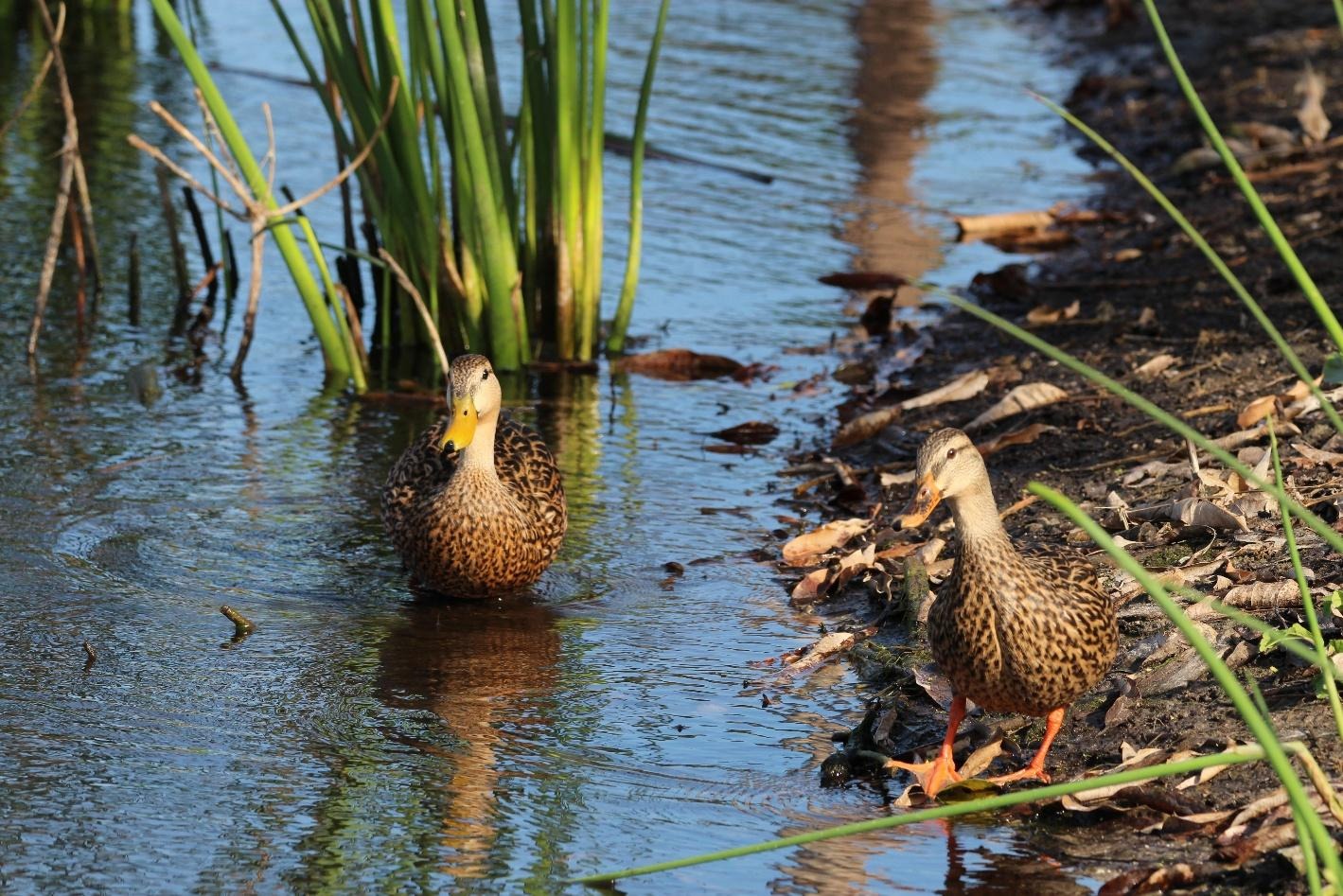
Florida Mottled Duck (Anas fulvigula fulvigula) pair, male (left) and female (right).
Photo credit: Katie Titsworth

