
By Richard Tew/NASA Correspondent for The Post Newspaper
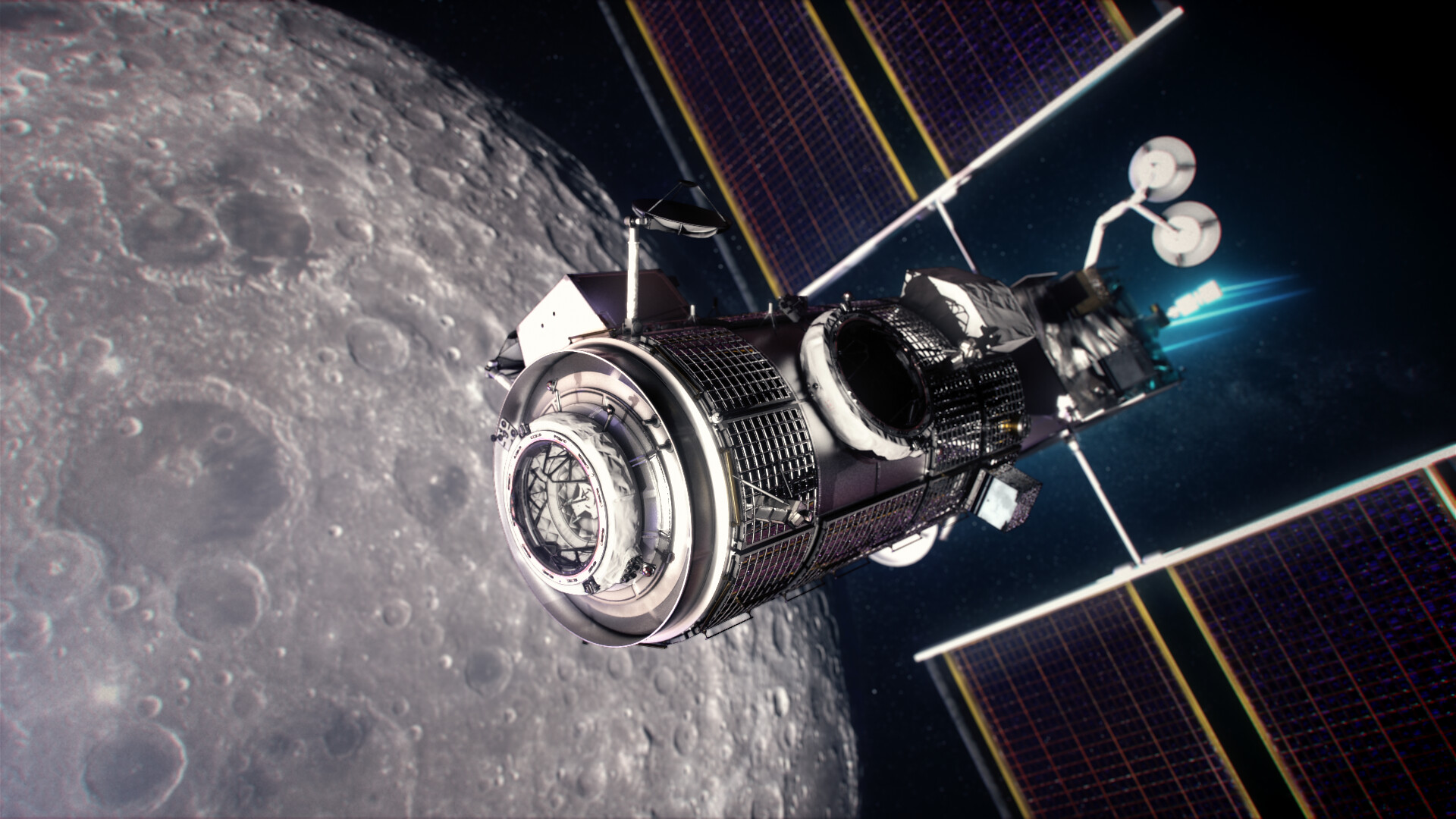
In the next three years, the ISS won’t be the only international spacecraft navigating outer space. NASA’s smaller “Gateway” will see another spacecraft in the dark vacuum of space.
At the helm of the effort is NASA’s Vehicular Systems Integration Manager Deb Ludbun.
Space wasn’t her first interest, Ludban says.
“When I was a little girl I wanted to be a vet, then I wanted to be president and I wanted to be all these other things,” said Ludban. “I didn’t plan to end up in the space business.”
Ludban says she liked helping big projects come to fruition.
“My passion is how large things come together in order to meet a mission. I couldn’t imagine a better place to be,” said Ludban.
After graduating with an engineering degree from New Mexico State University, Ludban was hired to work at NASA’s White Sands Test Facility in New Mexico before eventually transferring to the Johnson Space Center in Houston. While there she would eventually become involved with the Gateway project.
In the coming years, NASA’s “Gateway” space station will travel a “near rectilinear halo-orbit” (NRHO) around the Moon. The purpose for it is to serve as a hub for future missions to the Moon and eventually, to Mars.
The NRHO is an oval-shaped orbit and serves as a more fuel efficient path for the Gateway and its boosters as it circumnavigates the outer space that surrounds the Moon. At its closest point the Gateway will be about 90 miles its further point away, a distant 28,000 miles from the lunar surface.
During the much-earlier Apollo program, Moon explorers were limited to an orbit that only made equatorial landings possible.
According to Lunbun, the NRHO orbit will allow exploration of other important points of interest on the Moon. In particular, the north and south poles where ice and water are. The ice can provide air to breath, water to drink and fuel elements like hydrogen for fuel, once converted.
It will have the next generation robotic arm currently used on the International Space Station. It will be built by the Canadian Space Agency.
Is the Gateway an ISS 2.0? Yes and no, says Ludban.
“There’s a lot in common, but there’s a lot that’s different,” said Ludban.
The Gateway is intended to help future Artemis missions dock and send Lunar landing vehicles to the Moon’s surface for exploration. It will also have a role to play when traveling to Mars in years to come.
“There’s a lot the Gateway will do to enable lunar surface missions,” said Ludban. “It will also help enable future Mars missions. The Gateway is destined to facilitate Moon landings via the Artemis missions which are planned on a near-annual basis.”
For about 11 months out of the year, the Gateway “Is its own standalone science mission,” said Ludban.
According to Ludban, the Gateway will be able to conduct experiments even without a crew on board. The idea is to have ongoing science experiments conducted remotely through automated systems on board.
“That data can be downloaded to Earth so our scientists here can have that rich library of information to continue doing their work from,” said Ludban.
The first two modules: the power and propulsion element and the habitation and logistics outpost module will ride up via a SpaceX rocket sometime in 2025. More modules from the European and Japanese Space Agencies will be added later. Maxar Technologies is building the propulsion module while Northrop Grumman will be constructing the habitation and logistics module.
Once built, Gateway will be about 1/4 the size of the International Space Station.
“We have a ton of things that are already manufactured here on Earth and are already being put together and getting to be integrated into a spacecraft and launched,” said Ludban.
The certified design shelf life is fifteen years for Gateway but the system is going to be engineered in such a way where sensors will monitor structure points and allow upgrades to possibly extend its service life.
Besides its use as a refueling station, laboratory and rest station for traveling astronauts, Gateway also plans a critical role in NASA’s overall strategy for space exploration.
“It’s sometimes hard to step back and see how this (Gateway) plays into the big picture,” said Ludban. “I try to link it back to exploration and humanity’s need to go out and see and do and see whatever else is there. It’s clear our whole human history has been about expanding and finding new places and finding new ways.”
Ludban points out we don’t know much about the oceans in the way we don’t know a lot about outer space.
“In discovering the history of how all these planets and stars and solar systems all interact and where they came from we need to get people there,” said Ludban.
Ludban says technology such as the James Webb Space Telescope can show us pictures and we can send a robot to Mars for testing. She points out there is no real substitution for the human experience.
“It does not stand in the place of a human being there and seeing and feeling and being about to express that back to us with words, art and poetry and words that are so meaningful to humans as a civilization,” Ludban.
The Gateway and the Artemis program is all about pushing the limits of what is possible.
“Being able to live and work, and continue to test what humans are capable of doing, and what humans need to be doing to go to that next step is what Artemis is all about,” said Ludban.
Listen to the interview here: https://on.soundcloud.com/qL3Rr
Photo cutline: Conceptual rendering of Gateway and the Moon. Photo credit NASA.
When he’s not writing about NASA or his column about faith, Richard Tew teaches dance to all ages at http://www.tewperformingarts.wordpress.com.

