By Celeste Silling
One of my favorite things to do on a cool day here in coastal Texas is beachcombing. Beachcombing is essentially scouring the beach or coast for little treasures. This can mean sea glass, shells, rocks, coral, or other unique finds.
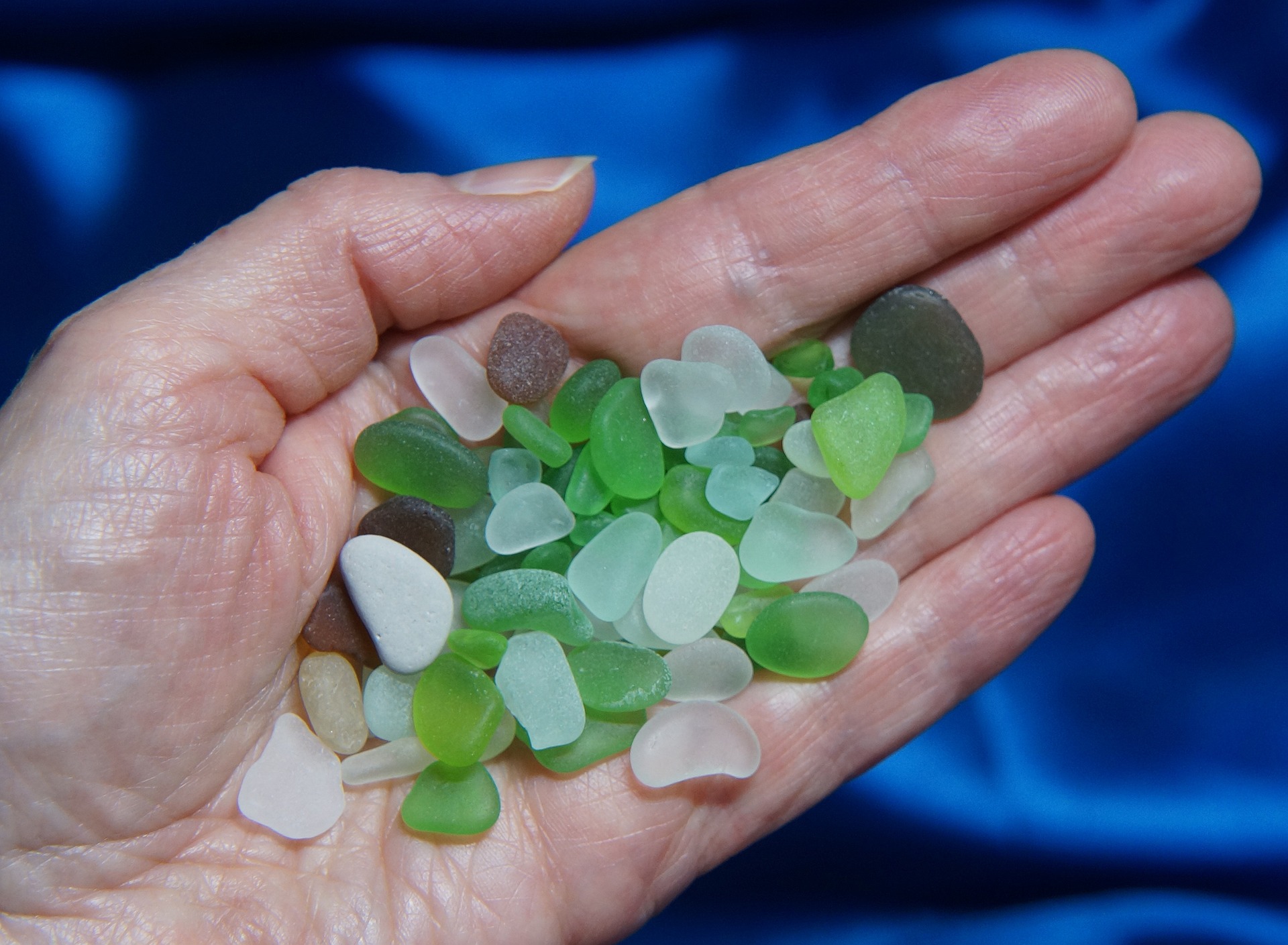
I am personally partial to finding sea glass. Sea glass is formed when humans discard glass into the ocean. The shards are weathered and smoothed by waves, sand, and rocks. This makes the glass beautiful and safe to handle, as all the sharp edges have been sanded down. Brown, clear, and green sea glass are relatively easy to find here on the coast. This is because many glass bottles are made of brown, clear, and green glass. Meanwhile, colors like blue, red, purple, and orange glass are much harder to find.
In my time as a beachcomber, I have found some great sea glass hunting spots. Places like Surfside and East Beach in Galveston have a spattering of sea glass, but the real treasure trove is the Texas City Dike in Texas City. The Texas City Dike is the longest man-made fishing pier in the world, and it extends 5.3 miles into Galveston Bay. Because it stretches far into the bay, any sea glass traveling Southward on the bay’s currents has a pretty good chance of washing up on the Dike.
On the North side of the dike, I have found loads and loads of green, blue, clear, red, and brown sea glass. I have also found beautiful tile shards and other trinkets. On the South side, there is less sea glass and more nurdles, which are little plastic pellets used in manufacturing. The ones that wash up on the Dike and our other beaches were likely lost during transportation, either by train or ship. Piles of nurdles end up on the dike hidden amongst the riprap. As a beach comber, I don’t count these as treasures (they’re not too pretty and are often covered in toxins) but they’re certainly interesting to see!
If you are thinking of heading to the Texas City Dike for a sea glass hunt, here is my recommendation. Drive at least a half mile or so down the dike and look for an expanse of sand on the North side. You can also find sea glass amongst the rocks, but these are often slippery and not worth the danger of falling into the ocean. There is plenty of sand to walk through, so no need to risk it on the rocks!
I always bring one bag for sea glass and other treasures and another bag for fishing line. There is a lot of fishing line on the Dike, as it is a popular fishing spot, and wildlife tends to get entangled and injured from the plastic lines and nets. Since I’m already out looking through the sand, it’s easy to pick up any line that I see and hopefully save a bird or dolphin while I’m at it!
I hope that this article has inspired you to try beachcombing this fall. Happy hunting! And save some sea glass for me!
Photo by Jan Haerer
Caption: Brown, clear, and green are the most common colors of sea glass.

