by Kayla Pringle
Few birds are as instantly recognizable as the swallows and martins of the family Hirundinidae. With scythe-shaped wings, streamlined bodies, and forked tails that are easily spotted in the air, these birds are masters of aerodynamic evolution. Swallows and martins occupy many habitats, from open prairies to coastal wetlands to city skylines. They have adapted to life almost everywhere that aerial insects are present. Birds of this family are found everywhere around the world, except Antarctica.
Swallows and martins are aerial insectivores, feeding almost exclusively on flying insects captured on the wing. Their wide gapes, bristled mouths, and agile flight allow them to harvest swarms of mosquitoes, flies, and agricultural pests. In doing so, they provide an often-unseen ecological service; linking insect populations, freshwater systems, and open landscapes through their daily movements.
Their global success is rooted in adaptability. While many species nest on cliffs or in earthen banks, others have readily embraced human structures. Barn Swallows plaster mud cups beneath bridges and eaves (you may even have barn swallow visitors this spring in the Brazoria area, they like to make nests on balconies as well); Purple Martins form dense colonies in cavities, and are reliant on human-provided housing in eastern North America.
Breeding strategies among swallows and martins are as varied as the landscapes they occupy. Many species are highly site-faithful, returning year after year to the same nesting locations, sometimes traveling thousands of miles to do so. Timing is critical: breeding is closely synchronized with seasonal peaks in flying insects, ensuring that newly hatched chicks are met with an abundance of food. Most species raise one to two broods per season, with both parents sharing the demanding work of feeding rapidly growing young—often delivering hundreds of insect meals per day.
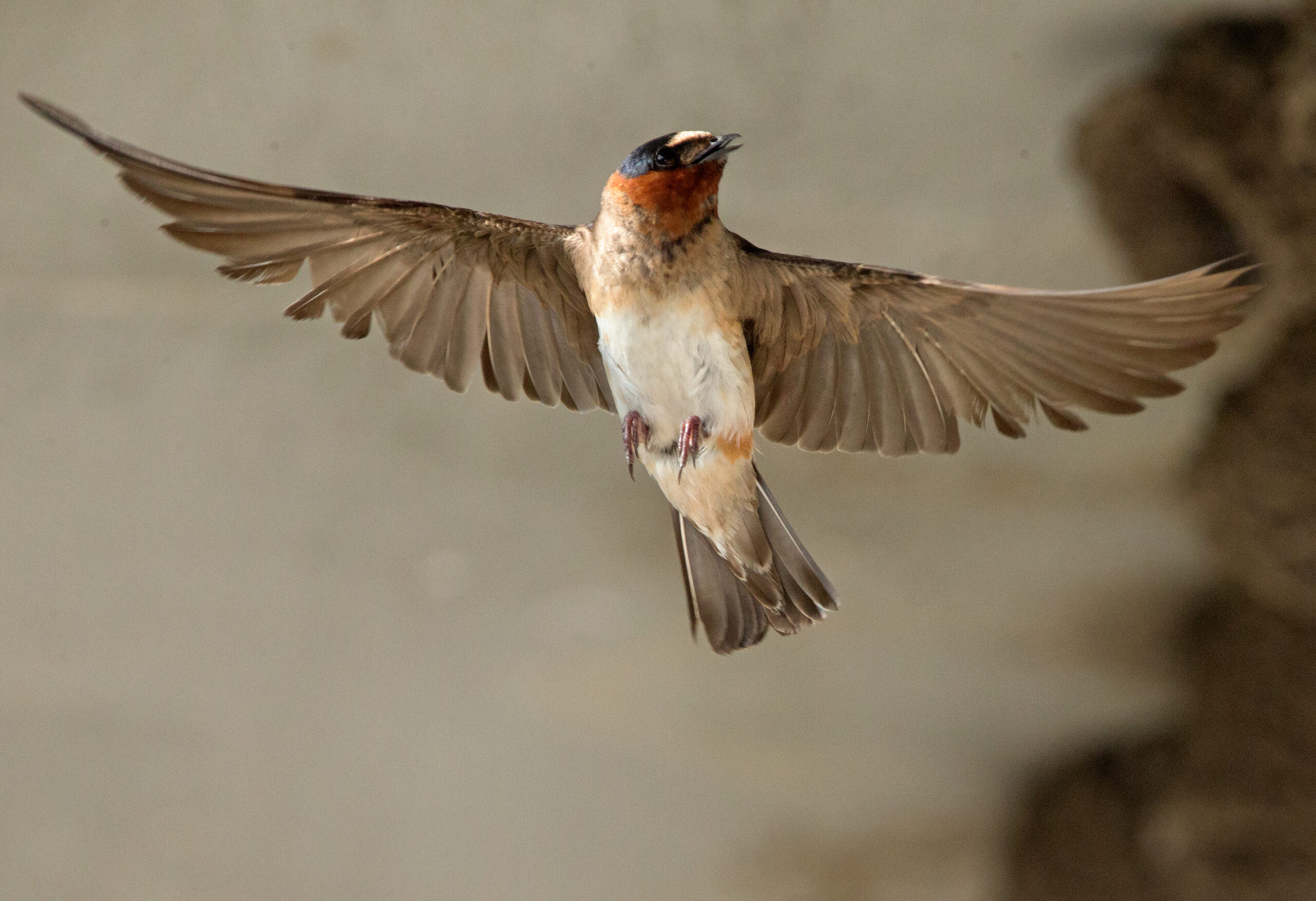
Nest architecture within the family reflects remarkable specialization. Bank Swallows excavate horizontal tunnels in sandy riverbanks, offering protection from predators and temperature extremes. Cliff and Cave Swallows construct intricate gourd or cup-shaped nests from mud pellets, each carefully collected and molded during flight. Martins and some swallows rely on cavities—natural or artificial—where colonial nesting provides safety in numbers. These diverse strategies reduce competition within the family and allow multiple species to breed successfully in close proximity.
Yet this closeness to human environments has come at a cost. Across much of the world, swallows and martins’ populations are declining. Long-term monitoring has shown troubling decline in aerial insectivores (driven by pesticide use), wetland degradation, and changes to building practices that remove traditional nesting sites. Climate change further complicates their lives, disrupting the timing of insect emergences and exposing long-distance migrants to increasingly unpredictable weather.
The life of a swallow is one of constant motion. Many species migrate thousands of miles between breeding and wintering grounds, crossing oceans, deserts, and mountain ranges. These journeys depend on intact stopover habitats and abundant food along the way – resources that are becoming harder to find in a rapidly altered world.
Despite increasing environmental pressures, swallows and martins remain resilient migrants. Their long-distance movements connect distant ecosystems, making population trends within the family valuable indicators of broad environmental change.
Photo credit: Mike Williams
Caption: A Cliff Swallow hunting for insects

