By Adam Trujillo
Often times, going birding is a fun, simple venture. You go out with your gear, you see a bird, and you try to identify it. During this time of year, things get fun when the migrant species come through. And every year may bring some surprise species that weren’t seen in your area the previous year. Those species might be explained by their migration route, destination, and recent weather events.
But sometimes, you can get those “what the heck?” species. These are birds that you absolutely did not expect to see. Birds can sometimes appear in places well outside their normal ranges, surprising birders and causing a great deal of excitement. These birds are called “vagrants” or “accidentals” because they presumably got sent off their migration course by accident.
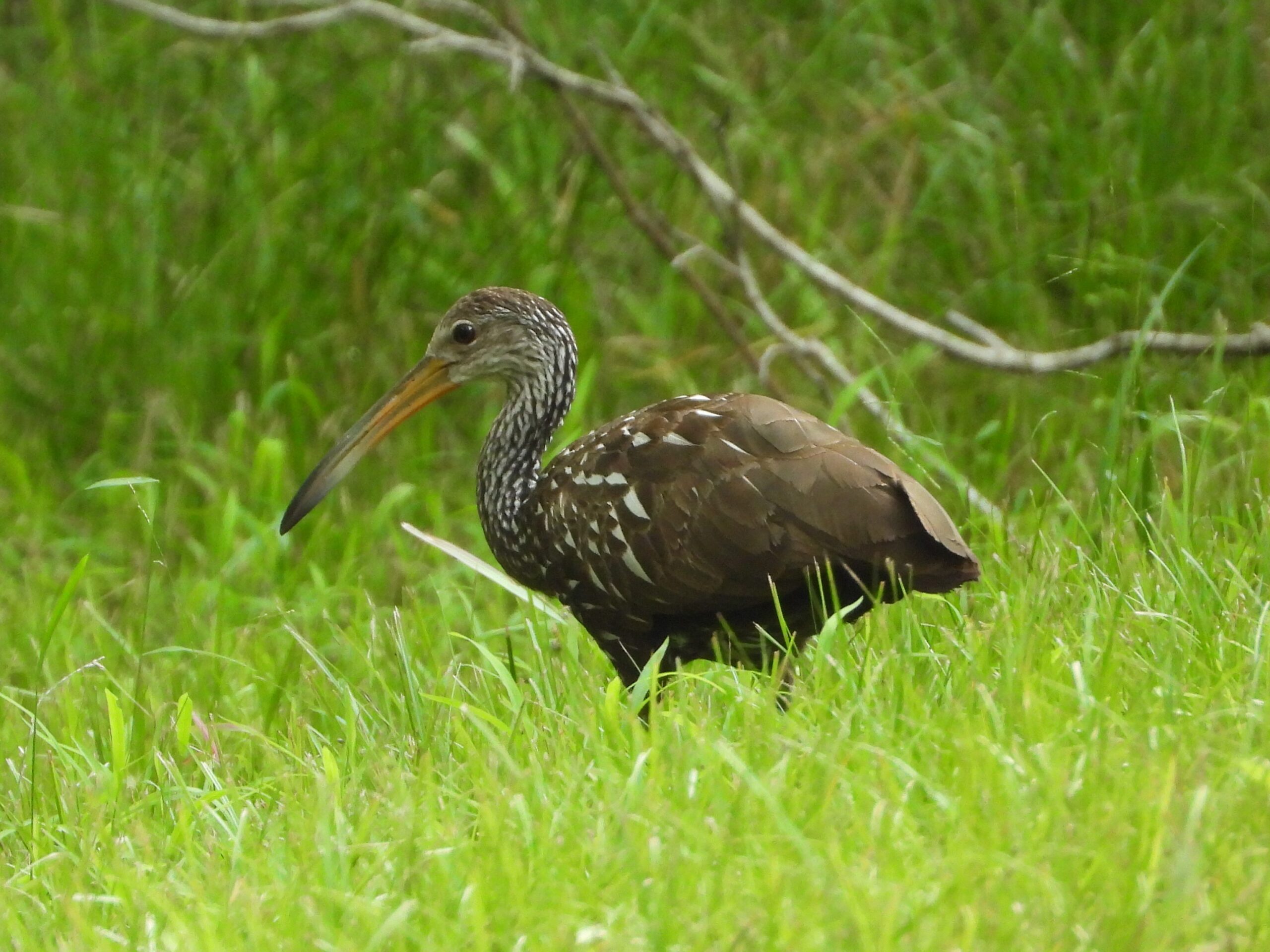
For example, a Snowy Owl was seen for a week or so earlier this year in Orange County, California, just west of Los Angeles. This is a bird is normally only seen in snowy Canada and the far Northern U.S., so was very unexpected on a warm California beach. As another example, in November of last year, a Limpkin was seen in New York. The Limpkins, a tall brown and speckled, heron-like bird, have never before been reported in New York. Their traditional range is Florida to Argentina. Both the Snowy Owl and the Limpkin had no business being where they were, so they sent birders into a frenzy, but in a good way.
Both those birds were examples of a vagrant species, a bird outside of its normal wintering and breeding range. And while it’s fun for us birders to come across a Snowy Owl in California or a Limpkin in New York, you have to wonder how that bird got there. It was speculated that the Snowy Owl got on a ship somewhere in the northern Pacific Northwest, if not Canada, and was brought south. The Limpkin might have just ventured up into New York in search of better resources. Other vagrants are sometimes brought in by storms, especially during migration times. And birds can accidentally migrate too far, get turned around, or land in previously uncharted territory.
Different bird species all have their traditional wintering, summering, or year-round habitat that they have presumably been using for thousands of years. But since many habitats are being clear cut, paved, developed, flooded, etc. by humans, birds are now being forced to change their ways. Species, either naturally or forcibly, will try to find new areas with more and better resources and start moving to those areas. So, when we see a vagrant species, it might not just be a fluke, but a bird venturing out to find new territory.
It just goes to show that we are in an ever-changing world, and species don’t always stay where they’re “supposed to.” So, keep an eye out, and while you’re out on your adventures you might find your own “what the heck?” vagrant species!
Photo by Celeste Silling
Caption: Limpkins are normally found in their range of Florida to Argentina.

