
By Ruth Ann Ruiz
The Post Newspaper Features Editor
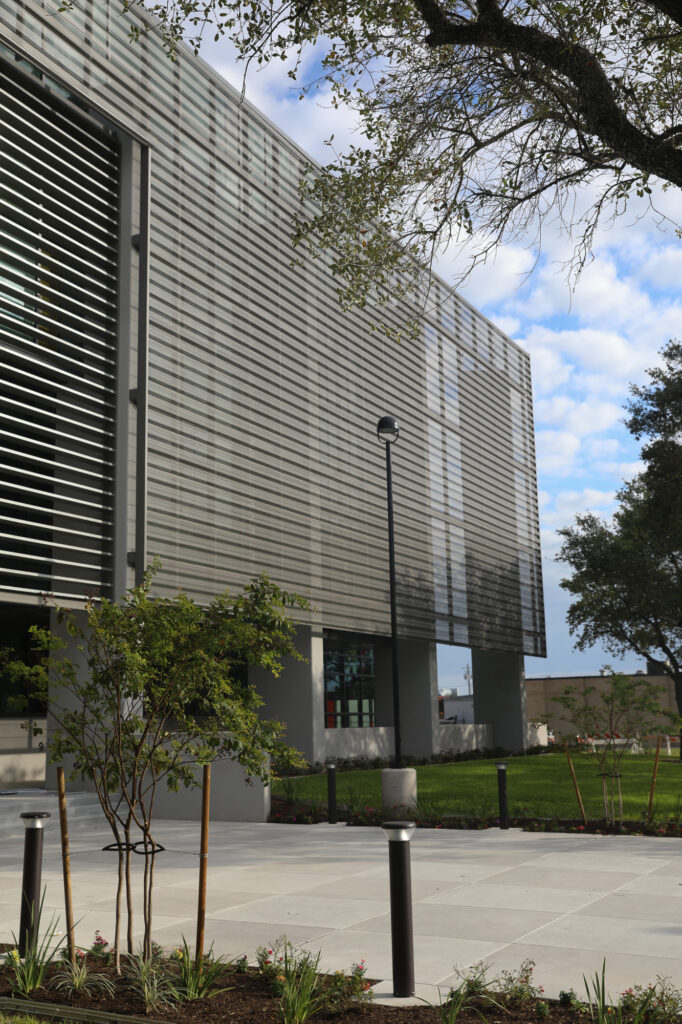
Working in a new building makes a teacher smile. College of the Mainland opened their 90,000 square foot Industrial Careers Building in August and it’s proving to be a big hit for the staff and students.
“Now we have the capacity to serve all the students who are enrolled in our industrial career programs,” said Dr Warren Nichols, President of COM.
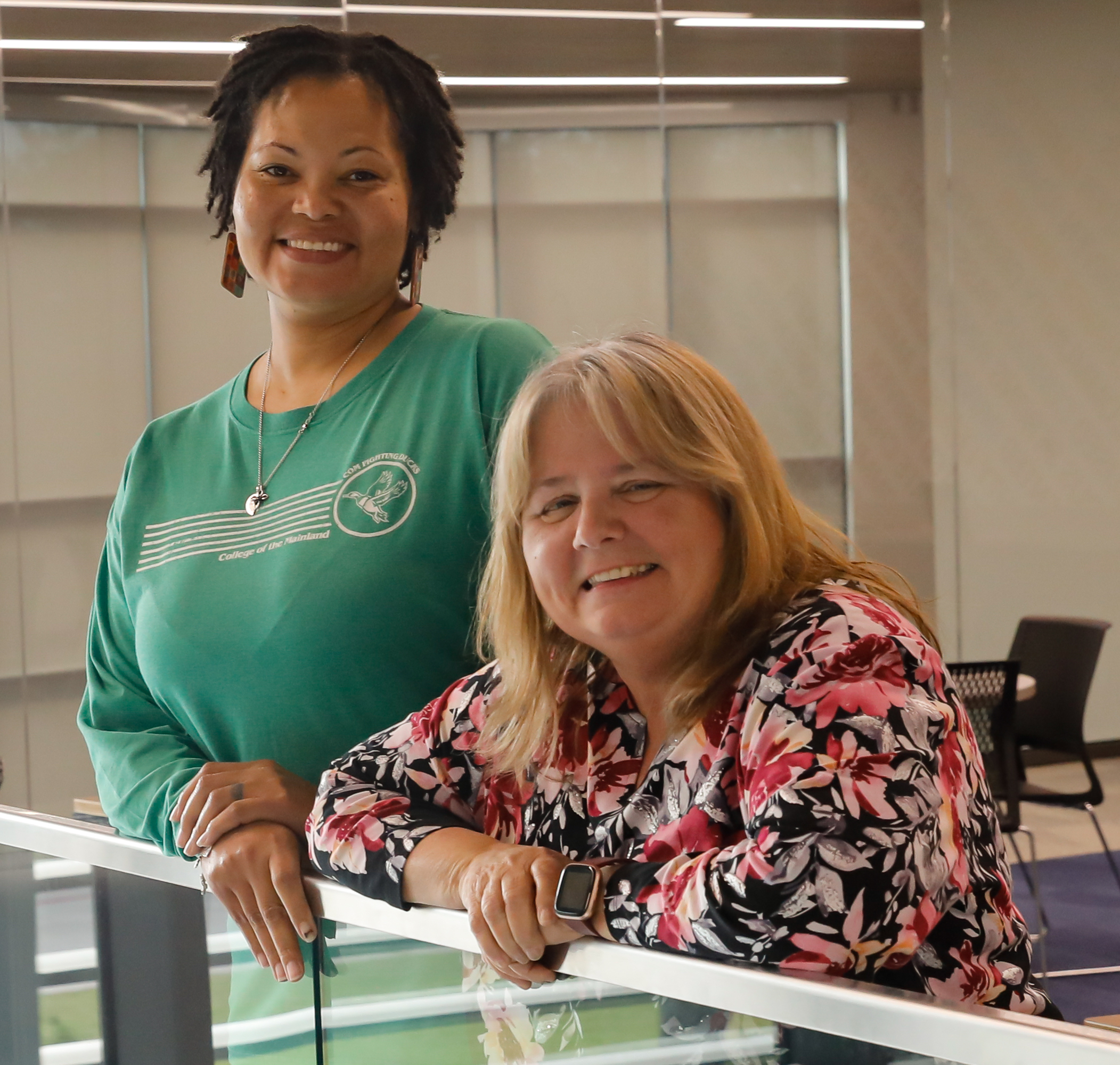
“I love the roominess of our lab and the new equipment we have for our students,” shared Elissa Martin, who teaches in the Process Technology department.
“I love everything about the new building. It’s so bright, fresh, and very teacher friendly and accommodating for the students’ needs,” said Karen Kupsa, who also teaches Process Technology.
She, along with all the other PTEC teachers, are very familiar with working conditions that aren’t the most accommodating as most of them have worked in the petrochemical industry.
Kupsa was once an operator working for Union Carbide. Within six years of working as an operator she moved up to chief operator. “I was the first chief operator at Union Carbide,” said Kupsa.
Elizabeth Wilson, another PTEC teacher, graduated from COM in the 80’s and then worked for 20 years as an operator.
“I sat in the classrooms of the old building learning the same things I’m teaching my students,” said Wilson. She also taught in the old industrial building and is very thankful to be in the new one. Her students unanimously agreed the new building is a much better place for learning.
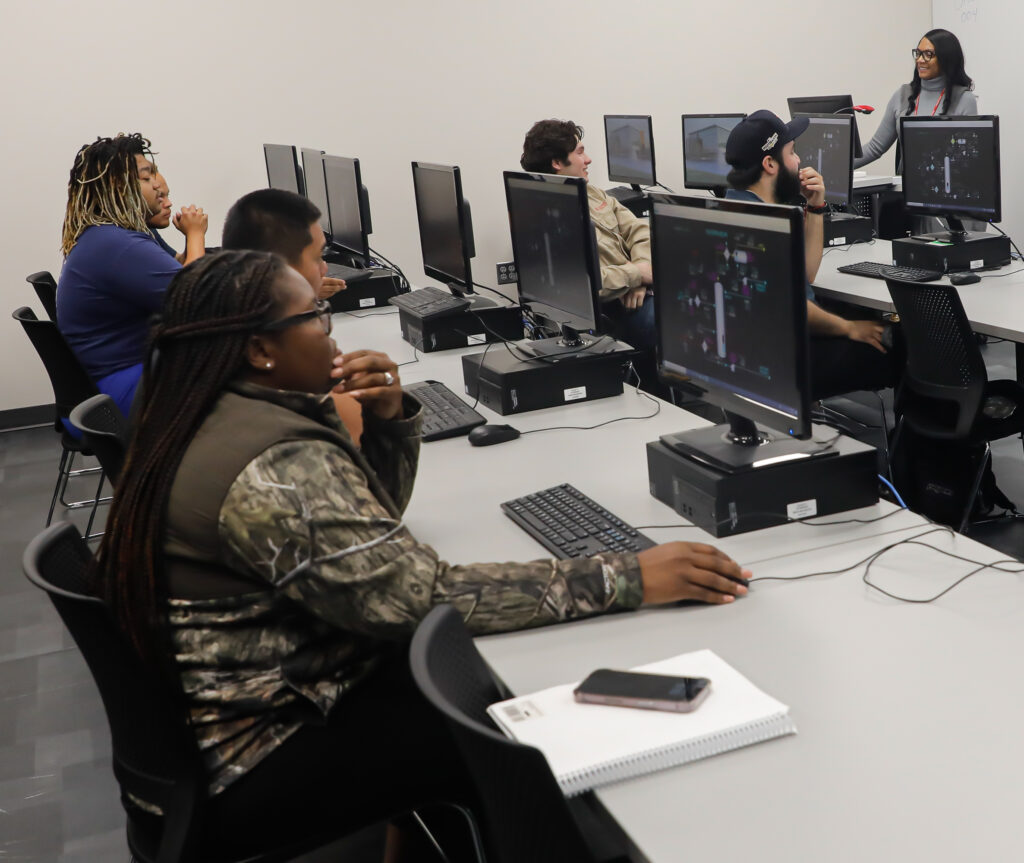
With simulators of an operations unit on a computer, her students learn the skills needed to troubleshoot problems that will need to be solved in a real work environment as an operator. The simulators come with sound, which means alarms go off when something is going the wrong direction.
“We didn’t have the simulators back when I was a student,” shared Elizabeth.
Derrick Lewis, another teacher in the PTEC program, is available to answer all the questions an inquiring mind might have as they learn about the tools of the trade. He too loves the new building.
George Njoku, who teaches classes in the Occupational Safety and Health Technology program, loves the new building. “This is a godsend. It’s wonderful to be in this building,” said Njoku. His department prepares students to be able to identify risks and reduce risks in workplaces.
“We were the first to create a process technology program and we haven’t been able to improve on the building and equipment for 40 years,” said Nichols.
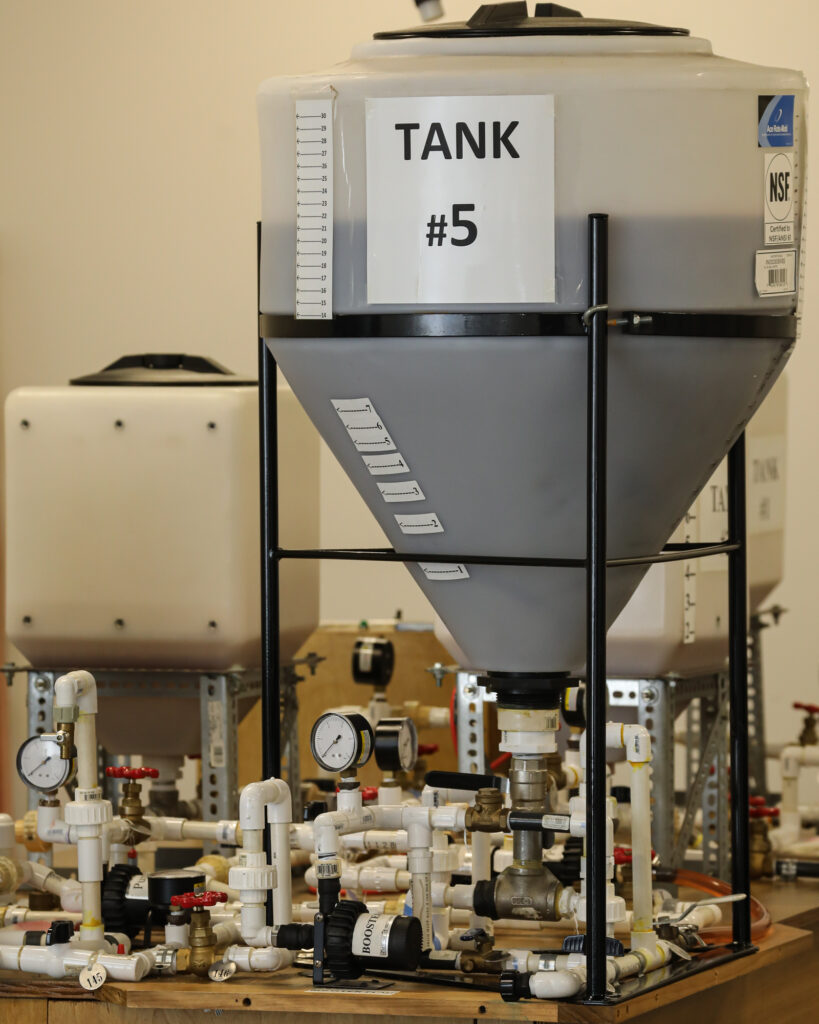
Process Technology is a program for training potential employees in the petrochemical industry to be able to operate the units that transport fluids. Units are complex mazes of pipes and valves. The school now has a new outdoor model unit that is scaled back in size along with new mini models inside the lab area.
COM also has an HVAC program which for a while had been located on different campus. Now it is back on the main campus housed in the new building. Also in the new building is the Collegiate High School program and they too are excited to be in a new building.
Another use within the building space is for a tutoring center which is available to all COM students.
Ceilings are high and the walls are painted in a soft shade of grey with encouraging murals located in the spacious hallways. Climbing the stairs is encouraged but elevators are available. Students can take a break and enjoy an expansive view on the terrace of the third floor.
Not only can you see the expansive view of the Texas Coastal Prairie, but you can also look down at the single level building that has very few windows and once housed the Industrial careers programs. The old building is scheduled to be demolished.
Learning and teaching in a new building is exciting but the future rewards of the industrial career’s programs are the focus of all that happens for the students and the community.
“We are preparing them to go into the workforce in our community so that the community has someone trained in all the skills that are needed right within the community,” explained Nichols.