By Sue Heath
The Texas coast is mostly without natural forest cover. Where it is not cultivated it is largely coastal prairie with fresh and brackish marshes in the lower areas. Most remaining coastal prairie is used to graze cattle. This open terrain is broken only by groves dominated by coastal Live Oak.
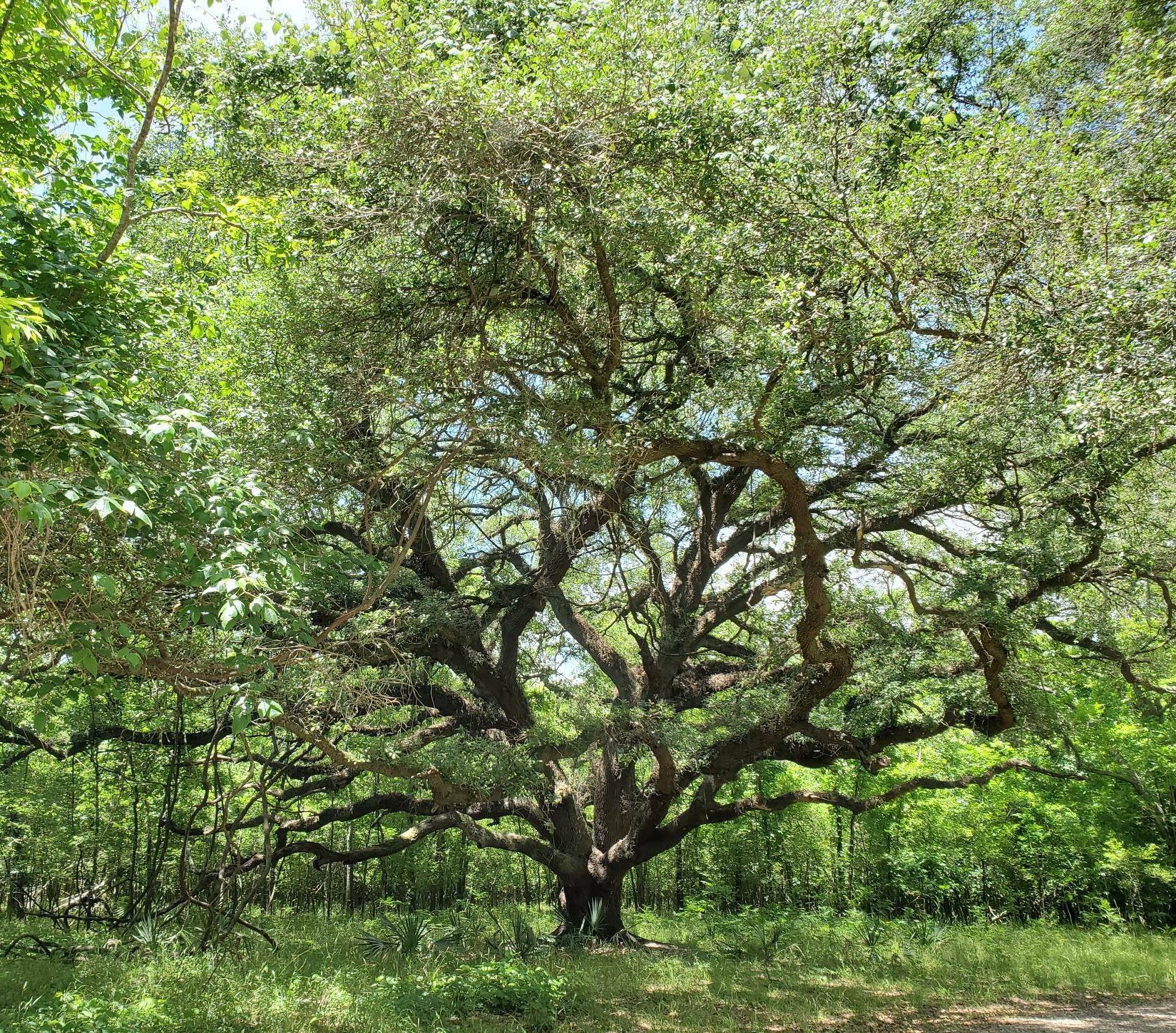
This venerable tree, relatively impervious to the ravages of the coastal environment, often forms rounded groves of various sizes locally known as “mottes”. These result from the live oak’s ability to send up shoots from its expansive root system forming thickets and eventually substantial groves. The oaks in turn provide the shelter that less hardy plants require resulting in a dense, nurturing oasis in the extensive grasslands.
The mottes are particularly important to the millions of migrating birds that pass through the Texas coastal region twice a year. They are of special importance in the spring when birds arriving from a non-stop flight across the Gulf may be drained of energy from bucking headwinds and turbulent weather that usually accompany cold fronts. Under those conditions the oak mottes can literally mean the difference between life and death to exhausted songbirds that may have been on the wing for 18 to 24 hours.
On the other hand, an oak motte can be virtually birdless during favorable weather for migration – that is with helping winds and fair skies. Under these conditions, arriving migrants appear over the coast during midday and have plenty of reserves to continue flying until they are well inland before landing in the evening.
But on days with rain, thunderstorms, and strong headwinds, a single oak motte may be an escape hatch which can save hundreds of birds’ lives. Without this sanctuary, they would perish from exhaustion, dehydration, or to predation which their weakened condition renders them vulnerable. With food-producing plants and the insects that feed on them, the shelter provided by the interlacing oaks and understory shrubs provides these lucky travelers with a chance to survive.
Coastal mottes perform an important function in the lives of migratory birds in fall migration also, although it is not quite as dramatic. Southbound birds have a more leisurely migration, moving down the continent in a series of relatively short hops, stopping off for periods of time where resources are bountiful to fatten up.
More birds take a path around the Gulf through Texas and Mexico in fall than in spring, so when they reach the coast the mottes act as their stepping stones. For those that do make an overwater flight the motte is a last chance to “top off the tank” and be in peak condition for the crossing. The late summer-early fall period is one of plenty when fruit-bearing trees and shrubs, nectar producing native flowers, and insect populations peak.
Coastal live oaks are tough, and can stand up to most of the extremes of nature, including hurricanes. Indeed, they help stabilize our coasts against such catastrophic events. Live oak mottes thrive on some of our public lands where they have been protected. Well developed mottes can be seen at Aransas National Wildlife Refuge, San Bernard National Wildlife Refuge, the Candy Abshier Wildlife Management Area at Smith Point, and Goose Island State Park in near Rockport hosts the famous Big Tree, the Texas state champion Virginia live oak. It is considered one of the largest live oak specimens in the United States. It’s a must-see for visitors to the area!
Photo by Brazos Bend State Park
Caption: A Live Oak at Brazos Bend State Park

