
By Alex Coenen
Fall migration has begun for many bird species, which means that we will be seeing more variety of birds coming through our part of the world. These migrants face many dangers along their journey, not the least of which is dangerous weather. During fall migration, hurricanes may hinder the seasonal movement of birds and deter them from reaching their intended destinations. Birds may hunker down to ride out the storm, flee to a safer region, or fly ahead despite everything. Unsurprisingly, many birds die due to ending up in the eye of the storm.
Non-migratory, resident birds also suffer during a hurricane as their food supplies are ripped from vegetation and habitats destroyed. This effect may be exacerbated on species which live on small islands or have small populations. For example, the critically endangered Puerto Rican parrot was once wiped out to only 22 individuals after Hurricane Hugo hit the island in 1989 and decimated a substantial portion of their habitat.
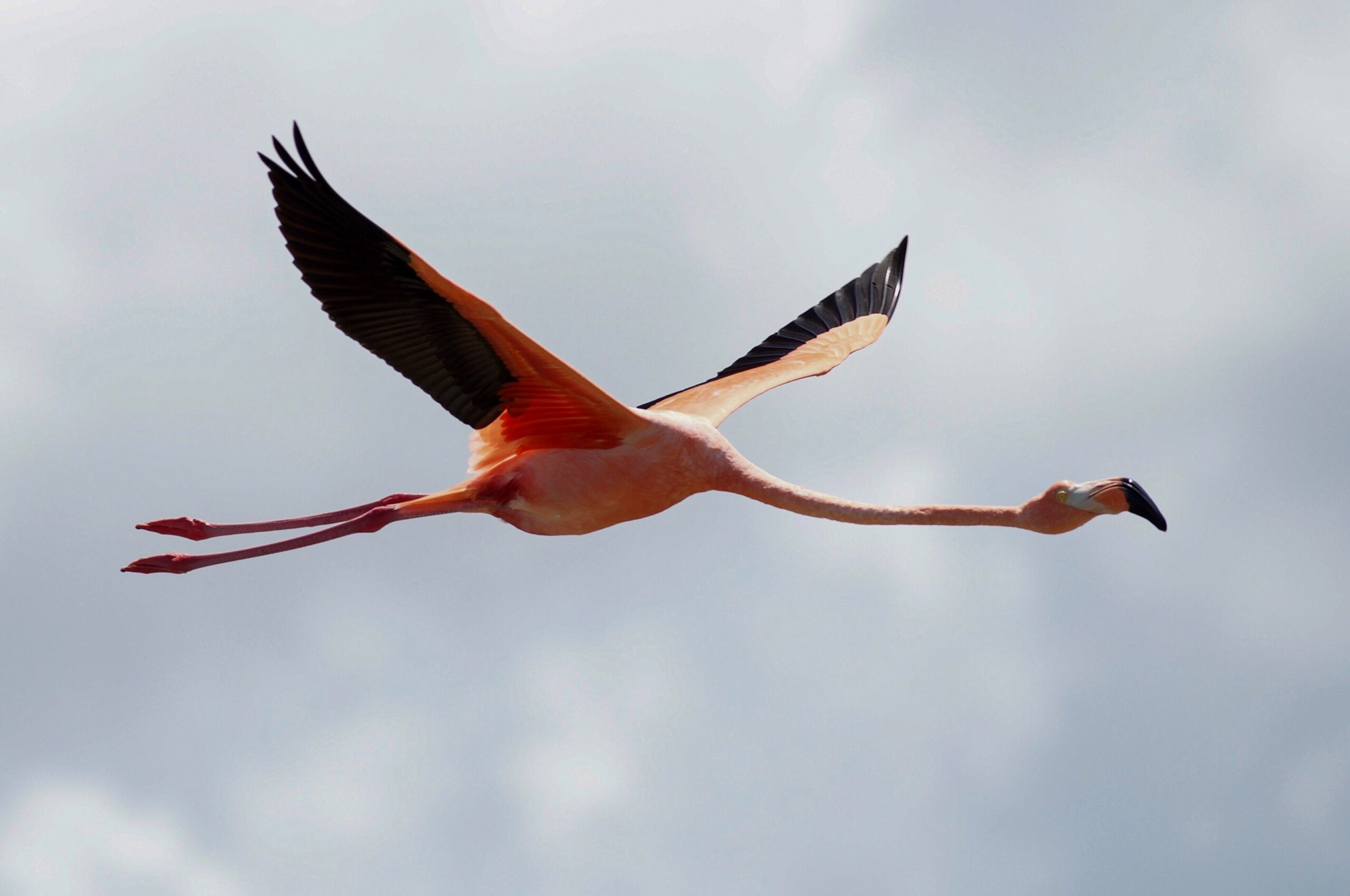
If you’re in tune with the Texas birding community, you may remember hearing about a group of American Flamingos spotted near Galveston on the Bolivar Peninsula after Hurricane Idalia had progressed through the Gulf of Mexico. These birds are not normally seen in the state of Texas, so they were a rare sight.
The hurricane likely disrupted these birds’ normal seasonal movement, and they may have needed to rest before continuing their journey to their intended destination. When the time comes, it is possible that these displaced groups of flamingos may attempt to fly back south to their home ranges or perhaps they might join the small population that resides in Florida. Though a longshot, this would help to reestablish a breeding community of flamingos in a region where they were decimated due to hunting for their feathers.
North America is not the only place where birds can be displaced after a hurricane. In the United Kingdom, North American songbirds have been spotted after Hurricane Lee tramped throughout New England and Nova Scotia in early September. Birds migrating south along their normal migration routes were likely redirected by the hurricane and kept flying East to the nearest landmass. Birders in the UK were delighted by the arrival of rare birds, but this appearance of new birds indicates a bigger problem.
Most birds that had to face the brunt of the storm likely never made it to the UK and died in the Atlantic along the way, with the few lucky ones being reported by UK viewers. The chances of getting back to North America are slim for these lucky survivors. Some may move south to Africa in pursuit of suitable wintering habitat, but being out of their normal environment means these vagrant birds won’t find the right food, may fall victim to new predators, or a whole other swath of issues. Whatever the case, the chances of survival for these small songbirds are extremely low.
According to climate models, the frequency and severity of hurricanes in the Atlantic will increase as temperatures rise. One or two hurricanes a season could displace thousands of birds, but increasing storms means increasing stress to withstand the bombardment of multiple storms a year. This will have drastic impacts on North American bird populations, especially if these hurricanes increase in frequency during fall migration season. The best we can do is to protect essential habitat to mitigate the effects that these disastrous storms may have on bird populations.
Photo by Brandon Trentler under Creative Commons Attribution 2.0 Generic license
Caption: Flamingo flying

