by Julia Juarez
One of the challenges that birders, naturalists, and animal enthusiasts face is identifying species. It can be difficult to do in the wild, especially if the species is sexually dimorphic. Sexual dimorphism refers to the difference in size, shape, or other characteristics between the sexes of a species. In dimorphic species, males and females will exhibit different features, colors, behaviors, and even sounds.
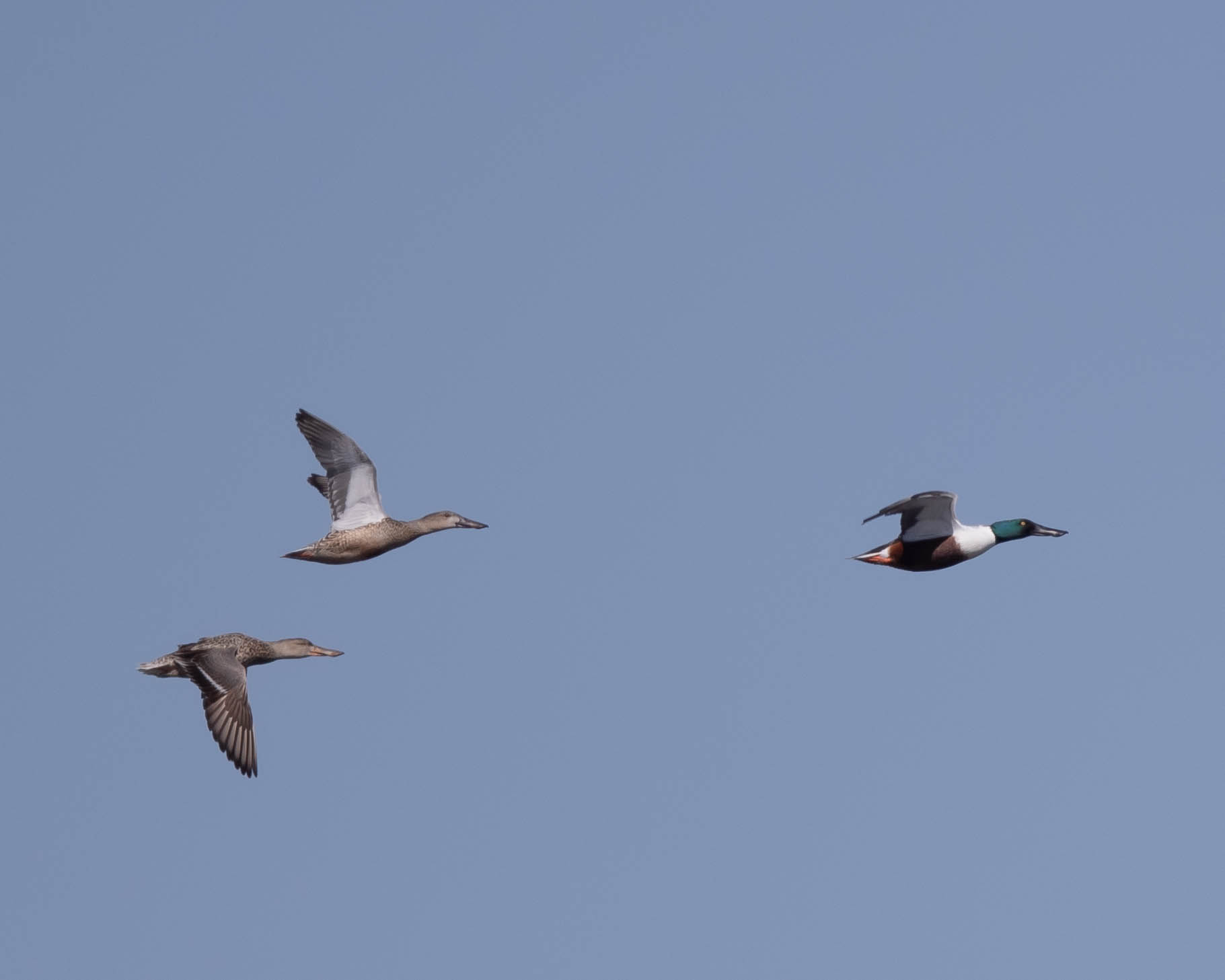
Many bird species are noticeably dimorphic. As you may already know, the males frequently show off to the females with their vibrant colors or over-the-top tail feathers. The females, on the other hand, are frequently more muted. It is the males who sing their elaborate tunes in the wooing process and will display courtship behaviors, such as extravagant dances.
Of course, not all species of birds show dimorphism. Some species of penguins, for example, require a blood test to determine their sex. There are also birds which have only very slight dimorphic characteristics. An example of this would be the Chestnut-breasted Malkoha. The males have a pale blue iris, while the females have a bright yellow iris.
Birds aren’t the only species that show dimorphism. Some mammals, insects, and many other animals display it as well. The mandrill is a great example of dimorphism in mammals. When comparing the sexes, the male is much larger, has bigger teeth, and has a brighter face and rump when compared to the females. Fun fact: Mandrills are the largest monkey in the world!
The Bornean orangutan, another primate, is dimorphic as well. The male in this great ape species will have more prominent facial cheek pads and is substantially larger than the females.
The males of the California sea lion are much larger than the females as well. The males can grow to be over eight feet long and weigh around a maximum of 1,150 pounds, and they display more aggressive behaviors than female California sea lions. Meanwhile, the females will only grow to about 7 feet long and weigh up to 220 lbs.
In sexually dimorphic mammal species, the males tend to be larger, but the opposite is true in insects. The females are large and in charge, and in most cases, it is the female who has the vibrant colors and flare.
An example of a dimorphic arachnid is the golden orb weaver. In this species, the females can grow to be up to six inches long, while the males only grow up to two inches. And in the genus of phyllium, which includes some species of leaf insects, the female is much larger, and rounder. The female will also have a larger leaf-like cover over her wings. The male phyllium is much slimmer and smaller.
There are many other fascinating examples of sexual dimorphism in the animal kingdom besides what I’ve described here. If you’re interested, I encourage you to dive in and research more, as there is so much to be learned!
Caption: The male Northern Shoveler (right) is far more colorful than the females (left)
Photo credit: Jackie Hicks

