
By Ruth Ann Ruiz
The Post Newspaper Features Editor
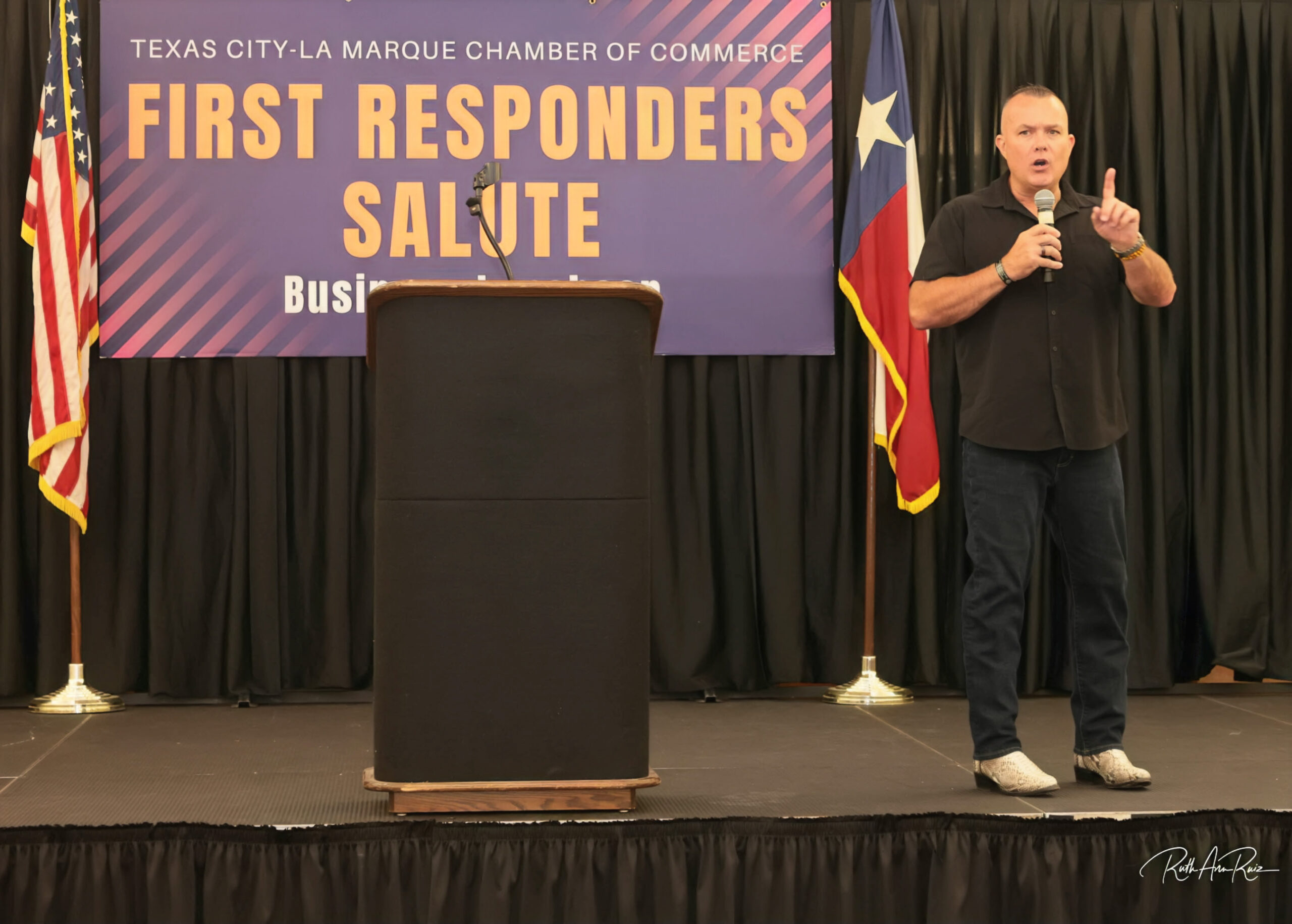
He paced back and forth across the stage holding the microphone, gesturing with his arms to the audience like a preacher with a mission to save his flock from the flames of hell’s fury. Retired Virginia Fire Lieutenant Kenny Mitchell is not a preacher, but he is on a mission to save fellow first responders from the flames of real-life torment that is often experienced by the men and women who serve our communities in first responder roles.
“It’s not normal to see a person’s insides on their outsides,” said Mitchell. “We see the worst.”
As a firefighter, he lost ten fellow firefighters to suicide, and his mission is to prevent first responders from taking that path.
Mitchell defines the career work of first responders as “inside the yellow tape,” a reference to crime scene tape, where they have mastered the skills of saving lives, taking care of other people in high-stress situations, and appearing to have it all together. But they don’t live just inside the yellow tape. First responders also live normal lives, with families, bills to pay, and funerals of loved ones to attend—what Mitchell calls living “outside the yellow tape.”
It’s their lives outside of the yellow tape that Mitchell recognizes as being in many cases very treacherous to manage.
He asked his audience to stand if they had dealt with depression, and a few bravely stood up. He then asked more questions, covering suicidal thoughts, friends who had taken their own lives, anger issues, and marital troubles. As he questioned further, more of the audience stood in acknowledgment.
He spoke of his own anger issues, giving the example of repeated trips to the hardware store to buy weed trimmers because he’d destroyed the previous ones in fits of anger.
His wife had died suddenly, and he had also witnessed many others lose their lives, which left him with survivor’s guilt.
His moment of reckoning came when his coworker Tom took his own life. It was then that Mitchell realized he had problems and needed to figure out how to deal with them.
Getting help for his own issues led him to discover the value of talking honestly with his coworkers about reality, rather than just running through the next item on their to-do lists. Mitchell believes talking with coworkers is a good step toward overcoming the difficulties of being a first responder.
“You have to love yourself a little more than you love the people you serve,” Mitchell said.
He also advocates for professional counseling for first responders. But he is adamant that a first responder will be the first one to know when he or she has problems, and that’s the time to begin reaching out to others.
His passionate presentation was part of the Texas City-La Marque Chamber of Commerce’s annual First Responders Salute and Business Luncheon. Close to 250 people were in the audience, including many first responders and people from other walks of life.
Byron Frankland, chief of police for La Marque, was in attendance. He confirmed the value of Mitchell’s presentation and the real need for first responders to reach out for help.
“Finally, we are recognizing it—the last 15 years we have made great strides as a profession in recognizing the need for support. Typically, a police officer will handle about 800 traumatic events over the course of their career.
“In ’92, at the police academy, there was nothing about mental health or dealing with stress. Now it’s part of the required curriculum.
“We recognized we needed to do something better because too many of our coworkers were headed down the path of self-destruction.
Part of our continuing education is on stress relief and mental well-being,” said Frankland.
Not only is mental health important, but the curriculum also includes nutrition coursework, and Frankland is noticing his officers are practicing healthy eating habits.
“A lot of my officers will bring in healthy food rather than going to a fast-food place. They will eat a salad or fruit. It’s making an impact on the new generation of officers.”
According to Frankland, the La Marque Police Department brings in counseling teams after a major violent event. All officers involved are debriefed and offered private, confidential counseling at no cost to the officer.
That support doesn’t end right after the event.
“That trauma might be triggered later, and then we get them hooked up with a counselor at no cost to them—we want to be sure they are the most productive officer, family member, and community member they can be,” said Frankland.
The city also provides officers with three confidential counseling sessions per year at no cost. If the counselor feels more sessions are needed, coverage can usually be extended with a minimal copayment.
Frankland is seeing the difference in his officers. “One of the things I’ve noticed with our younger officers is that they’re more open to discussing things in group sessions, and they’re more willing to seek help when they’re having problems.”
Even though things have come a long way, Frankland feels there is always room for improvement.
For Mitchell, that improvement starts with first responders looking out for each other, on the job and off it. His message to the room that day was simple: reach out. There is help, and there is hope.

