By Rebecca Bracken
Fall migration is in full flight! Right now, there could be millions of birds passing overhead, especially at night. Birds are undertaking their massive migrations from the warmer, chillier weather conditions of the northern hemisphere, to the warmer climates of the central and southern Americas as the cold air begins to set in in the north.
During this complex annual cycle, birds often take cues from the environment about when to time their migration, including changes in light throughout the day. Humans do the same; many of our tasks are dependent on daylight, with our schedules shifting often in response to the decreasing amounts of light in the fall. Unlike most humans, birds are often very active at night, with up to 80% of all North American migratory bird species choosing to migrate at night.
While migrating at night allows birds to avoid certain predators and use less energy due to the cooler temperatures the night air brings, it can also be risky. Natural light sources, like the moon, stars, and illuminated dawn horizon, help guide birds on their way. But as the night sky becomes less and less bright in response to rapid urbanization, birds are increasingly at risk.
It is estimated that up to 99% of all humans in the United States and Europe live beneath artificially lit skies, with many areas too polluted to see the Milky Way on any given night. While having light beyond sunset might be advantageous to many people, research suggests that enjoying a night sky filled with stars is critical to the endurance of many wildlife habitats and the survival of nocturnal animals. Because birds and many other animals are adapted to detecting low levels of natural light, blasting artificial light can cause confusion and disruptions to the natural systems.
For birds in particular, artificial light at night is a major issue, especially during migration. They are often drawn to the artificial light and, as a result, collide with large structures such as high-rises in large cities. City lights can create confusing and dangerous environments for birds to traverse. It is estimated that as many as one billion birds per year are killed by building collisions in the US alone. In many cases, it’s not only tall, glass buildings that cause problems. It is thought that up to half of these collisions occur with homes and smaller buildings. In reality, we don’t know the true number of birds killed by window collisions; many birds are simply stunned, but fly away and die elsewhere, either from an internal injury that wasn’t visible, or are slowed enough to allow a predator to catch them.
While many birds can avoid collisions or recover from one, others become too disoriented by artificial light and never make to their final destination. Artificial light can draw birds off course, or alter the timing of the migration. Light pollution is known to cause shifts in migratory timings by as much as a week. You may think that this doesn’t sound like much, but to a bird that is dependent on specific weather and food conditions, a migration mistiming can be deadly.
You can be part of the solution, and help us protected our bird species. There are many programs, including Lights Out, Texas and the International Dark Skies program, that work to educate communities about responsible lighting practices, pass dark sky friendly legislation, and continue to research this advancing field. You can get involved by following some simple guidelines – assess your home’s lighting, use DarkSky approved lighting wherever possible, and help spread the word about this important issue. Remember, during fall and spring, turn off your lights at night!
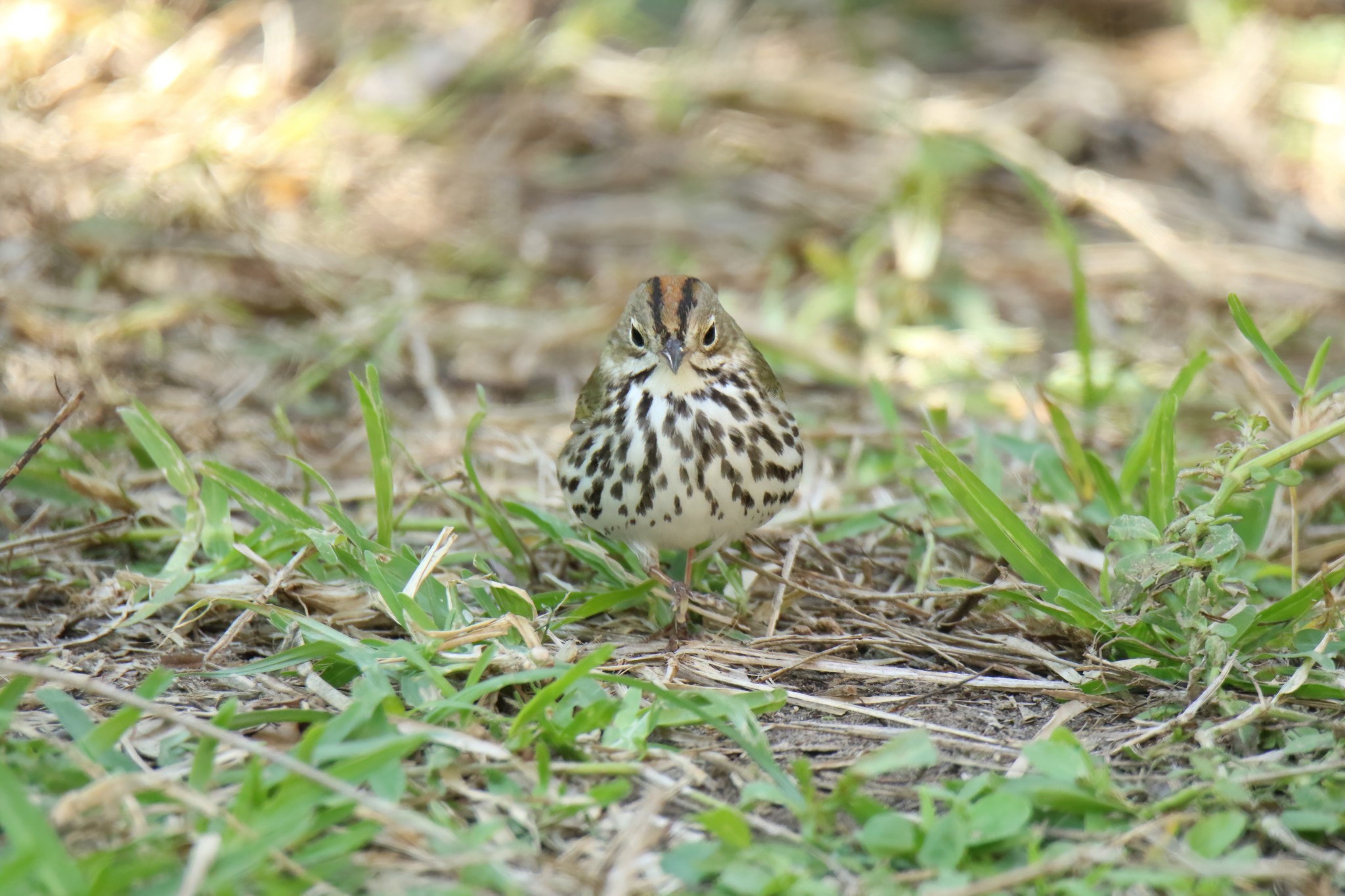
Photo by Sheryl Travis- Ovenbirds are one of many species that commonly die from window strikes

