By Martin Hagne
There are amazing avian events happening here along the Texas coast throughout the year, one of which is hawk migration in the fall. Unnoticed by most people, large numbers of raptors, such as hawks, falcons, kites, eagles, and vultures, funnel down along the coast from all across the eastern half of the continent into a narrow flight path about 50 miles wide over land. This stream continues along the Gulf coast into Mexico, narrowing even more as mountains squeeze the land mass down to just a couple of miles wide.
Because raptors are just about impossible to survey and count on their northern breeding grounds, there are hawk watch sites that have been established to monitor them where natural land features concentrate them heading south in their fall migration. These hawk watches help collect data which shows the population health of these species, and by collecting numbers over many years we can establish population trends.
Gulf Coast Bird Observatory is in its 30th year of raptor counting at our Smith Point Hawk Watch station. Each year, the count runs from August 15th through November 30th. This time period represents the peak fall raptor migration along the Upper Texas Coast, and Smith Point offers an exceptional viewing point as the birds head south. The station is located in southwestern Chambers County on the eastern shore of Galveston Bay and the hawk watch tower is located within Texas Parks & Wildlife Department‘s Candy Abshier Wildlife Management Area. There is an official counter on the tower 7 days a week from 8:00 until 4:00, and many days volunteers are helping out as well.
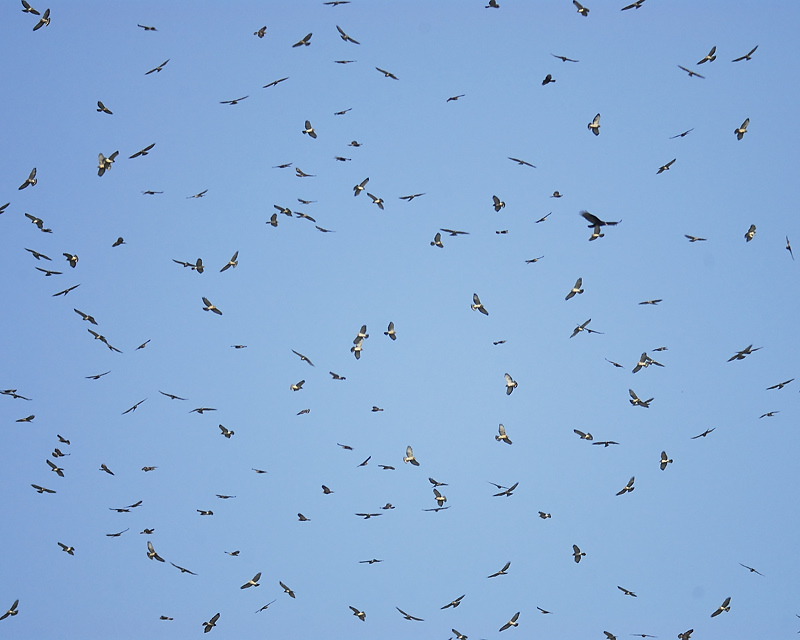
Although we typically record 20-21 species of raptors at Smith Point, the largest percentage of birds are Broad-winged Hawks, whose migration peaks in late September. Ten thousand or more of these birds can pass by the hawk watch in a single day when weather conditions are right. Raptors use the rising air currents caused by the sun heating the ground to move long distances, which uses a minimum expenditure of energy. The birds ride up these thermals until they reach the point at which the cooling air is no longer rising, and then, perhaps several thousand feet off the ground, they sail off for miles in the direction they want to go, gradually dropping until they reach another air current. Like all birds, raptors use stored fat as fuel during migration, helping them move the 4,000 miles or so between their northern breeding grounds, and winter grounds in Central and South America.
Ours is one of many hawk watches in the world. Further south, there is a fall raptor count at Hazel Bazemore Park near Corpus Christi which is staffed similarly. And a few hundred miles south of the Rio Grande in the Mexican state of Veracruz lies the grand champion of all New World hawk watching sites. It is aptly called the “River of Raptors” and it lives up to its name. Here, where the flight path is squeezed down between the mountains and the sea to just a mile or so wide, up to four million raptors are counted each fall.
GCBO will be celebrating 30 years at Smith Point on Saturday, October 3 at the tower! The Hawk Watch Celebration runs from 10:00am to 1:00pm and will feature free hamburgers, hotdogs, and cupcakes, live birds of prey you can see up close, booths, and of course we hope there will be many migrating birds in the air! We will also highlight the need for the tower to be rebuilt after this season. It is now 20 years old and the harsh coastal weather elements have taken their toll. Come join us celebrate the raptors and research! Hope to see you there!
Photo by Joe Kennedy
Caption: Broad-winged hawks and other raptors flying over the tower.

