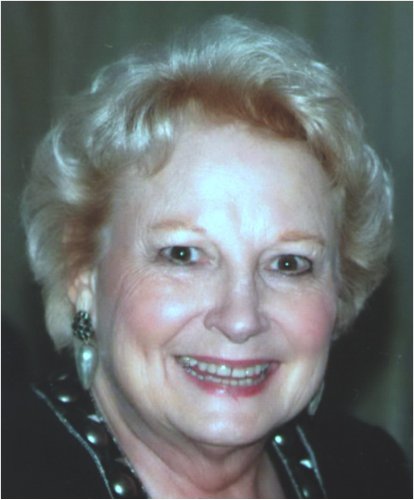
By Carol J. Rhodes,
I don’t like the dressing, “she repeated over and over as she tore the store-bought brown ‘n serve roll into small pieces. “And, the turkey’s cooked to death.”
I’ll bet the pumpkin pie will be good, though,” I managed, trying to be cheerful. It was Thanksgiving Day, and I was having dinner at the nursing home with Aunt Ella, who had suffered a stroke earlier in the year.
“Give me some hot coffee,” she demanded of an aide who happened by our table, where a clear glass bud vase with orange and yellow plastic flowers served as the centerpiece. I couldn’t help but notice the oilcloth cover. Its once-cheerful roses, faded from being wiped a few too many times, now contained a buildup of residue in the embossed design.
In the dimly lit room, the diners, most of whom were residents of the Sunnyside Nursing Home, sat four to a table. Over half of them were in wheelchairs, while others, seated on plastic-covered chrome-legged chairs, had walkers or canes nearby. This was the first time I had shared a meal with Aunt Ella since her illness.
In place of her beautiful Limoges China, we ate our meal, turkey, dressing, green beans, and canned sweet potatoes, off three-way divided plastic plates. A small plastic bowl held syrupy fruit cocktail with a red cherry on top.
Small paper napkins which kept sliding off our laps replaced her starched linen ones with the “J” monogram in the corner, and Made in Taiwan stainless substituted for the sterling flatware she always polished before holiday dinners. Instead of wine in crystal goblets, we drank weak iced tea from amber-tinted plastic glasses, and coffee was served to us in Styrofoam cups, not her delicate porcelain ones.
Around the room, I saw thinning gray hair, flowered cotton dresses covered by sweaters which had long ago lost their shape, terry cloth slippers, and sad eyes. None of these people wanted to be here. By the look on their faces, even those who couldn’t speak told me so. Some were here because their families didn’t want them around. Others were here because they had no family. Many, like my aunt, were here because they were too ill to be cared for at home. No amount of money could buy better care in the small central Texas town where she and my uncle, who had died the previous year, had lived all their married life.
Most of the residents of Sunnyside Nursing Home were friends of my aunt, who had taught school in the area for sixty years. All of the employees were her former students, or had children who she had taught. While the furnishings and equipment at the facility desperately needed updating, the managers, nurses and aides did the best they could with the limited funds from Medicare and Medicaid patients. Unfortunately, the private pay convalescents didn’t make all that much difference in the operating costs. But they treated Aunt Ella with love and respect, saw to her medical needs, tried to make her as comfortable as possible, and genuinely hoped for her recovery.
She died just two days after my Thanksgiving visit. Following the funeral, I went to Sunnyside to pick up a box of her belongings. One by one, the on-duty employees came by to say they were sorry and told me that even though she had been a difficult patient, she would be missed.
On my way out, I passed by the dining room. Lunch time was over and the kitchen staff had just begun clearing away the dishes. I poured myself a cup of coffee, sat down at a table near the door, and thought about the happy years I had shared with Aunt Ella, my mother’s sister.
She was the middle child of three girls, the renegade, the Auntie Mame. For the first six years of my life, my parents and I lived in the same town as Aunt Ella and I saw her almost daily. Even after we moved to another town, our contact was still frequent. At a very early age, I was impressed by her impeccably groomed hair, perfectly manicured red nails, and obsession with good taste.
Since Aunt Ella had no children of her own, she had always been like a second mother to me. I remembered the time she taught me how to thread a wiggly worm on a fish hook, assuring me that it was okay for a girl to enjoy the sport of fishing recalled sillier times when she and I danced t Clyde McCoys’s “Sugar Blues”, she in flats, leading, and I, in a pair of her highest heels, trying hard to follow the steps.
Aunt Ella introduced me to fine linens, antiques, Juicy Fruit chewing gum, and regaled me for hours with stories of when she and my mother were young. She had little or no tolerance for incompetence, as evidenced by her refusal to move onto another chapter in her English classes until every student knew and understood the previous one.
At age seventy, she was still teaching high school gym students, boys and girls, how to serve a mean tennis ball, a holdover from when she and my mother were doubles tennis champions in college. She was an avid sports fan, and constantly amazed us by recounting the statistics of college and professional football, baseball, and basketball games, and by knowing the names of all the players.
Thinking about this brought the tears that had been suppressed for the years she was ill, when I tried to keep up both her spirits and mine. Even though she couldn’t walk or care for herself, she never gave up the idea of going back to her home and resuming her life as it had been. She told me repeatedly, “I have to get well because there is still so much to do.”
This Thanksgiving Day, Aunt Ella’s Limoges China, heirloom silver, starched linen napkins, and crystal goblets will grace my table, and I will give thanks, not for these transient treasures, but for the legacy of her lasting memory.

