by Taylor Bennett
Gulf Coast Bird Observatory’s avian research team is continuing to monitor for non-breeding shorebirds along the Upper Texas Coast. Our main focus are those species that are classified as endangered, threatened, or of high concern due to habitat loss and climate change. The six target species that we monitor are Piping Plover, Red Knot, Snowy Plover, Wilson’s Plover, American Oystercatcher, and Black Skimmer. Gulf Coast Bird Observatory monitors Matagorda Beach, Bryan Beach, Quintana Beach, Surfside Beach, and Follet’s Island. During monitoring, we tend to see other migrants along the beach. One such species we often see this time of year is the Eastern Phoebe.
Eastern Phoebes are medium-sized birds belonging to the flycatcher family. They are migratory and can be seen in Texas in the fall and winter. They prefer woody habitats. For instance, we have observed them hiding out in the salt cedar along Matagorda Peninsula, at our headquarters in Lake Jackson, and at our Quintana Neotropical Sanctuary in Freeport.
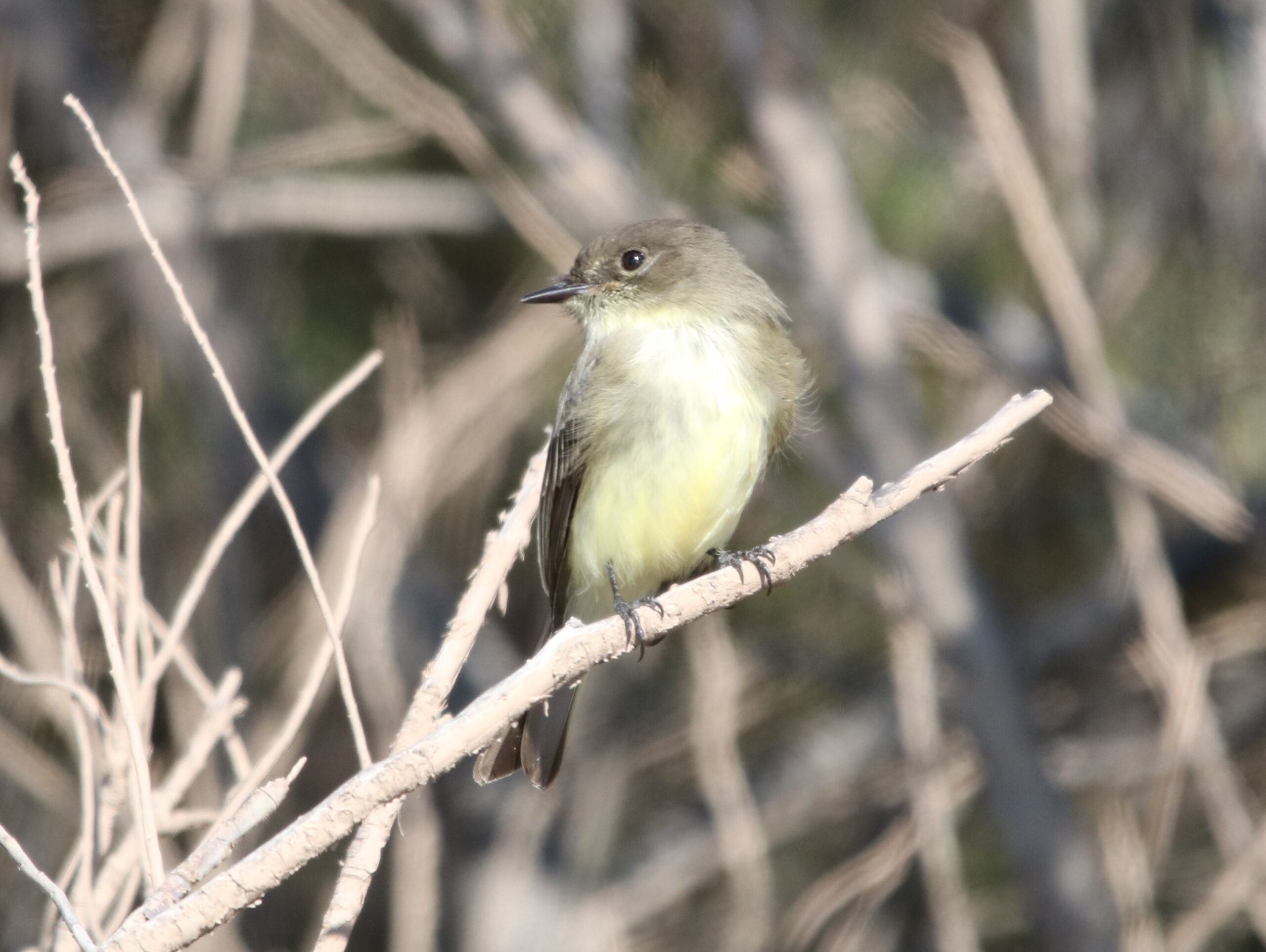
They are easily identifiable by their black-brown bodies, whitish yellow chest, large brown head, small pointed black bill, black squared tail, and short black legs and feet. Males are typically larger and darker than the females. Their call and their tail bobbing behavior makes them stand out from other flycatcher species. They get their name from their main call which is a raspy Fee-bee.
The Eastern Phoebe’s main prey are flying insects, which makes sense since they are part of the flycatcher family. They eat wasps, beetles, dragonflies, butterflies, moths, flies, midges, and cicadas. Occasionally, they will eat spiders, ticks, and millipedes. If insects are scarce, they are also able to eat small fruit and seeds.
Eastern Phoebes rarely eat things on the ground, instead typically catching their prey mid flight in quick outbursts. If you look closely at their bill, you will see something that resembles whiskers. These are actually modified feathers called facial bristles that help them sense their prey. When they catch their prey, they quickly snap their head back resulting in a snapping sound.
Eastern Phoebes breed in the Northern United States and Southern Canada. They are capable of having two broods per season and they will often use the same nest as previous years. They often utilize buildings and bridges as nesting habitat. They are also resourceful in terms of their nests. Instead of creating a new nest each season, they will often reuse nests of Barn Swallows and American Robins.
Eastern Phoebes are very territorial, even to their own partners. Once the eggs are laid, the female will actually chase the male away, so she can raise the chicks on her own.
Unlike our target species, the conservation status of Eastern Phoebe is of least concern. However, they are still protected under the Migratory Bird Treaty Act, so please give them their space. On behalf of Gulf Coast Bird Observatory, thank you for reading.
IMG_0713: Eastern Phoebe perched on a salt cedar branch on Matagorda Peninsula at Matagorda Beach, TX. Photo taken by Taylor Bennett on November 1, 2023.

