By Ruth Ann Ruiz
The Post Newspaper Features Editor
School is in session across the Gulf Coast of Texas and with that means all the extracurricular activities that follow a school year calendar are starting their fall schedules.
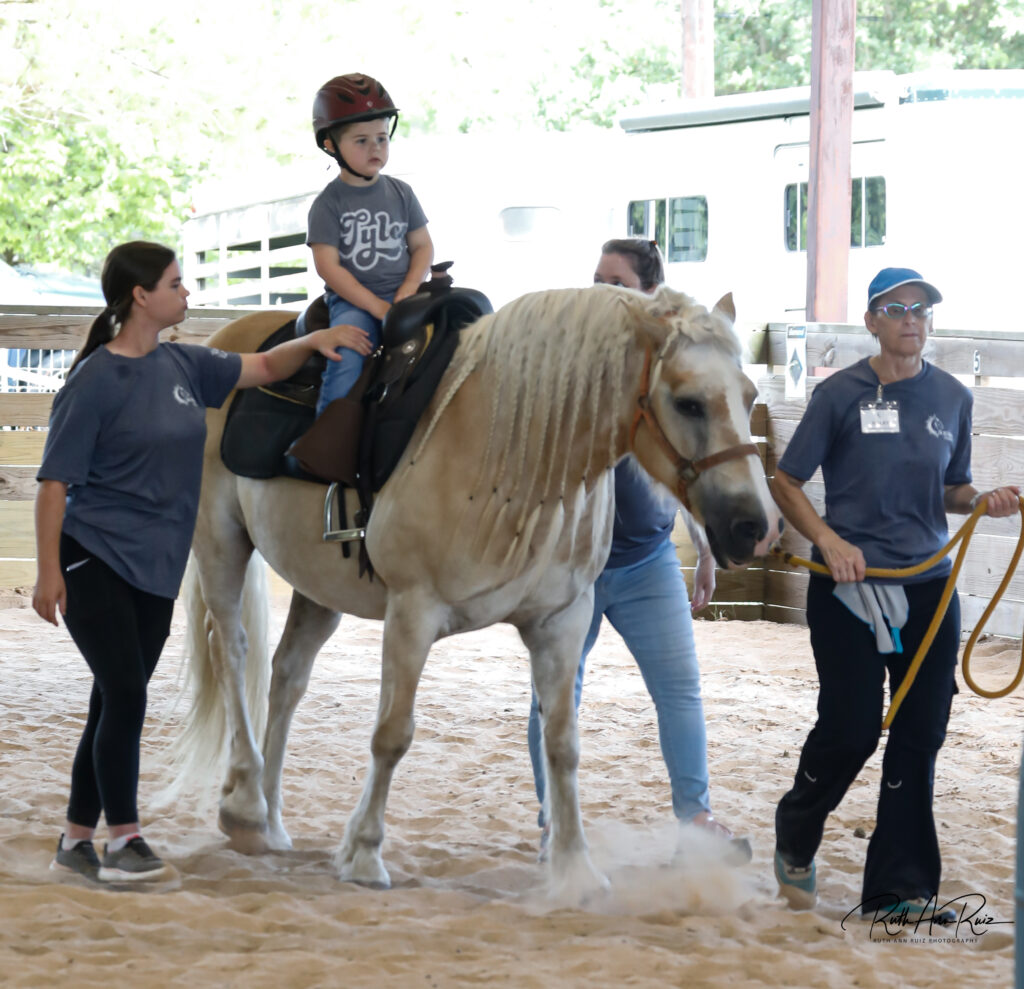
For little Thompson, who is four years old, he’s been on a waiting list to get into his extracurricular activities for just over one year. “We put him on the waiting list with SoleAna Stables when he turned three,” said his dad. Saturday was his first time to mount a horse and go for a ride.
Thompson appears for all practical purposes to be your average 4-year-old, but God blessed him with being a nonverbal autistic child. For him, goals of the day were getting him to mount the horse, say “whoa,” and keeping him safe and content on the horse.
He may have been given some challenges, but that didn’t keep him from mounting the horse for his first riding lesson, and he remained in the saddle till the end of the lesson.
There were a couple moments when everyone in the stables stopped as we heard his little voice ring out “whoa.”
Throughout his ride, he had two trained volunteers who walked along side of him keeping their hands on his legs for comfort and security. Also in the lineup was another more experienced volunteer who led the horse. At no time was he left alone atop of the horse or anyplace in the stable.
“Many times, a student won’t stay the entire lesson for their first ride. Some students won’t even get on the horse their first time at the stable. They realize it’s a big animal and we have to be patient and work with them.” said Sasha Camacho, founder of SoleAna Stables.
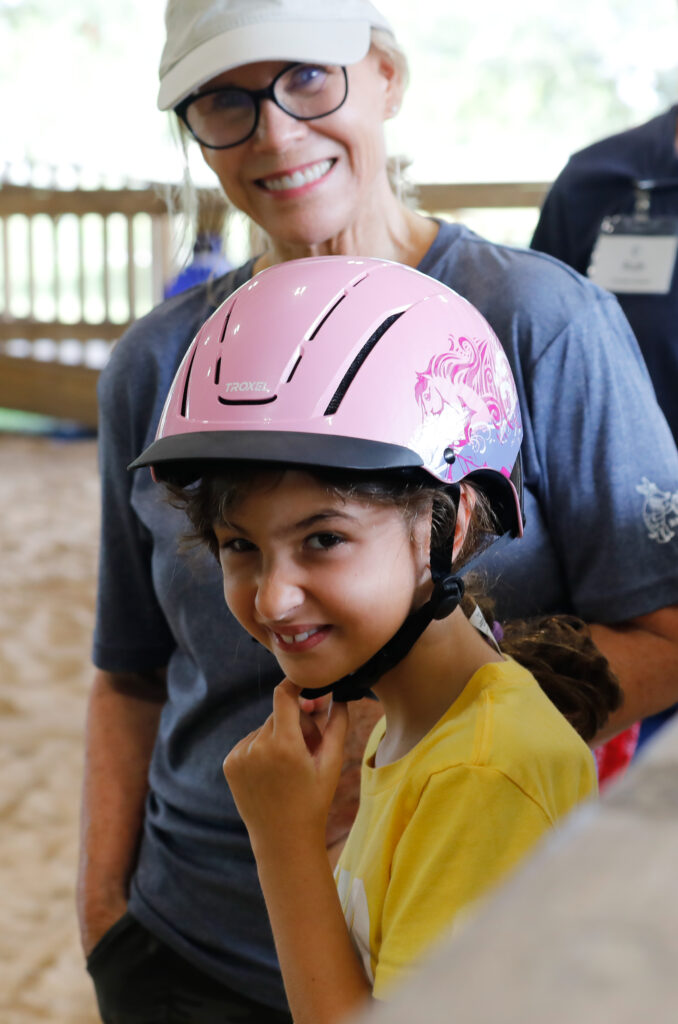
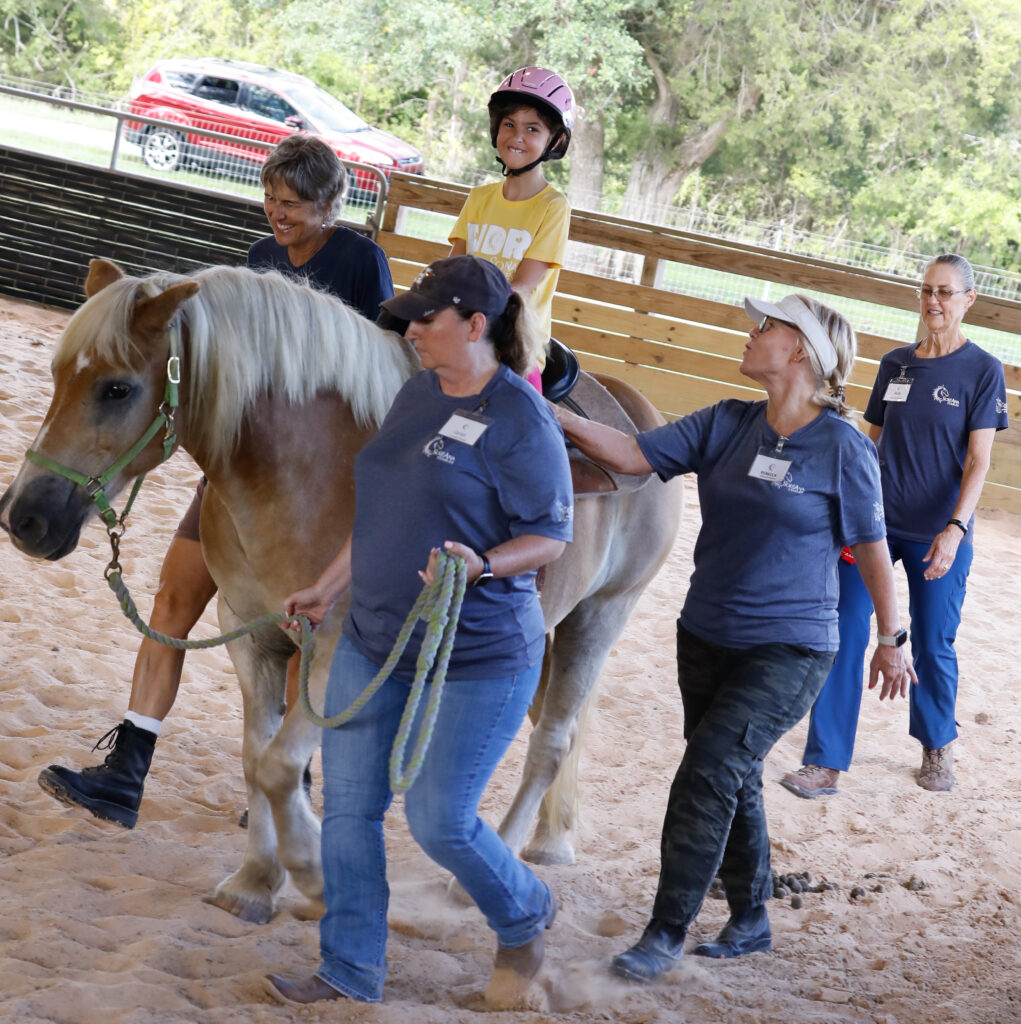
Paige is an experienced rider with 1.5 years under her belt. She is all smiles and happiness as she prepares for her lesson. Though she is experienced, she has limitations, and all the volunteers and staff are keenly aware of her needs.
Her volunteers keep her safe along with engaging her in conversation. She is autistic with verbal limitations and keeping her engaged in talking is part of the therapeutic aspects of her riding experience.
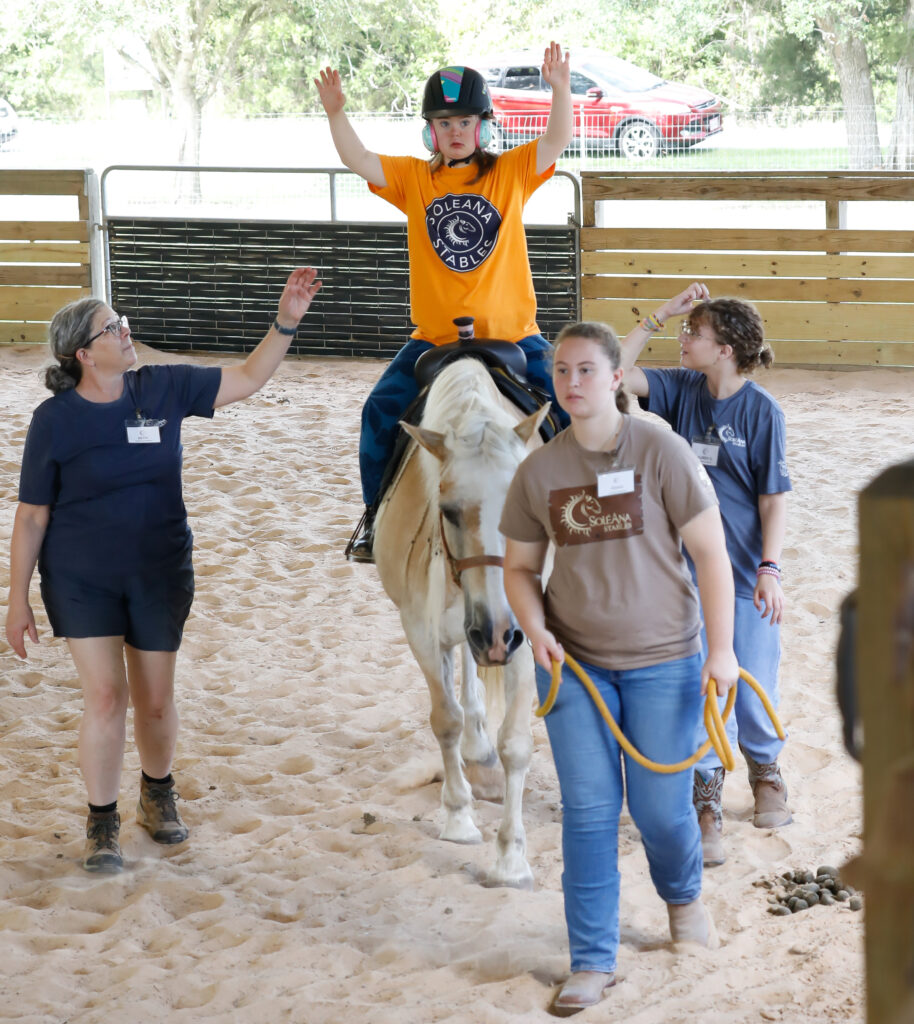
Delia, who just turned 13, has been riding since the stables opened. She is comfortable with the volunteers letting her try some tricks without their hands on her, but they are standing right near her just in case she needs them.
Raising their own Downs Syndrome daughter, the Camachos grew to learn the value of activities for special needs children that go beyond the academic classroom. A young Solana, their daughter, had taken riding lessons, but the teacher’s life was busy, and lessons were not regular. They tried Solana in ballet. “She just kept asking for Freddy, who was the horse she rode,” said Sasha Camacho.
Both of her parents wanted a solution for their daughter’s eagerness to get back to riding and with time and prayer they came up with an idea.
After several years researching, they went to work on developing their plan. Since 2016 their non-profit, SoleAna Stables has provided the Texas Gulf Coast a place which offers therapeutic riding lessons for special needs individuals.
Part of the program is building the rider’s confidence, balance, and language skills.
As the riders trot along in a circle, Katlyn stands in the middle calling out instructions for the riders. Katlyn is completing her doctorate in occupational therapy. Her volunteer time and training as a therapeutic instructor are part of her Capstone project. Katlyn is under the supervision of Dea Martin, who has her eyes covering the entire arena.
Riding horses isn’t just horse play for special needs individuals, it’s a time of building skills and accomplishing goals for their physical, emotional, intellectual, and social well-being. Lessons are supervised by a PATH certified instructor. The instructor assures that each rider and horse are safe and that all activities are geared for developing the goals of each rider.
SoleAna Stables is dependent on volunteers to keep the program going. There are the typical administrative roles which are filled by volunteers. Each student needs at least three trained adults, sometimes a fourth adult is needed during the ride.
It takes a special person to volunteer with a therapeutic horse stable. The individual must love both horses and people with special needs. Plus, it is a very psychically intense role. “I usually walk 10,000 steps when I’m out here,” said Janet, one of the volunteers.
The smiles on the riders, volunteers and parents confirm what experts know: pairing a well-trained animal program with special needs individuals for confidence and skill building is a win-win combination.
If you are interested in becoming a volunteer or would like to make a donation to SoleAnna Stables you can contact them directly at: director@soleanastables.org