Ashley Van Wieren
Nature enthusiasts may find themselves interested in beginning wildlife photography, but they don’t where to start. You might take photos of birds with your phone only to find out that they don’t live up to your expectations, often turning out grainy or blurred due to the distance. As a fellow newcomer to the world of wildlife photography, I can offer a few tips for those just starting out.
Selecting a camera and lens can be a daunting task. There are an abundance of cameras and lenses that are available to those interested in wildlife photography. Your budget can help to narrow down the options, and great photos can be taken on any budget!
Lenses and camera bodies are often sold or rented separately but can be sold in kits. Many photographers switch out multiple lenses with their camera bodies depending on the subject they are trying to capture. A telephoto lens is often most helpful when photographing wild birds as they allow you to photograph subjects from greater distances. Some camera bodies even come with wildlife eye tracking technology; this allows a user to quickly focus on the subject’s eye.
Other useful equipment for the beginner can include lens protection such as a lens cover or lens hood. Tripods and monopods are useful for stabilization, especially with heavier set ups, although handheld shooting has perks as well with its free range of motion. Long distance trips and camping can benefit from back up batteries. Memory cards are for storing photos, and they have varying capacity and read and write speeds.
Another tip is to do your research before going out into the wilderness! Learn about the three basic settings in photography: shutter speed, ISO, and aperture. If you want an easier experience you can shoot in auto, this means the camera automatically adjusts these settings for you. Go to your local camera store or birding hot spot and ask for tips; people are often happy to share!
It also helps to get comfortable with your camera and take advantage of free resources; YouTube and photography blogs are great places to start. Additionally, you can pay for a photography workshop, where an experienced photographer may lead you to wildlife hotspots and teach you helpful techniques with real time feedback.
Once you know how to use your camera, you can practice with a stuffed animal outside. Try to focus on the eye of the animal, as the eyes are the “windows to the soul.” When you get comfortable with this, try progressing to birds that are used to humans, so they are less likely to flee. Parks, beaches, and sanctuaries are great starters for beginners. You can encourage birds to stop by your own backyard by planting native species and offering clean water.
Pay attention to the foreground and background of your bird as well. You can slowly and quietly adjust your position to avoid a branch covering your bird’s face and to add interesting elements to the foreground and background. Try to capture behavior, as this brings interest to the photo. When photographing birds in flight with a handheld camera, try to keep your camera as steady as possible, rotating with your body rather than with your hands.
With enough research and practice, you will be getting shots you will want to share with friends and family. Most importantly, do not forget to be respectful to the wildlife and their habitats and have fun!
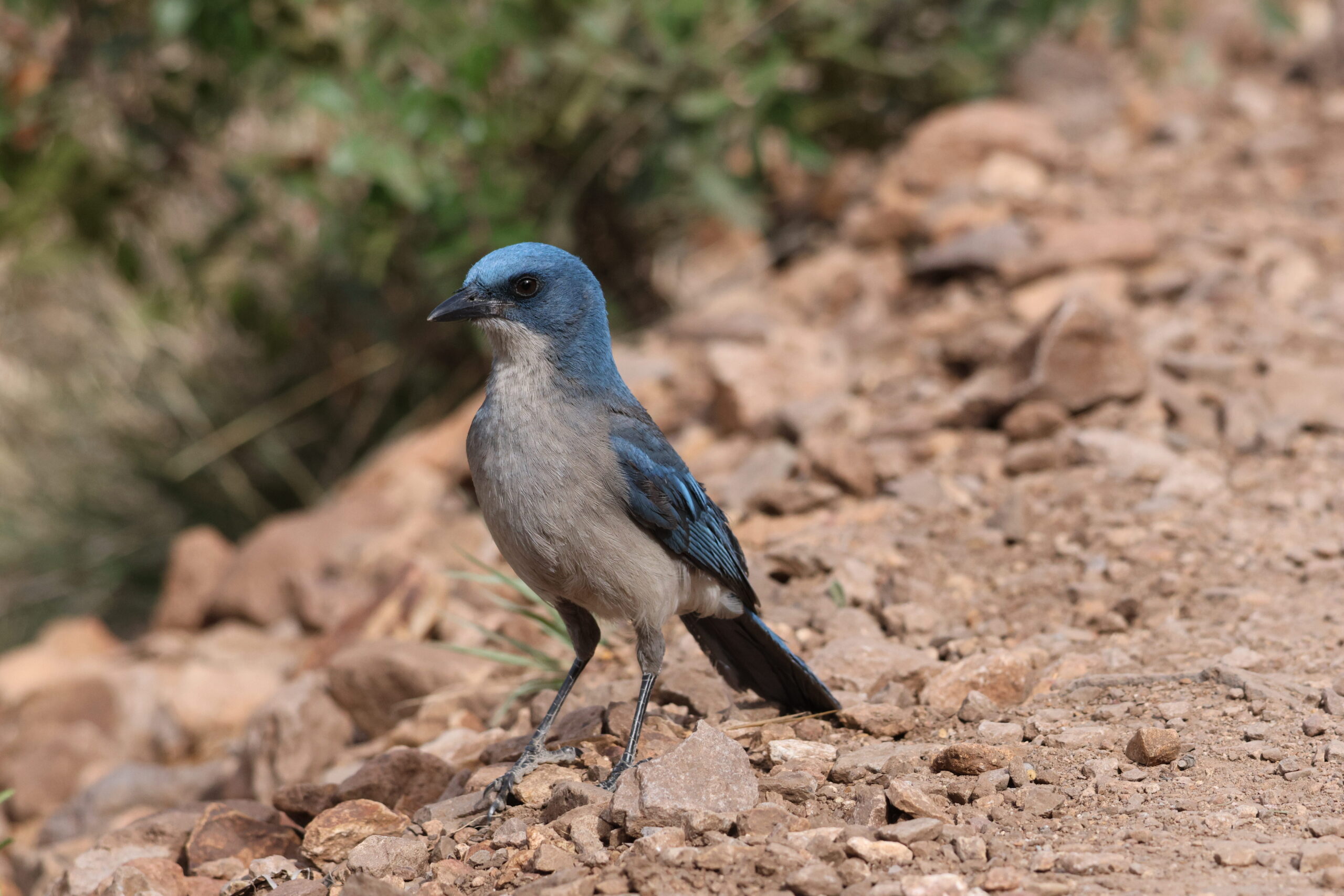
Photo by Ashley Van Wieren
Caption: A Mexican Jay taken by a beginner wildlife photographer at Big Bend National Park.
Ashley Van Wieren is an Education Intern at the Gulf Coast Bird Observatory, a non-profit organization dedicated to saving the birds and their habitats along the entire Gulf Coast and beyond into their Central and South America wintering grounds.

