
By Ruth Ann Ruiz
The Post Newspaper Features Editor
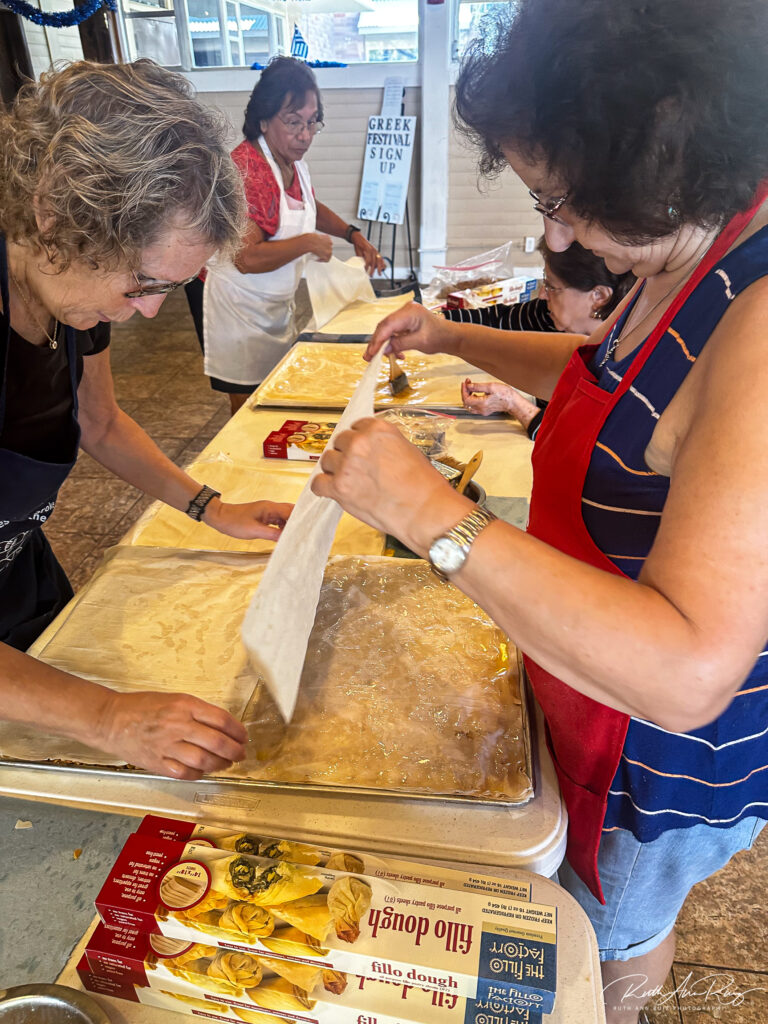
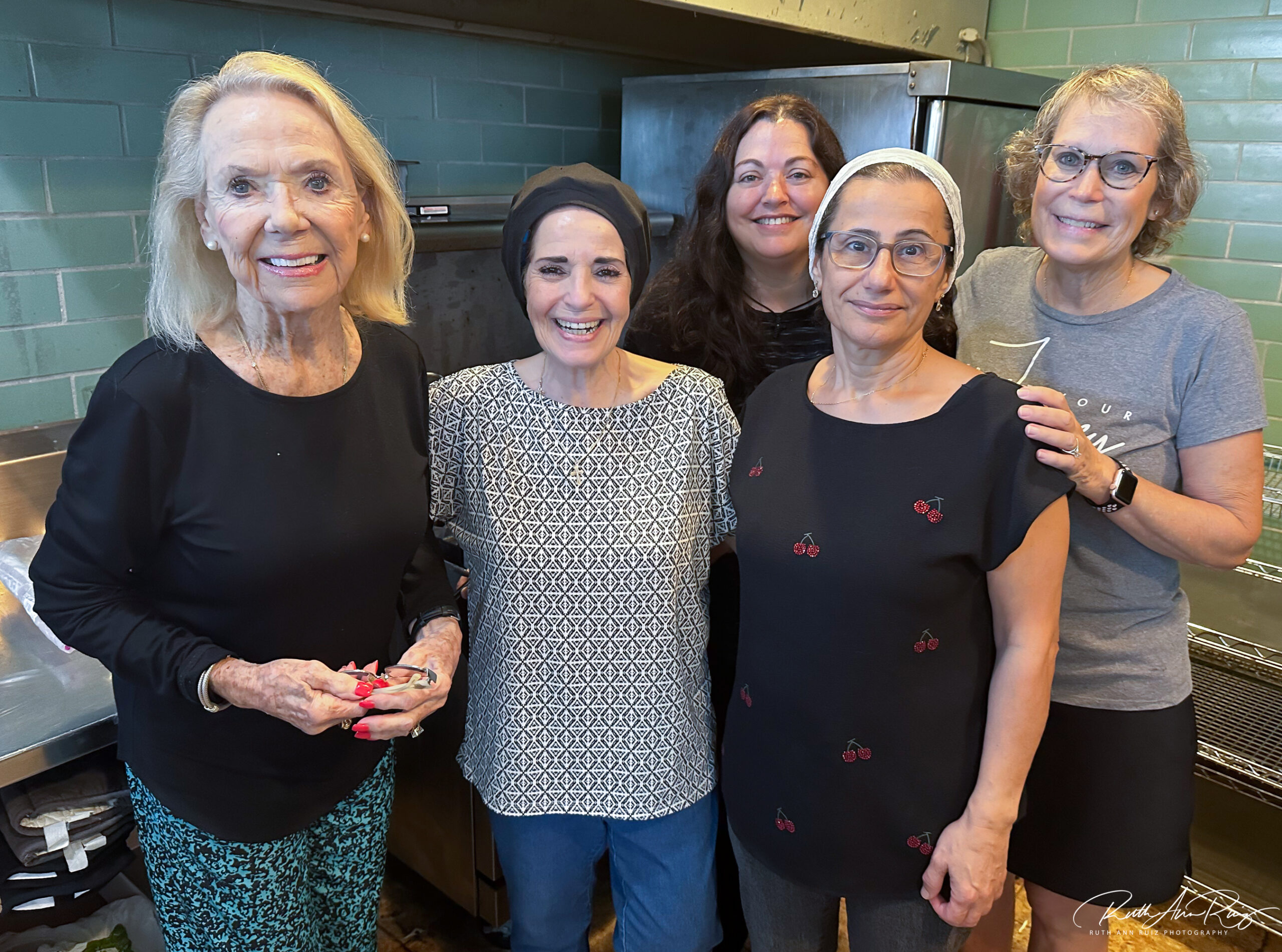
The ladies of the Assumption of the Virgin Mary Greek Orthodox Church in Galveston have gathered for a third day of baking in preparation of Galveston’s Greek Festival.
“Baklava is the most labor intense of all our cookies,” shared one of the ladies as she laid out layers of dough on a tray.
Ten layers of filo dough were placed onto a baking tray and then the famous mixture of nuts seasoned with cinnamon and sugar are piled on top. Then someone poured melted butter onto the mix. More layers of dough were added on top of the nuts and the process was repeated.
Before baking, the trays of baklava were covered with a honey syrup that will bake into the many layers and create the sweet delicacy that has been enjoyed for more than 1,000 years.
The bottom layer and top layer of dough are the thickest to keep the popular pastry together. All together there are about 40 layers of the thinly rolled dough in the ladies’ baklava.
There is dispute about which modern country can claim to be the originator of baklava. But in general, it is agreed baklava came from the Ottoman Empire, and therefore, nations which were once part of the Ottoman Empire, such as Greece, continue the tradition of making baklava.
No matter which nation is the originator, everyone agrees, baklava is an ancient delicacy worthy of continuing to please generations far out into the future and far away from its point of origin. The ladies of the Assumption of the Virgin Mary Greek Orthodox Church laid the dough and poured the nuts with their rhythmic team efforts, just as their ancestors have done. As a result, these ladies will provide the festival with an abundant supply of baklava.
A sign of the tradition passing along to younger generations is present with several young women in the group working alongside the more senior members.
Just like each of the previous days of baking, Popi, chairwoman of the pastry committee, declared lunch is to be served. And again, the ladies gathered at the circular table enjoying Greek delicacies. The conversations are as friendly as the on previous days, and the meal is once again a true feast.
The ladies collectively conclude that the Greek way of eating is healthy and provides for a long, happy life. Sitting amongst the women there are mothers, grandmas and great grandmas. The ladies fill the roles of a small community with each member knowing her neighbor and each one brining to the group her individual skills and contributions.
Post-lunch, the baking continues.
The ladies estimated that in preparation for the festival, they had made several thousand pastries. Together they were at the parish activity center for three days of baking from 9:00 in the morning till 9:30 at night. Their fourth and final day was spent cutting the baklava into individual pieces.
As I left them on their final day of pastry preparation, voices rang out with a summons rather than a question, saying, “You will be at the festival,”
Galveston’s 39th annual Greek Festival is just around the corner. It will take place on Saturday October 14 from 11 a.m. to 7 p.m. and Sunday October 15 from 12 p.m.to 5 p.m. Admission will be free, but donations will be appreciated, according to the event website.
For an additional source of information about the food and entertainment you can look forward to enjoying at the Greek Festival, you can visit. https://www.galvestongreekfestival.com.