A Veterans Day Tribute

By Ruth Ann Ruiz
The Post Newspaper Features Editor
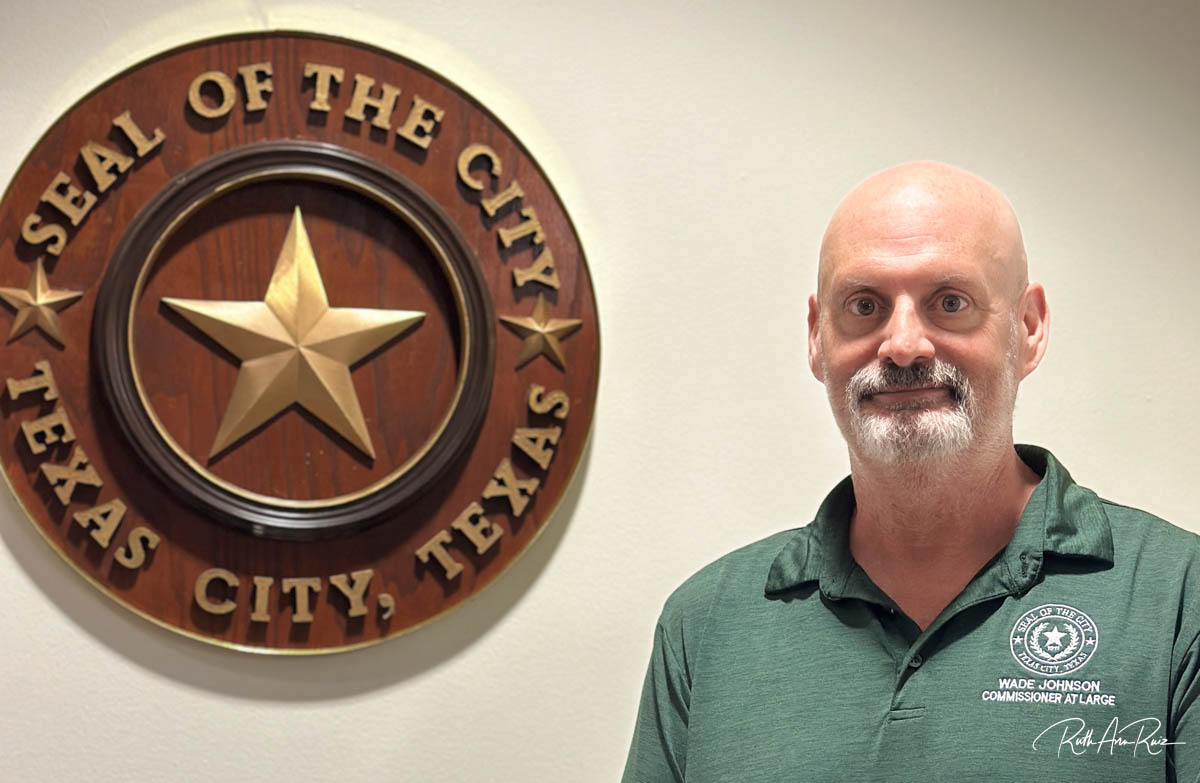
Sitting across from Wade Johnson in a conference room at Texas City’s interim City Hall, I listen as he begins to share memories of his years in the Army. He neither grimaces nor shows outward signs of pain, though he tells me it is almost always there.
The Texas City commissioner at large served two tours in Afghanistan and one in Iraq. He says he survived a vehicle explosion that killed four fellow soldiers and left him with injuries he carries every day.
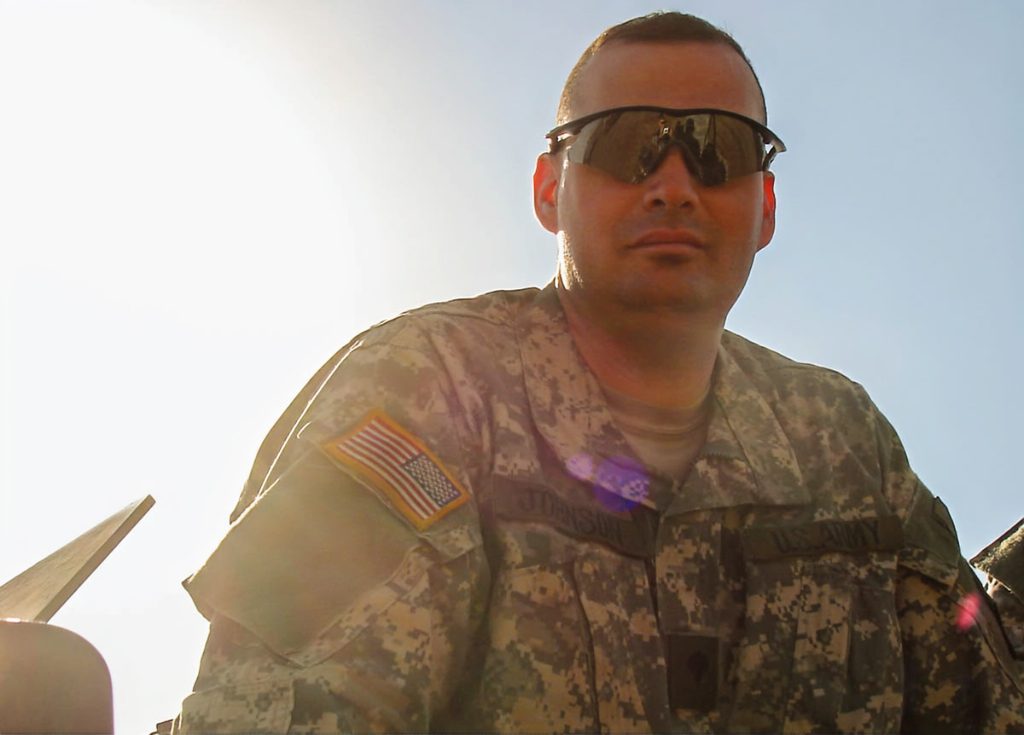
Before joining the Army, Johnson earned the rank of Eagle Scout. He believes in putting service to others above himself.
His military service began in 1989, when he left Texas City High School at 17, earned his GED and joined the Army.
“I had made a deal with my parents, that if I could pass all my finals without attending classes for six weeks, they agreed to let me drop out and join the Army,” Johnson explained.
Fourteen days later, he was in Uncle Sam’s Army. He has no regrets, even though his body and soul bear the wounds of an infantry soldier.
“If I had it to do it all over again, I’d do the same thing,” said Johnson.
Johnson later received his Texas City High School diploma under a state law recognizing military service, he said. He has also earned a bachelor’s degree and plans to pursue a master’s.
Johnson went to basic training at Fort Benning, where he also received his advanced individual training. He initially trained as Army airborne light infantry. From Fort Benning, he was stationed at Fort Bragg, where he received his first orders to a conflict zone.
“I was shot at for the first time in the jungles of Panama on December 20, 1989,” Johnson said.
“I was still 17 years old,” Johnson added. He was in Panama from December 1989 until March 1990.
He was also sent to fight the war on drugs in Central America. He described being dropped into fields of poppy plants, coca plants or marijuana, which he and his squad chopped down and then set on fire.
“Some of the hacienda owners would come out and thank us for clearing their field,” said Johnson.
Johnson was part of the Army infantry during the first Gulf War, when he stood ready to keep Iraq from invading Saudi Arabia. He also served in Somalia.
Even while serving overseas, Johnson took pride in his hometown. Texas City’s selection for the National Civic League’s 1997 All-America City Award remains a particularly proud memory.
“One of my proudest moments in the military was when Texas City was named All-America City,” Johnson said. “I was very proud and bragged about it to everyone.”
After his tour in Somalia, Johnson received leave to be with his wife in Texas City because she was experiencing complications during her pregnancy. While home, he had a heartfelt conversation with Jerry Purden, then Texas City’s police chief and a former Marine.
Johnson said he told Purden he wasn’t getting what he had expected out of joining the Army. He has never forgotten the chief’s response.
“It’s not what you get, it’s what you give back that effects people’s lives,” Johnson recalled Purden telling him.
The conversation renewed Johnson’s sense of purpose. When he returned to duty in conflict zones, he reminded himself that he was committed to serving others, regardless of the cost to himself.
Reflecting on his service in the Middle East, Johnson recalled standing up for what he believed was right and refusing to carry out an order.
“I refused to put my squad in danger,” Johnson explained.
He said he was demoted from E-6 to E-4 as a result. By the time of his discharge, he held the rank of sergeant, with a pay grade of E-5.
During his tour in Iraq, Johnson was riding in a vehicle leading a convoy when he saw a flash of light. He says five people were in the truck, and he was the only survivor. Others later filled in the details he could not recall: The vehicle had struck an improvised explosive device, or IED, and he was found 300 feet away.
“They told me the truck was blown in half, I don’t remember any of it,” said Johnson.
He remembers the survivor’s guilt he experienced after learning the others had died, and he remembers a chaplain who prayed with him every day. He said it was his faith that helped him through.
That was his final assignment. He sustained numerous severe injuries from the explosion, and after receiving initial medical care, he was discharged.
Since his discharge, he has received ongoing treatment for his service-related injuries.
Johnson has plates in his skull, a replaced shoulder, a replaced ankle, a replaced knee and damage to his neck and spine.
“It’s a price I’d pay again if I need to,” said Johnson.
He expressed gratitude that he returned with all his limbs, in contrast to many recent veterans who have returned home with missing limbs.
When he enlisted in the Army, he was six feet two inches tall. His injuries have reduced his height to five feet eleven inches, but if you watch him walk, you might think he is six feet or taller. He continues to carry himself as a man who is more than six feet tall.
After his discharge, Johnson returned to his family and his hometown of Texas City.
When I ask Johnson about the pain from his injuries, he says it is almost always there, but he lives with it.
What does bother him is the mental health care available to veterans. Many of his counselors have been located out of state, he explained, and a good portion of his therapy has been provided virtually. That is one reason he believes veterans need to be there for one another.
During our conversation, Johnson draws a distinction between being patriotic and being a patriot. When he enlisted, he said, he was patriotic. He now considers himself a patriot, a word he associates with action.
“I’m a patriot because I love my country and am willing to defend it,” said Johnson.

