By Ruth Ann Ruiz
The Post Newspaper Features Editor
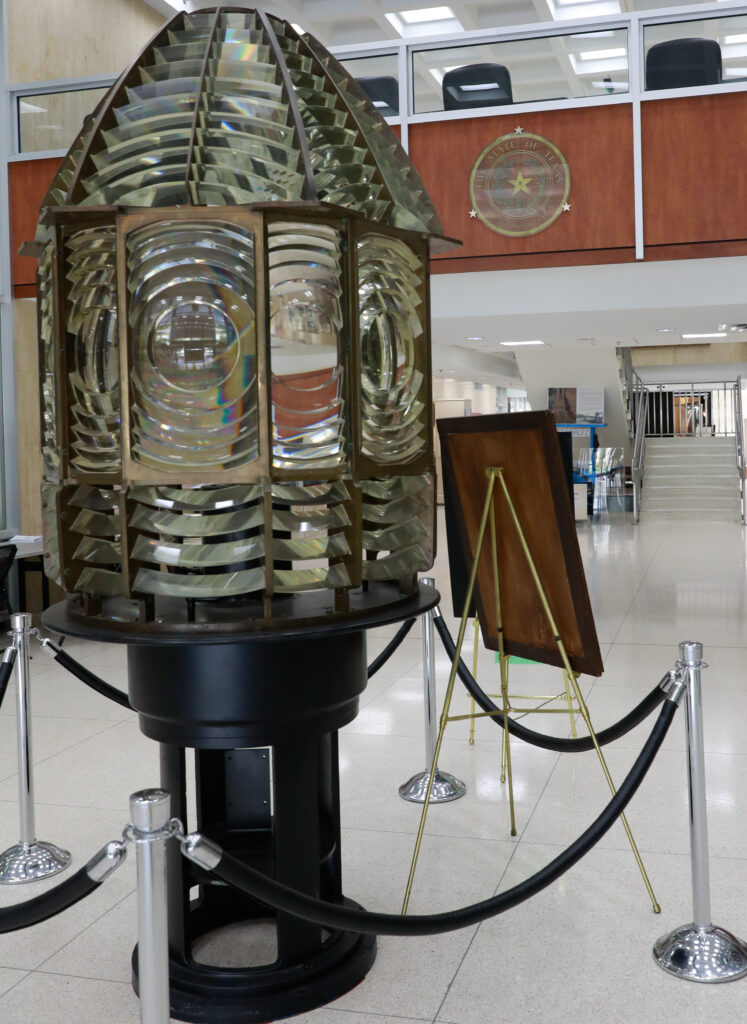
What is it? Why is it in the middle of the building? Will it help us get our county permits or pay our taxes? It’s the lens from the South Jetty lighthouse and it has been housed in the historic bank on Market Street since the early 70s.
Galveston’s Jodi Wright-Gidley is museum director; she first took the job in 2007 and held the position through 2011.
In 1972, Mary Moody Northern donated the former City National Bank building at 2219 Market Street to Galveston County for use as a historical museum, dedicated to the memory of her father, W. L. Moody Jr.
For the next thirty years, this location served visitors as the hub of Galveston County history.
September 2008 brought with it the destructive forces of Hurricane Ike. Although the artifact collections and exhibits were not harmed in the storm, the building’s electrical and air systems were severely damaged.
“All the collections and archives were high and dry, but the building was unusable,” said Wright-Gidley.
The Museum found a temporary home in the Shern building and while negotiations for a permanent home were transpiring, visitors continued to enjoy learning the county’s history.
The next move, in 2015, brought the museum to its current location in the back of the county building on 21st Street in Galveston.
Walking in, visitors notice an object which seems to be décor or an antique; is it a light? It is the lens from the lighthouse that once stood on the South Jetty.
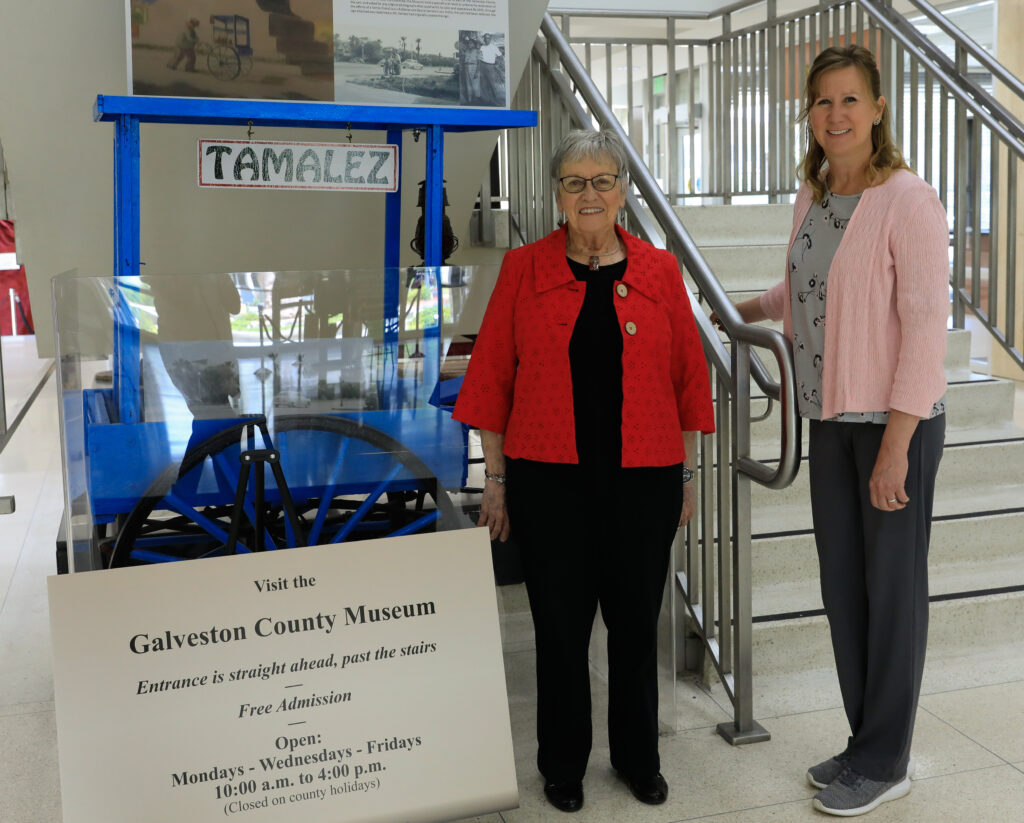
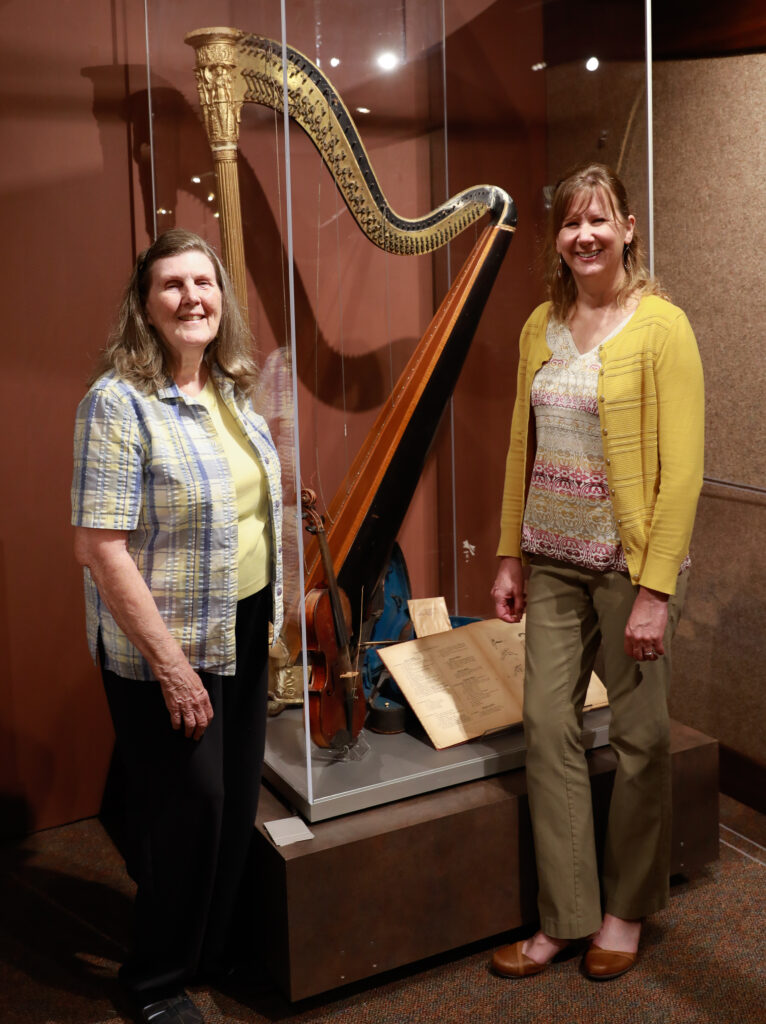
Then you come upon the Tamalez display. If you wander down the room there is an anchor from the Civil War and on the north side of the building is a piano….
“It’s easier to take care of historic artifacts in a modern building with climate control,” explained Wright-Gidley. “Even though we loved the bank, we equally love being here.”
With the new location, all items that come in are first taken to the artifact room, where they are carefully examined and allowed to dry out and to be sure little critters such as spiders or other pesty crawling things are cleared off of the artifacts.
The museum owns 25,000 artifacts and they are rotated in and out of the exhibits. The staff consists of one director, one part-time curator and a handful of volunteers.
Donna Campbell, a volunteer and native Galvestonian, loves working at the museum. “I love history!!” said Campbell. “I was born here and I love meeting people and helping them with the museum. An added plus are the great people who I work with.”
Wright-Gidley studied archeology and museum studies at Baylor; she’s originally from Conroe, and her masters is in history from Sam Houston State University.
“I was the first one in my family to go to college and since I didn’t know what to study, I chose what I like, museums.” she said. “As a family, whenever we traveled, my parents’ took us to see museums, so I grew to love history and museums. When I started my degree program, my parents thought I’d never get a job, but I’ve never been without one since graduating.”
The museum struggled to stay open during the pandemic as the hours were inconsistent. In March 2021, after a complete renovation and COVID19, the museum exhibit hall opened back up for public viewing.
“It’s a work in progress with exhibits and walls added by our volunteers and staff over the past five years,” said Wright-Gidley.
Clara Barton came to Galveston after the Great Storm of 1900 and took a leadership role, bringing in more Red Cross staff to work in the dank and dreary task of finding and assisting survivors.
Walking into the museum begins with the County’s military history. The first exhibit is from what was once the weather museum with Army personnel manning the weather reports. It is a tribute to the military bases in Galveston County which were once part of the defense of our nation in both world wars.
The county was home to Fort Crockett, Fort San Jacinto, Camp Wallace, Fort Travis, and the first air squadron for the US that was in Texas City. Hitchcock Naval Base hosted blimps that were used to fly over the gulf and detect enemy submarines.
“One patron came in and told us how she was a little girl and would try to hop on the ropes of the blimp as it was taking off,” said Wright-Gidley.
The museum also has photography exhibits with samples photos from well-known Galveston photographers and their now-antique cameras.
The exhibit that seems to be the most visited and most liked is the Great Storm. There is a ledger of names of the people who were lost to the storm along with the typewriter that the editor used to create the list that forms part of the exhibit. Also included are personal artifacts such as jewelry and dentures that were removed from bodies. The items were all that a loved one was able to collect, and the ones that are in the museum never found a loved one.
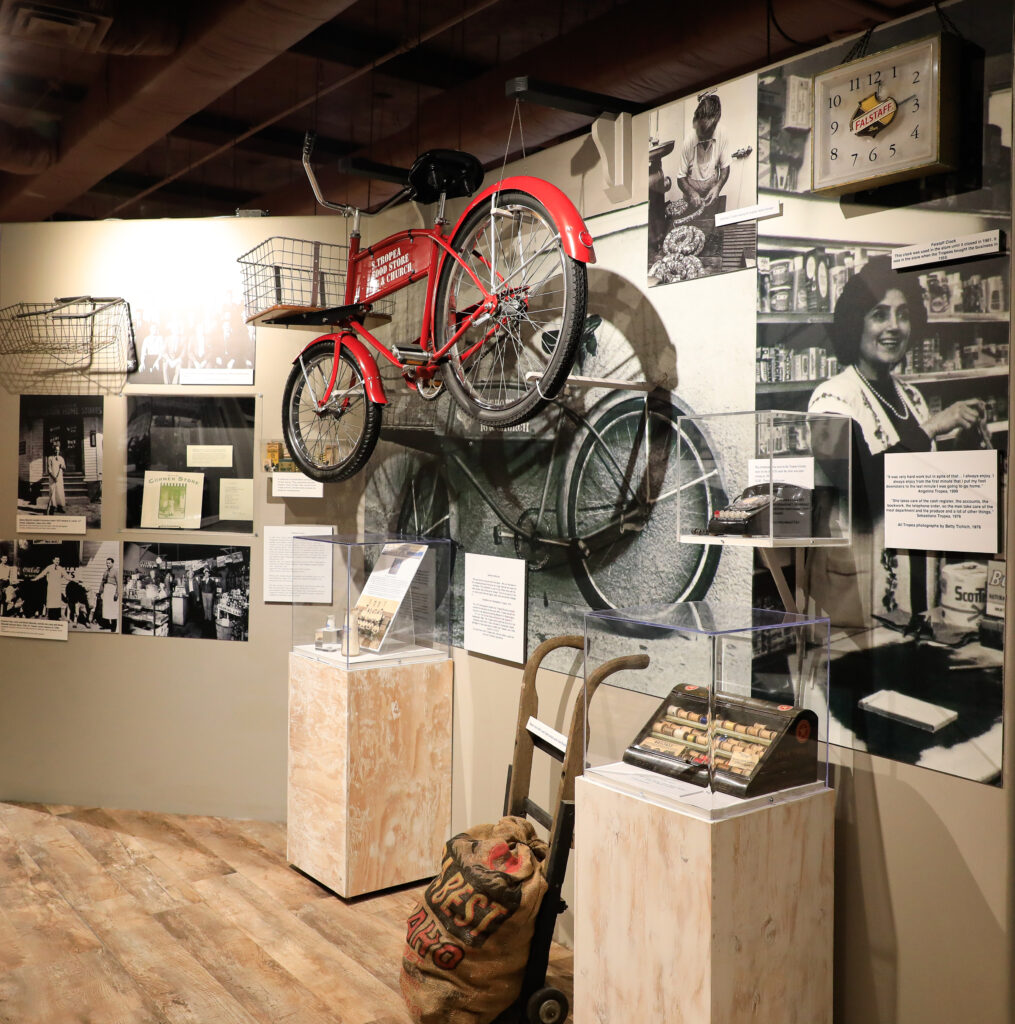
The corner store exhibit is very popular. Hanging high is a red bicycle that was once used to deliver groceries; the bike was on display at the Smithsonian as a representative of Texas corner grocery stores. If you wonder why it looks so shiny and new….well that ole Hurricane Ike got its hands on the bike and it needed restoring.
During Mardi Gras season, the museum hosts a display filled with Mardi Gras dresses and other bright objects from the past.
One room is used to host small gatherings and features a painting from the old Buccaneer Hotel along with some reminders of the gambling era.
Prehistoric times are also remembered with fossils from Wooly Mammoths and Bison teeth.
“Everyone is surprised when they come in and realize it really is a museum,” said Wright-Gidley. “About half of our visitors are people who have come into the building for county business; the rest are those who know we are here and want to learn more about history. We have some who come in just to see the light from the lighthouse.”