Caleb Clarkson
Spring is an exciting time to be a bird nerd on the Texas Gulf Coast. As fresh buds begin to swell on the trees and Texas shakes off the grasp of frigid northern winds, birds that previously fled to warmer regions grow restless to return. For many species, spring migration isn’t just a cross-country voyage; it’s a race to secure the best habitat for foraging, breeding, and raising young.
Each year, millions of birds fly overhead, hugging the landscapes of the land as if they were highways, using rivers, mountain ranges, and coastlines to navigate home again. Some species even cross the expansive Gulf, racing to reach shore before their wings give out. Migration is an energetically intensive process that requires instinct, navigation skills, learned routes, and a fair amount of luck to pull off successfully. By the time a bird navigating the Gulf finally sees land, it is desperate for rest, water, and food. Vital coastal habitats become crucial, journey-saving rest stops where birds can regain strength before continuing. These spots serve many different migrating species, and it is one of the reasons why places like Quintana Neotropical Bird Sanctuary and High Island boast such impressive diversity during peak migration.
Unfortunately, migration doesn’t always go as planned. Environmental hazards such as storms and wildfires can push birds off the beaten path, and younger, less-experienced birds can make navigational errors. Sometimes, birds even join flocks of similar species and migrate with them instead. When this happens, birds appear outside their normal, expected ranges. These unusual visitors, called vagrants, often only stick around temporarily before moving on, so zealous birders are quick to seek out these exciting additions to the usual birds of the area.
Sometimes, bird species show up that are completely out of left field: not just in the wrong area, but on the wrong continent. Many of these birds are ship-assisted vagrants. They were not blown off course by weather or capable of crossing the ocean on their own, but instead hitched a ride on a trade vessel. In some cases, they may travel thousands of miles with barely enough food or water before departing at the first sign of land. To the untrained eye, these birds may look like run-of-the-mill, haggard migrants, tired from their journey. In reality, they are transcontinental visitors who made a ridiculous voyage with the help of human systems and infrastructure.
Migration is already a massive undertaking, but vagrants remind us just how unpredictable and full of surprises the skies above us can be. Every bird overhead flies a long path shaped by weather, instinct, and endurance, and once in a while, those paths take unexpected turns. For birders watching the coast each spring, that uncertainty is part of the magic, because you never quite know what might appear next.
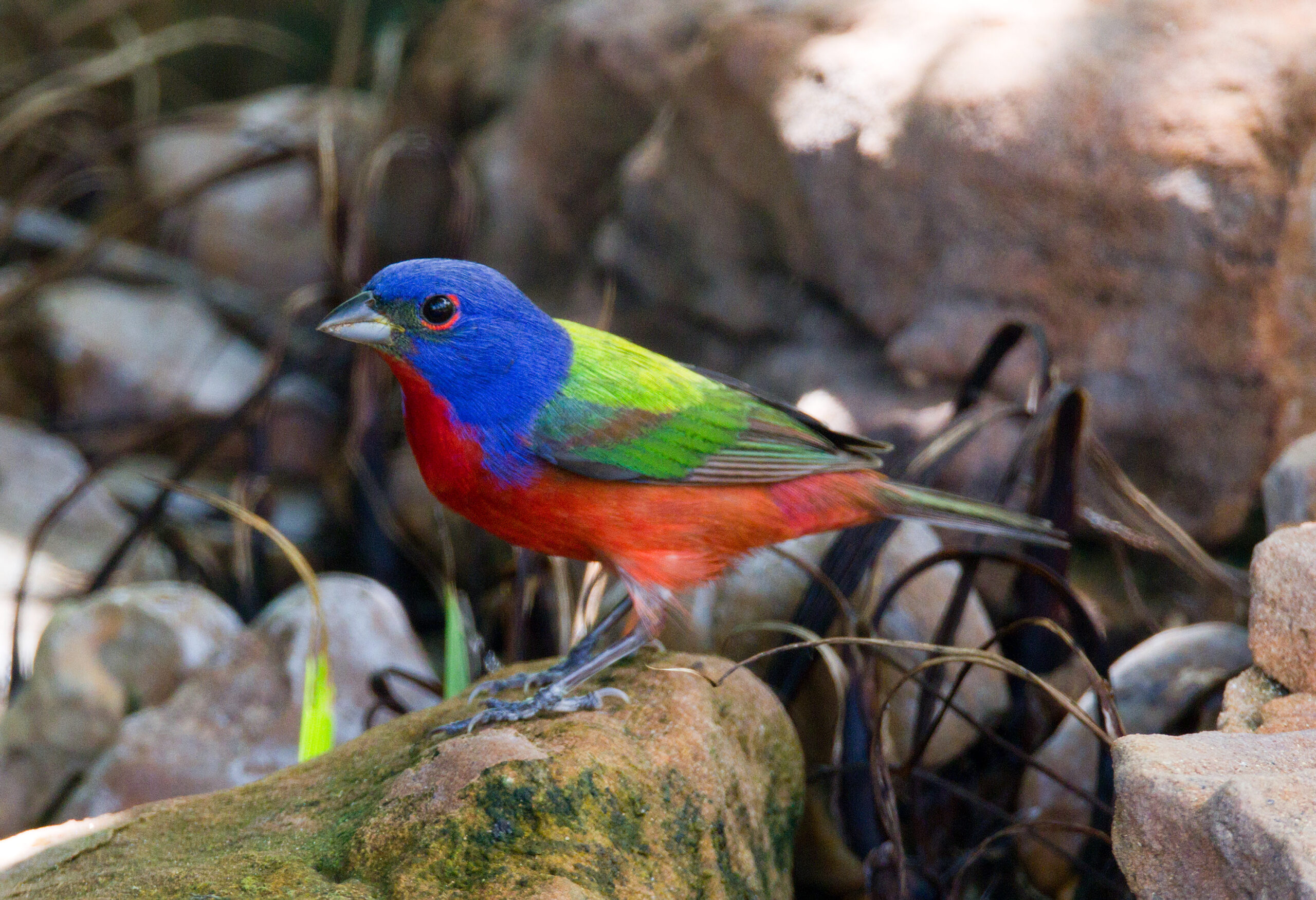
Photo: Painted Buntings are one of the many species that fly through the Upper Texas Coast area during Spring Migration
Credit: Mike Williams

