By Martin Hagne
Some birds have a magical, or maybe mysterious draw for birders, especially those that are more elusive and harder to find. Maybe that is due to their small numbers or restricted ranges, maybe they like hiding deep in vegetation, or are found in such remote areas that they are hard to get to.
One migratory shorebird seems to have that draw for many birders, even though they migrate through our area and even spend the winter here. Let’s see if any birders out there can guess which species I’m writing about; they arrive in small numbers, and spread out over our vast Texas beaches and baysides. Their winter plumage gets dull and non-descript, adding to their enigmatic appeal.
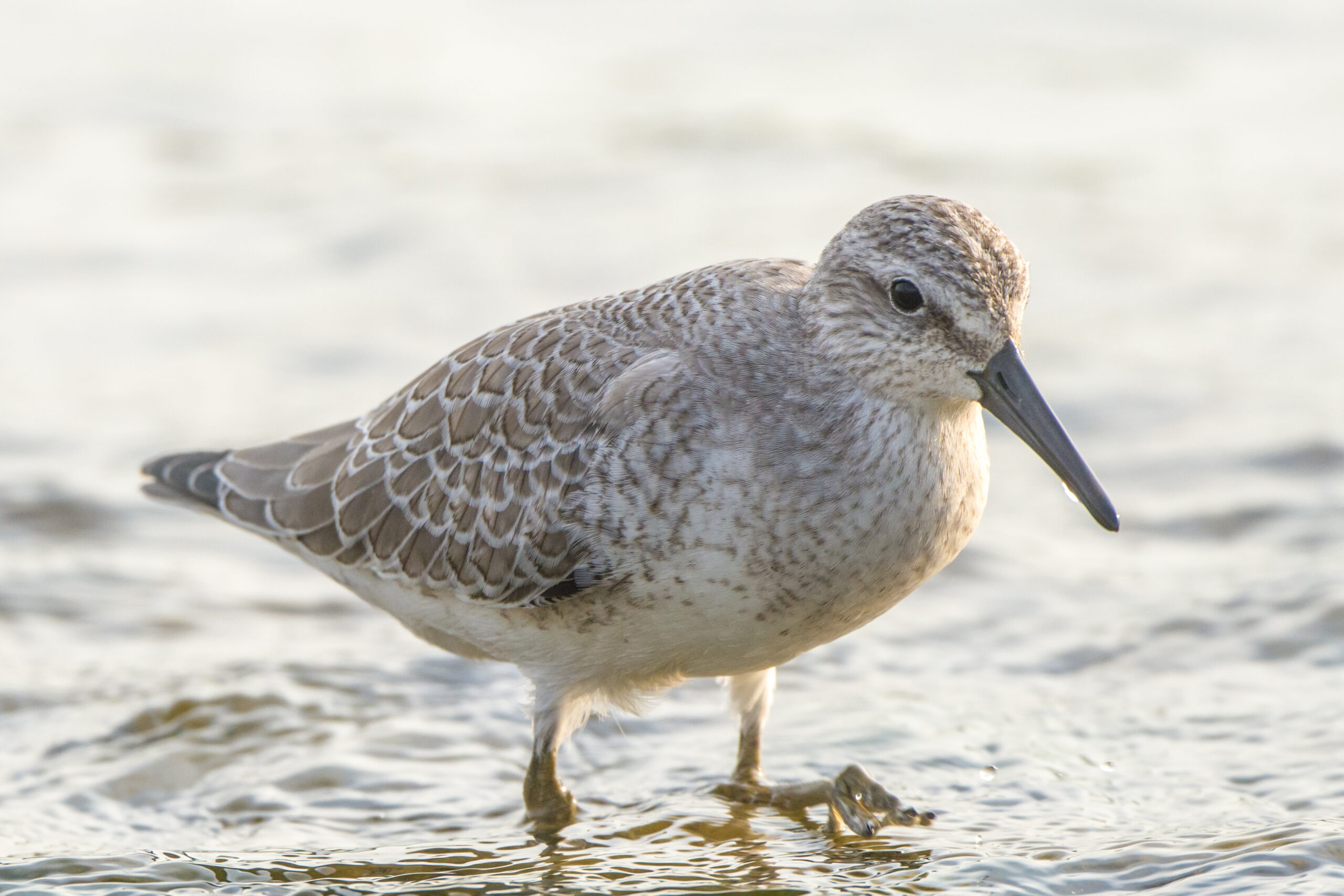
Have you tried to guess the species yet? It has a vibrant breeding plumage, and we get to see bits of it when it migrates through, but rarely in full breeding regalia. In the non-breeding season, it is mostly grayish-brown above, and slightly paler below. As they gain their breeding plumage, they gain a rusty red face, head, neck, and underparts. Their backs stay motley gray brown.
It is also known for its incredibly long migration flights, traveling from its breeding grounds in the Artic to as far away as South America for winter! Although, a few do stay here in winter. It has one of the longest migration routes in the Americas.
The bird is listed as threatened due mostly to habitat loss. Their habitats consist of mostly coastal beaches, tidal flats, and northern tundra during the breeding season. They forage by probing their relatively short and straight bills into the sand or mud, sometimes picking on the surface, and often form feeding flocks as they feed. Their diet consists of mostly clams, mussels, and crabs. And they can crush those shells in a powerful gizzard!
But besides their name… they are mostly known for their close ties to the Delaware Bay on the east coast in their long migration. Here they feast upon another creatures’ eggs, a crab that looks prehistoric! Their migration only works because of this close tie to the Horseshoe Crabs laying eggs in this bay at that time! Thankfully to conservation efforts of this bay and crab, the bird is slowly doing better. Do you know it now?
Yes, indeed, it is the Red Knot! With a bit of searching you can find them on our upper Texas beaches in small numbers in winter. It is one of the species that the Gulf Coast Bird Observatory studies during the Non-breeding Shorebirds project every winter, now for many years. I hope you too can find one and enjoy their presence!
Photo: Red Knot by Andrew C, CC BY 2.0 <https://creativecommons.org/licenses/by/2.0>, via Wikimedia Commons

