By Martin Hagne
Neotropical bird migration started eons ago, with tropical birds slowly following the melting ice mass over land, looking for more food and habitat further north. Eventually it developed into todays bird mitigation going south for the winter, and back north for the summer. So truly our migratory birds we see here in summer, aren’t really “ours” after all. Not entirely anyhow.
Birds are fascinating in so many ways, including the amazing flights they take during migration. Tiny little birds weighing hardly anything, flying for days and weeks, some without even landing for breaks! There are many variations of routes, and timing of migration between the many species. There are also some major differences between spring migration, and fall migration, beside one going north and one south. Let’s take a look at a few of those differences, especially for songbirds.
First of all, spring migration is a race to claim the best nesting spots! It happens over a much shorter time frame than fall migration. Here on the Texas coast and inland, we start seeing songbirds in the later parts of March, and its pretty much over with by mid-May. The heaviest migrations happen late April through early May. We see mostly males heading north first, followed then by females, and lastly the younger birds. Within the species, the males are in a hurry to head north to look for suitable habitat to claim the best breeding territory, and start singing their best tunes to impress the girls once they arrive.
The southbound fall migration is a much more spread-out affair. Some shorebirds start in early July, or even earlier, with songbirds still pushing south as late as early December. So, there is no real defined giant songbird push like in spring. Birds are not in such a hurry to reach their wintering ground and they can take their time, making fora safer flight.
Along with the difference in urgency, there are also differences between spring verses fall flight routes. Due to birds being in a hurry going north, many of them fly over the entire Gulf in one flight. Leaving the Yucatan peninsula after a few days of fattening up, they take an 18 –25 hour flight, against the odds of bad weather. Getting north fast apparently outweighs the risk, which is high. Exhausted birds may drop in at any coastal location with some habitat, to rest, and find water and food, and soon continue their journey. Many never make it to their destinations, due to bad weather pushing against them. If they land in the ocean, they don’t get back up, and can often become shark food!
In the fall, without the need of such a hurry, many bird species chose to fly around the Gulf, taking their time, stopping here and there for rest and food. This adds many days, or even several weeks, to their migration, but they will still reach their wintering grounds in plenty of time.
Migration truly is a very intricate and special natural process, and Gulf Coast Bird Observatory here in Lake Jackson has been helping study it for 30 years now! There is still so much more to learn about birds and their migrations, and we are excited to continue researching them.
Photo credit: Michael Gray
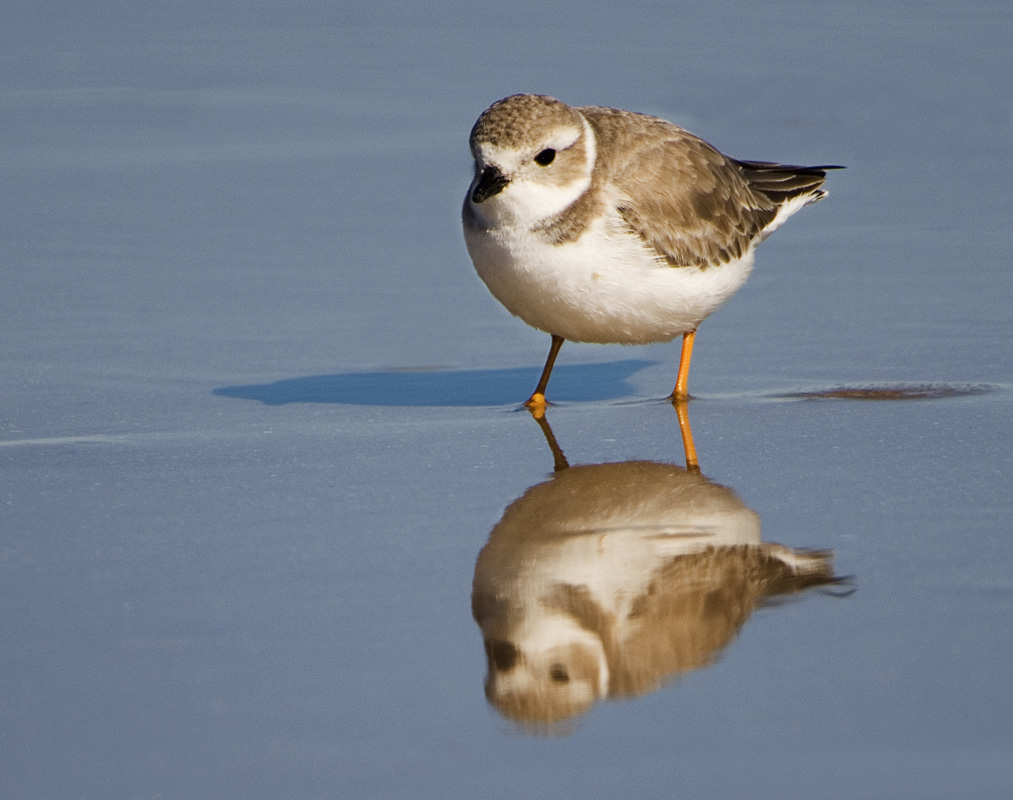
Caption: Piping Plovers are one of the many species that you might see popping up on the Texas Coast during the fall.

