By Kate Underwood
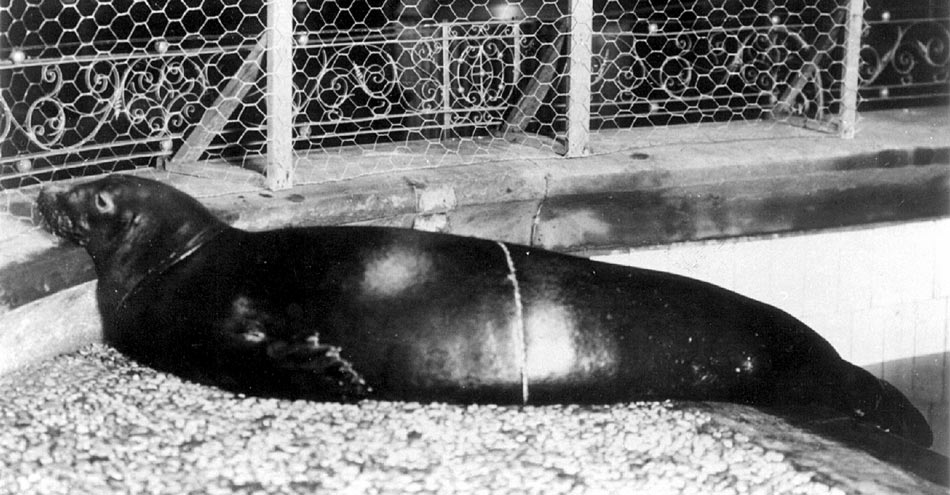
Did you know that there were once seals in Texas? The Caribbean Monk Seal (Monachus tropicalis) was last officially sighted in 1952 and declared extinct by the U.S. in 2008. The first written accounts of the seal came from Columbus’s expedition in 1494, in which 8 were killed.
In Texas, there were sightings in 1926 and 1932, and there are archaeological records of its existence here as well. It likely did not breed in Texas, and simply foraged and rested along the state’s southern coast. It historically ranged throughout the eastern Gulf of Mexico, down into the Caribbean, and Western Atlantic.
The Caribbean Monk Seal was one of only a few warm-water seal species in the world, and is survived by the Hawaiian Monk Seal (Neomanachus schauinslandi) and Mediterranean Monk Seal (Monachus monachus), both of which are endangered. Not much is known about the Caribbean Monk Seal’s habits, due to them largely disappearing before scientists took interest in the species. What we do know is that they hauled out in large groups on islands, and occasionally the mainland, and may not have been particularly fearful of humans according to some reports. They likely behaved similarly to their surviving cousins.
Like most wildlife prior to the passage of laws such as the Lacey Act of 1900, Caribbean Monk Seals were mercilessly slaughtered by market hunters and sailors for their blubber, meat, and hides. Oil made from the blubber of whales and seals was of incredible economic importance at the time. It was used for cooking, to light lamps, to lubricate tools, to coat the bottom of boats, and more. The seals were thought to be the primary source of oil in the region, and were already uncommon by the early 1900s. They were also persecuted to a lesser extent by fishermen who saw them as competition, and collectors for zoos and museums who wanted rare animals in their collections.
The demise of the Caribbean Monk Seal is a sobering reminder of how quickly sensitive species can disappear and a great example of shifting baseline syndrome. Shifting baseline syndrome is the idea that people, over time, will accept degraded ecosystems as normal, because they have never seen what the ecosystem should look like. As each generation is brought up with more broken and fragmented ecosystems, we continue to accept sicker and sicker ecosystems as normal, until the originals are completely gone.
Most people have no idea Caribbean Monk Seals ever existed, and accept the Gulf in its current state as “normal”. Think of how different the Gulf Coast would be if seals were still present, and they are not even the only species that has disappeared in the last few generations. I encourage readers of this article to learn about the history of their local ecosystems, participate in restoration initiatives, and support endangered species protections so we can avoid repeating the tragedy of the Caribbean Monk Seal.
Photo Source: New York Zoological Society., Public domain, via Wikimedia Commons

