
By Ruth Ann Ruiz
The Post Newspaper Features Editor
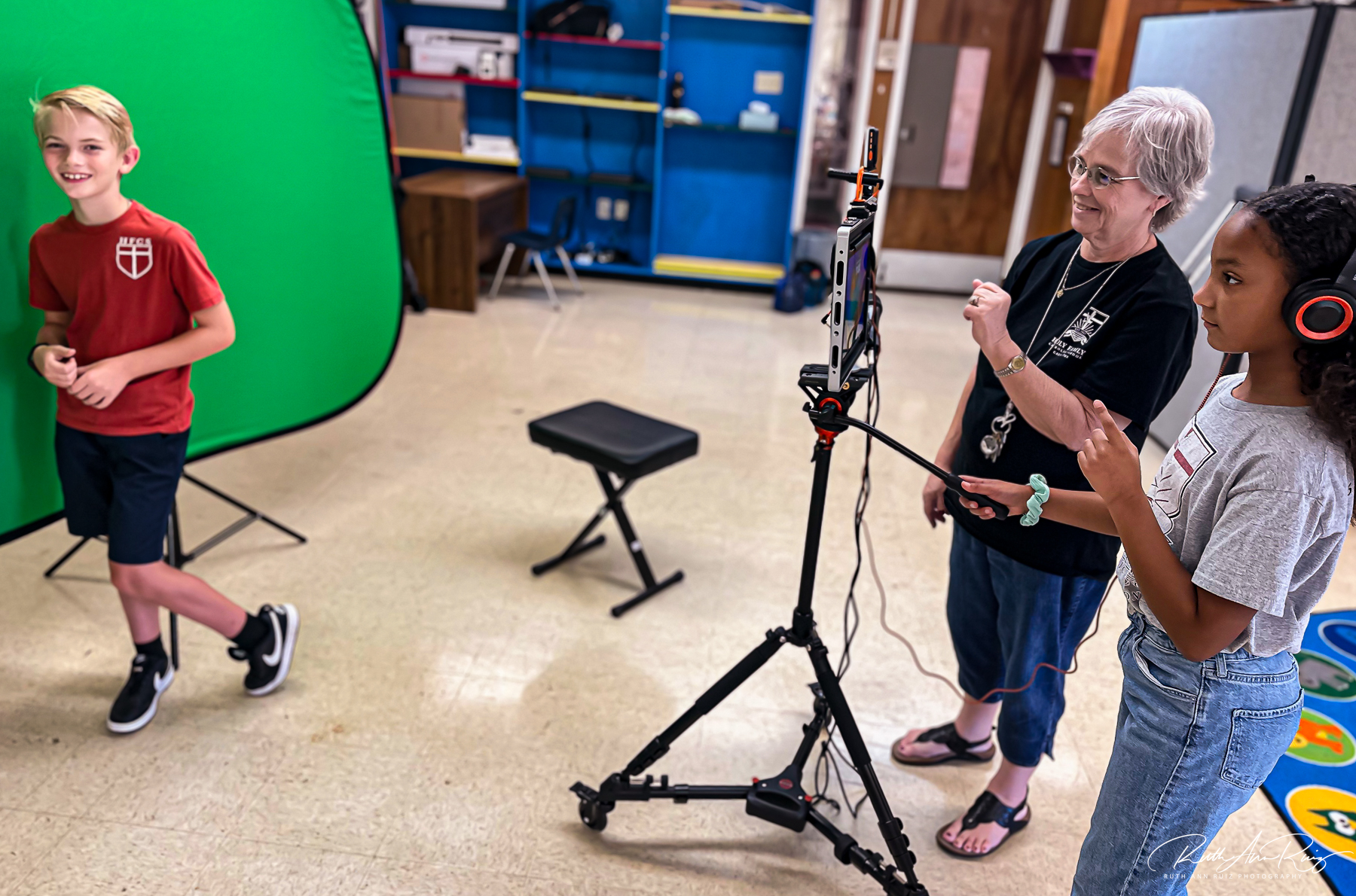
The young scholars at Holy Family Catholic School (HFCS) in Galveston are learning how to make videos with their new lab, which currently includes video recording equipment and a green screen. So far, the middle school students have shot their own videos and are now in the editing stage of learning and production, according to Principal Jeanna Porter, M.Ed.
Learning to create their own videos makes for more than just a fun time for the students. The program is about preparing the students at HFCS for the future in a world full of technology. Learning the video production process also requires students to practice their skills such as writing and research because the students are responsible for creating their own scripts.
“The new learning environment and tools will form students into better digital citizens and help them to use technology to increase their productivity as we prepare them for jobs that have not yet been invented,” Porter said.
Video production also incorporates math and science as the students learn about lighting, shadows, angles, distance from camera to the subject, depth of field and numerous other technical skills needed to create a high-quality video.
“I’m hoping the students will progress enough in their skills so that they can create videos to promote some of our activities, such as our upcoming fall festival,” Porter said.
She also shared that she envisions the program helping the students develop the skills to manage live streams of the many performances and events held at the school.
“We want the children’s grandparents who maybe live in Oklahoma to be able to watch our events via live streaming,” Porter said.
Learning how to play games and keep up with social media and communicate with others seems to be a breeze for the younger generation. But according to Porter, the students’ technical productivity skills are not as advanced as their other IT skills. Therefore, the school has increased their middle science/technology teacher’s responsibilities.
In Candace Weber’s capacity as technology teacher, it’s not just middle school students she works with. Weber shared that she teaches kindergarten to recognize the letters on a computer keyboard, while she teaches older elementary grades and middle school students experience using the Microsoft office Software suite. Like the middle school students, the upper elementary students are also learning how to use the video production equipment.
Younger students receive only one or two technology lessons a week, while the older students are taught computer skills every day, Porter said.
And not only the students learn from Weber. Other faculty members learn from her as well, Porter shared.
Porter said she’s proud to announce that there is one computer for every student attending HFCS. She added that she believes a one-to-one computer-to-student ratio will help facilitate greater progress with computer learning.
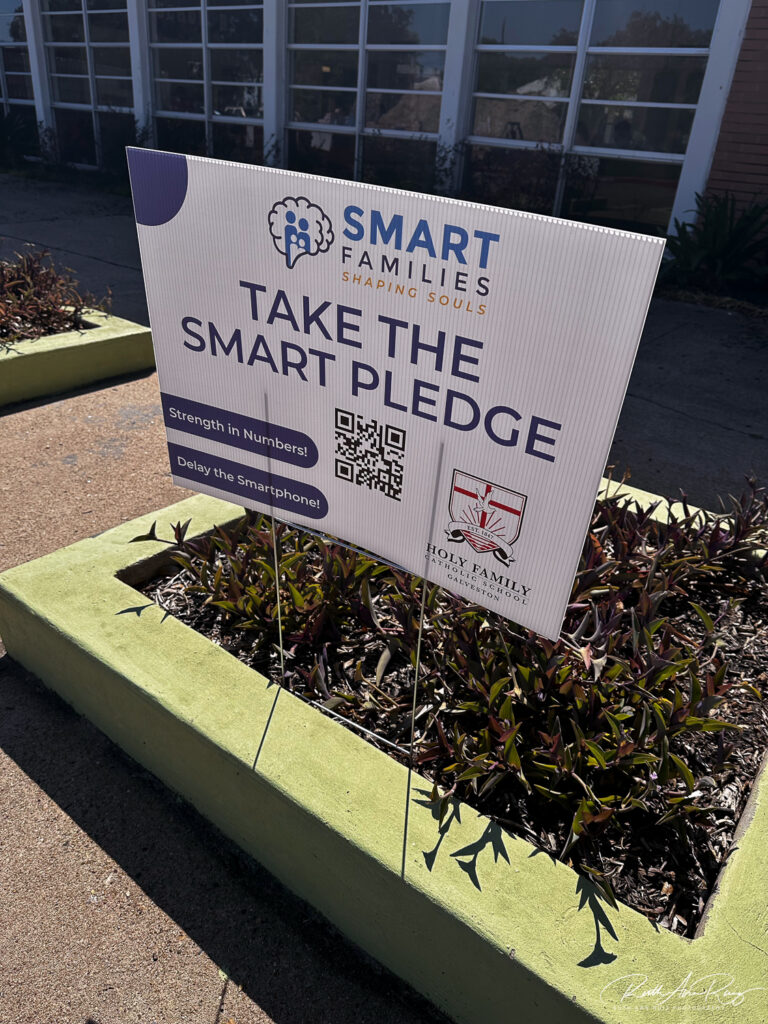
While the students are gaining some extra computer and technology skills this school year, Porter has also elected to have HFCS opt into a program which she hopes will limit their use of smart phones.
The new program she opted into is neither directed at the students nor is it about phone use at school. The program is directed at the parents and is all about educating them on the many pitfalls of giving a child a smartphone.
“Smart Families Shaping Souls” is an initiative that encourages families to pledge to wait until after eighth grade to give their children smart phones.
“When we give our children a smart phone, we are essentially handing them access to the world, which means they are exposed to many adult issues at a very young age,” Porter explained.
The initiative has grown out of the warnings from child psychologists such as Crystal Collier, Ph.D., who has done extensive research into the impact of smartphones on young children. She recently spoke to the parents at HFCS school as the school kicked off the initiative.
The Rev. Jude Ezuma, pastor and rector of Holy Family Parish is very supportive of the initiative.
“Technology is a blessing, and we are all aware of the amazing things that can be accomplished through technology. However, there are pitfalls associated with the use of technology, which requires discipline.
The smart pledge is a way for parents to provide oversight, guidance, and discipline to their children so as to encourage and foster a healthy disposition and use of technology as they grow. Here at our school, Holy Family Catholic School, we strive to support parents in this endeavor.” Ezuma said.
“The movement is about retaking our children’s childhoods, keeping them children and protecting them, along with bringing awareness to the impact smartphones have on child development,” explained Porter.
Not only can children be overexposed to adult themes on a smartphone, but also, according to Porter, research is showing that children who spend lots of time on smart phones are neither developing essential skills such as impulse control and empathy, nor can they sit still and just be in the moment.
Though there can be serious downsides to giving children smartphones, Principal Porter does advocate for children and families to use “old-school,” not-so-smart phones for their youngsters.
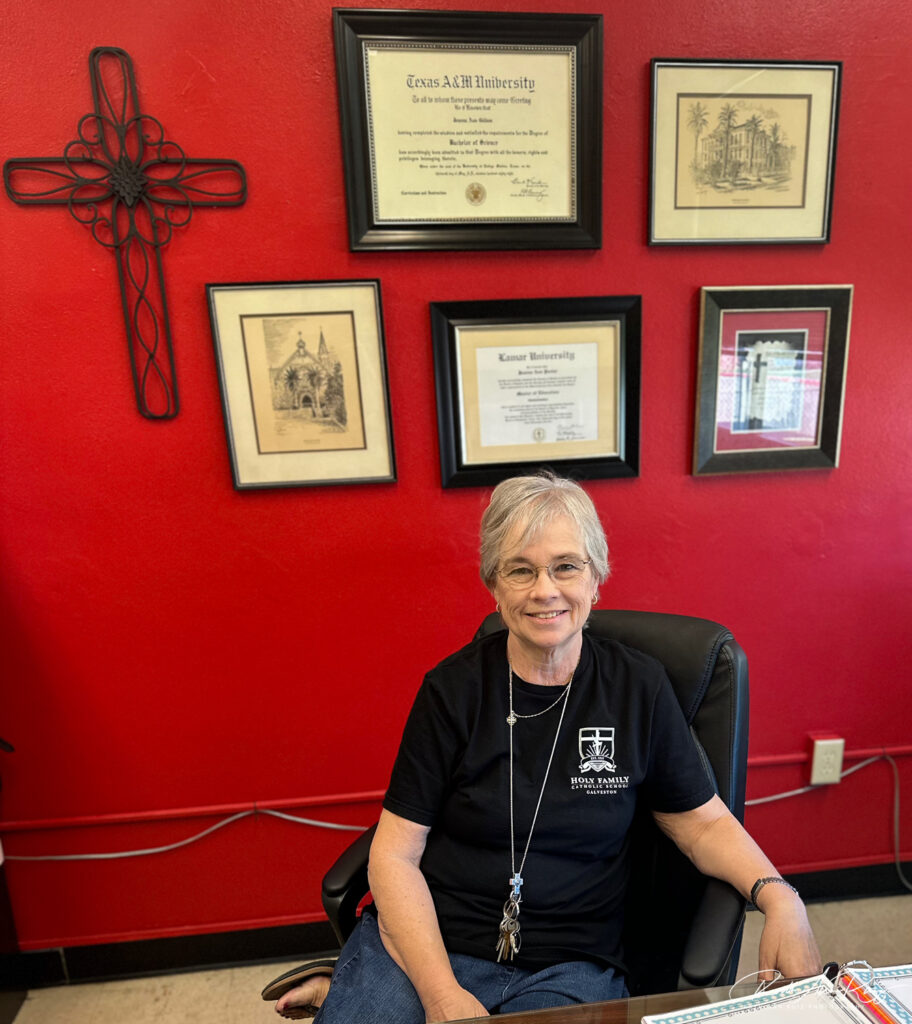
Porter has been an educator for over twenty years. She served as a first-grade teacher at HFCS for two years and is in her second year as principal.
The video production lab and “Smart Families Shaping Souls” are just two of the initiatives Porter has begun in her relatively new rule at HFCS. To find out what else is new on campus, go to https://www.hfcsgalv.org /. To find out more about the Smart Families organization and mission, go to https://www.smart-families.org/.