By: Ashley Van Wieren
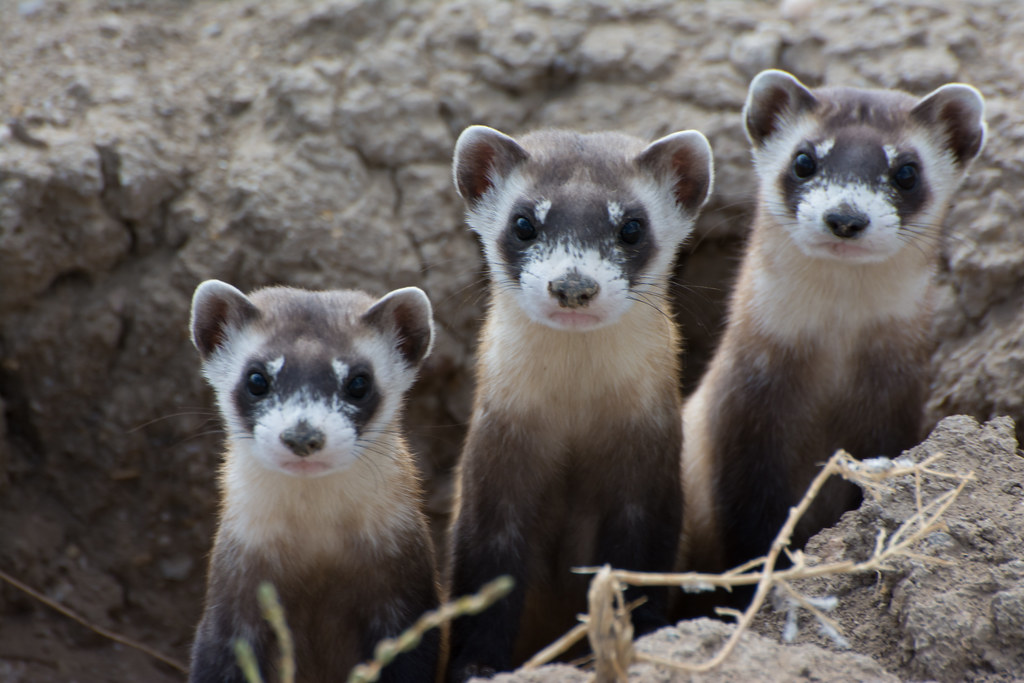
A fluffy, elongated body, short legs, dark mask, and teddy bear-like ears… this is the face of a predator! And if you’re a prairie dog, it’s the last face you want to see. This is a 1.5-to-2.5-pound mustelid, the Black-footed Ferret Mustela nigripes.
Rather than dig their own homes, the Black-footed Ferret occupies the empty tunnels of prairie dogs and claims them as their own. Black-tailed prairie dogs are the main prey of the ferrets, though they will also hunt a proportionately small amount of rodents and birds.
Black-footed Ferrets live an average of four to five years in the wild, but their lifespan climbs upwards in captivity. Males are called hobs and females are referred to as jills, which produce a litter of three to five kits. These kits are born blind in the tunnels where they will remain for a couple of months with their mothers before exploring the world aboveground. The kits are playful. Playing like youngsters is beneficial, as it teaches them the hunting skills they will need to survive.
Ferrets are commonly mistaken for being rodents, but they actually belong to the family Mustelidae (mustelids). This includes everything from stoats to river otters. Black-footed ferrets can be challenging to observe due to their nocturnal lifestyle and mostly underground hunting. They are, however, notoriously fearless. This makes sense when other relatives of family Mustelidae are the honey badger and wolverine.
Like many other members of Mustelidae, including domesticated ferrets, the black-footed ferret is highly susceptible to the canine distemper virus. Some of these ferrets have been captured and vaccinated against canine distemper as its effects can be devastating to recovery efforts. Coyotes are threats to black-footed ferrets both as a predator and also as a carrier to the highly lethal canine distemper.
You won’t be finding these ferrets in your local pet store or pet rescue, because Black-footed Ferrets are critically endangered. Along with the red wolf and key deer, the black-footed ferret is considered to be one of the most rare and endangered mammals in all of North America.
Previously classified as extinct, captive breeding programs have had success increasing populations; yet just around 300 remain in the wild. Their historical range stretched the vast expanse of Mexico to Canada. Today’s range is limited to the several U.S. states the ferrets have been reintroduced into including Colorado, Arizona, and Montana.
Human activity was the cause of the black-footed ferrets’ initial extinctions in the wild. Prairie dog colonies are often intentionally destroyed by humans, eliminating both the ferrets’ food source and habitat. Prairie dog populations are further depleted today by the sylvatic plague, further limiting the ferrets’ food source. In addition to depleting prey, ferrets are prey animals themselves. They are commonly hunted by coyotes and other wild animals.
Thankfully, conservation efforts like captive breeding programs are now maintaining wild populations of the Black-footed Ferret. Ferrets in captive breeding programs transition into a preconditioning phase where they learn how to hunt wild prairie dogs. This is important to the survival of the ferrets once they are released into the wild.
Thanks to the vaccinations, native habitat restoration, and captive breeding and release programs, the black-footed ferrets are surviving and will hopefully be more successful in the future.
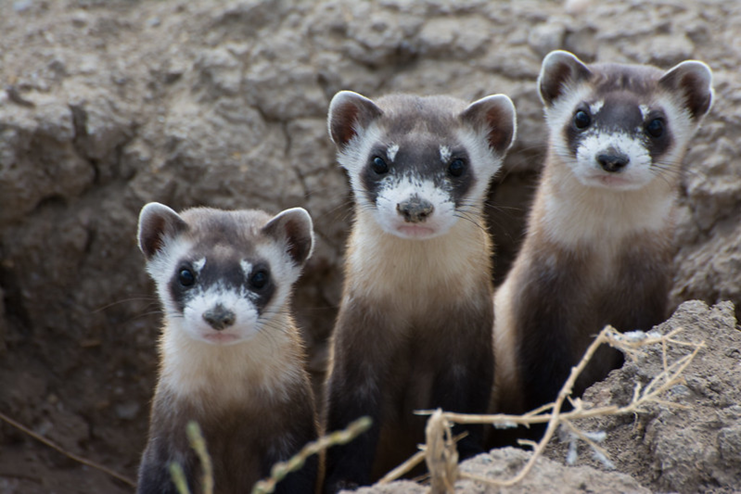
Three black-footed ferrets emerging from a tunnel.
Photo Credit: Kimberly Fraser / USFWS