by Taylor Bennett
Here at Gulf Coast Bird Observatory, each year from December 14 through January 5th, staff members participate in several Christmas Bird Counts throughout the state of Texas. The counts are a way to determine wintering population numbers of various species within a specific area. They are conducted nationwide and have grown to include several other countries as well. The data collected from these counts help biologists and wildlife managers determine what conservation efforts are needed to protect the habitats of wintering and residential bird species.
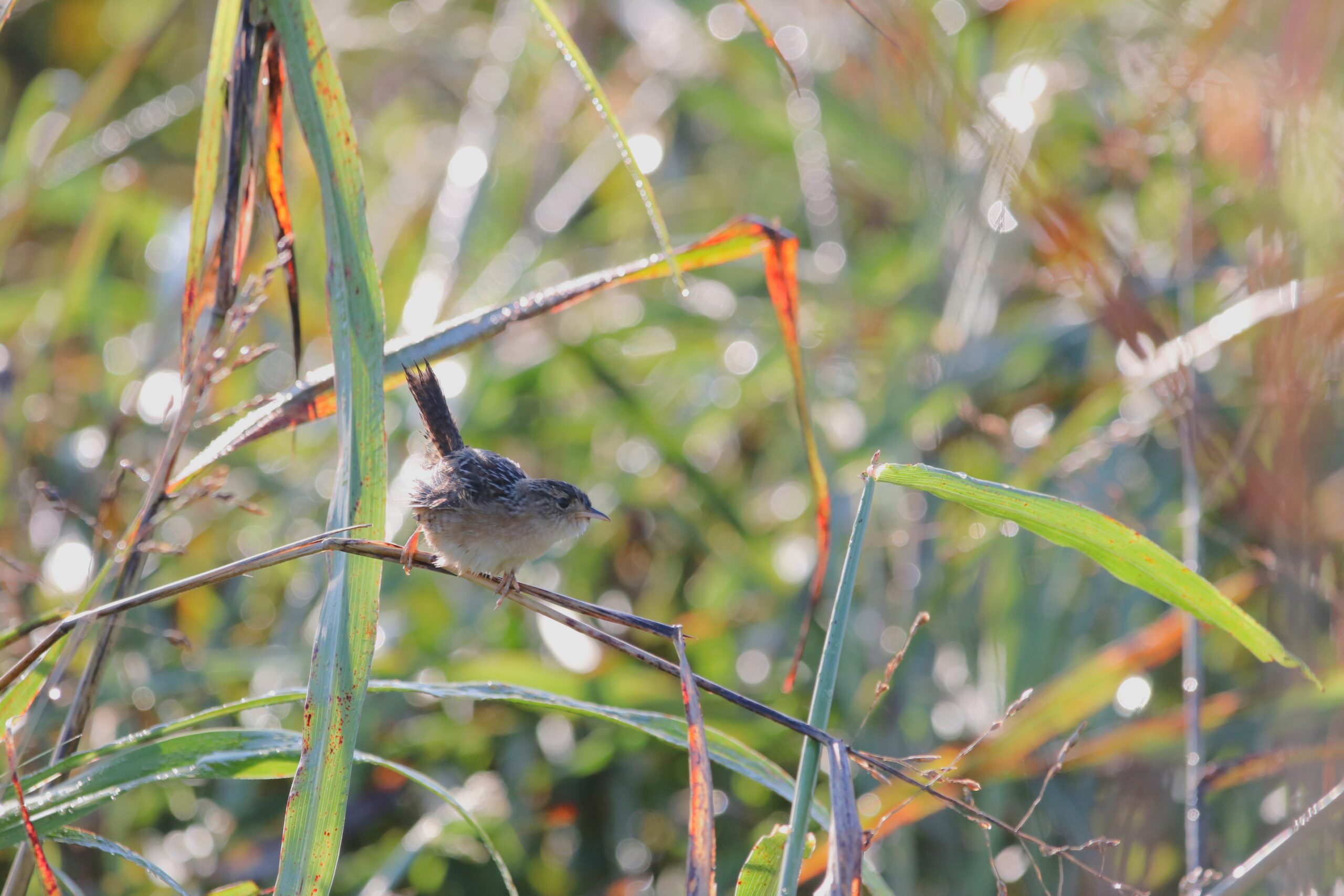
This year I participated in the San Bernard CBC, Freeport CBC, and Brazoria CBC. It was during the San Bernard CBC that our education intern, Adam Trujillo, and I encountered a rather elusive species, the Sedge Wren.
Sedge Wrens are only observed in Texas during their winter. They are considered one of the most nomadic terrestrial birds in North America. They have a widespread breeding range and are constantly moving which makes them difficult to study and therefore less is known about them. Their population numbers are also difficult to determine due to their nomadic behavior.
Sedge Wrens are smaller than Carolina Wrens. They are round with a brown and black body that is streaked with a little bit of white and have a buffy white belly. They have a pied bill with the upper part being black and the lower part being pinkish yellow. They have small pink legs and a short stubby barred tail which is often held upright. They are very similar to the Marsh Wrens, but differs in appearance, song, and habitat. The head of the Sedge Wren is more streaked, lacks a bold white eye stripe, has a shorter bill, and is paler than Marsh Wren.
They also have a different song and call. The Sedge Wren male sings 3-4 sharp notes, ending with a trill. Both the male and female call harsh notes described as being like two pebbles tapping together. Marsh Wrens sound more musical and garbled. Sedge Wrens used to be classified as Short-billed Marsh Wrens, but that was changed to Sedge Wren due to the habitat it prefers. Sedge Wrens prefer dense patches of sedges and grasses in wet meadows, hayfields, and marshes. Sedges are solid grasses with triangular stems that grow in wet environments.
Sedge Wrens are ground foragers and most of their diet consists of insects. Their small bill allows them to quickly snatch up food. They feed on ants, beetles, moths, crickets, grasshoppers, spiders and small amounts of seed as well.
The Sedge Wren is currently listed as Least Concern, meaning that it is still plentiful in the wild. Like most migratory songbirds, they are known to migrate at night, which makes them prone to tower and building strikes because of the lights disorienting them. One way that people can help Sedge Wrens and other migratory species prevent this is by participating in Lights Out Texas which is a statewide effort to turn out non-essential lights from 11pm to 6am during peak fall migration time which occurs from August to November.
On behalf of Gulf Coast Bird Observatory, thank you for reading and we wish you and your family a happy new year.
IMG_Sedge Wren: Sedge Wren observed during San Bernard Christmas Bird Count at Nannie Stringfellow WMA in Brazoria, TX. Picture by Taylor Bennett

