
By Richard Tew
The Post Newspaper Faith Columnist
For many, there stands a wide precipice between spiritual faith, and views on science and technology. For others, the two enjoy a healthy coexistence and are complementary to each other. For the latter, science is simply investigating God’s great creation, showing due deference to the creator and His creation.
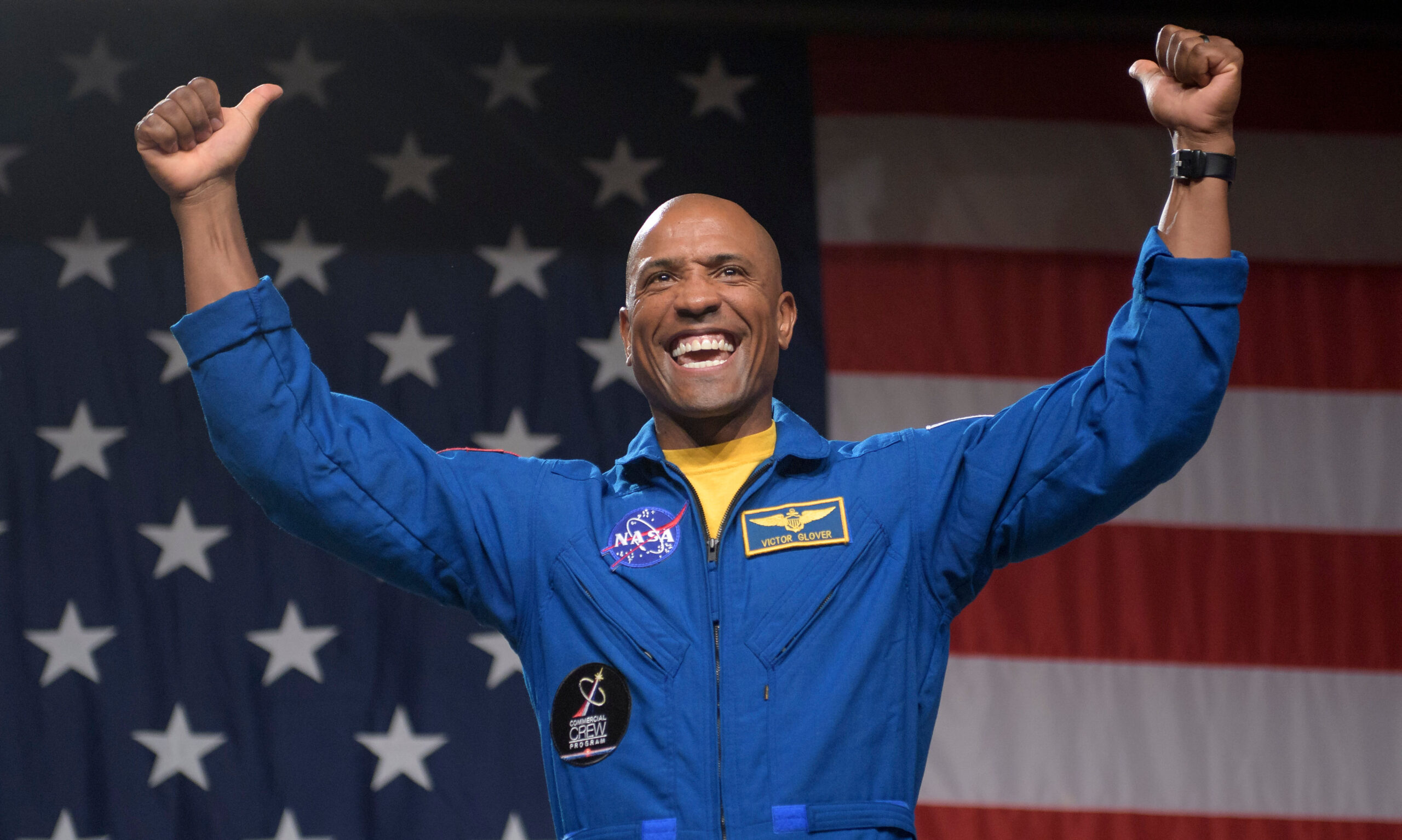
NASA Astronaut Victor Glover sees God’s handiwork through the eyes of an engineer and researcher, as part of NASA’s journey to see humankind explore further and further towards our closest celestial neighbors.
“My scientific and engineering background feed my faith and my faith feeds my scientific background,” said Glover. “When I sit in that rocket, I know there are things I can control and there are things I can’t control. I have a healthy respect for both.”
Glover says some of the big questions discussed at NASA are also some of the big questions asked at Church: “Where are we from, why are we here and where are we going? They connect to me because they are facets of the same story.”
Relating the Big Bang Theory and the Biblical account of creation isn’t a stretch, suggests Glover.
“There’s a lot more in common than there is different,” said Glover. “I think what theoretical physics gives us and what ancient wisdom of religion gives us work together because humans have not changed for a very long time.”
Glover says for many people, there is a natural tendency to worship something greater than themselves.
“There is a space in us that wants to look up to heroes of any kind or trends or people. I think that is rooted in our nature to worship,” said Glover. “We are built to put our hearts and minds on something. We are taught to worship something bigger than ourselves.”
Before his first flight to space, Glover says he reflected on the pending launch and found comfort both from his exhaustive training regime and his faith in God’s word.
“There are things we can control and things we can’t control,” said Glover. “I said I am going to ready some scripture and I am going to pray and what came into my mind was Philippians 4:13: ‘I can do all things through Christ who strengthens me.'”
Glover says he read all of Philippians 4 and picked up things he says he hasn’t noticed before.
“The one thing that jumped out to me that I hadn’t noticed in my 44 years prior to that was that the writer was talking about being satisfied or content in any situation,” said Glover. “He (Apostle Paul) says ‘I have learned that in any situation I am both hungry and full.’ That’s what really stood out to me. I am going to pray and put my faith in God that it’s going to be ok. That verse spoke to me more than it ever has. …No matter what the situation, you can have confidence in the promises made in the Gospels and you can have faith. That’s the power of faith. You can put that on something that is sure and not worry. That night, I had a good night’s sleep.”
Once aboard the ISS, Glover says the views from the space station on the Earth below are awe-inspiring.
“I love that perspective to feel the smallness of Earth in the vastness of the universe, but then to know that’s the only place we have found human life and how special we really are,” said Glover.
While most of his time is spent working on research on the ISS, Glover says there is time for other things like worship and time spent with family, both made possible via video. Glover says on his time off, he would watch streaming church services and take communion. Astronauts are allowed a small collection of personal effects for their mission. Among other things, he took an electronic Bible and enough communion emblems for the duration of his mission.
“I tried to make my family conferences on Sunday so we could fellowship together,” said Glover.
Glover notes the ISS has now been in low Earth orbit (240 miles above the Earth) since 1998. During that time, astronauts from around the world have brought some of their culture, including their faith with them.
“It’s important to remember, that’s our home, we live there,” said Glover. “We’ve taken our religion with us, our games, our art, our music. When we bring pieces of what we know on Earth and we adapt them or we innovate new ways to relate to our surroundings,” said Glover.
Glover points to the power of hymns, particularly “Amazing Grace” as a source of inspiration for his faith. He also draws inspiration from classic hymns like “Swing Low, Sweet Chariot.” Glover says the words of some of the time-honored hymns slaves would sing in the field while they were working were inspirational to him.
“They are songs of hope, and putting your heart on something bigger and further when you couldn’t even see it around yourself,” said Glover. “You are in the middle of misery and you have these songs that connect you…It’s just an amazing thought. Those songs mean so much to me.”
Gearing up for his second flight to space as part of the upcoming Artemis II mission, tentatively set for November of 2024, Glover is excited to be part of the crew of four set to launch and circle the Moon for the first time in fifty years. This feat will usher in future Artemis missions which will see the current generation of astronauts landing on the Moon. These milestones will serve as a springboard to missions further out in the solar system, in particular to Mars.
“Artemis II is just one step on that journey,” said Glover. “…as we explore the solar system for all people, by all people.”
Photo cutline: NASA Astronaut Victor Glover. Photo by NASA.
To watch my interview with Victor please visit: https://fb.watch/kyfd0oBUC5/
When he’s not writing on NASA or matters of faith, Richard Tew teaches Irish dance to all ages in Clear Lake. Learn more at www.tewirishdance.wordpress.com.

