
By: Kayla Pringle
A few weeks ago, my coworker Celeste and I were driving back from a beach cleanup and as we were headed back to Lake Jackson, we thought we saw a mountain lion on the side of the road. We were taken aback because we had never seen a mountain lion in this area, and were unsure of what wildcat species inhabit Texas. Unfortunately, it was too late for this mountain lion, but this encounter inspired me to lookup what wildcats we have in Texas because I am not very familiar with them.
This search lead me to stumble upon a species of cat I have never heard of. This species is called the jaguarundi. At first, I thought I was on the wrong website because that name sounded too silly to be a real cat. This is where I found out that they are extirpated in Texas, meaning they are locally extinct, but still exist in Mexico and South America. The jaguarundi could be found very far south in Cameron, Hidalgo, Starr, and Willacy counties. The last confirmed sighting of a jaguarundi in Texas was in Brownsville in 1986.
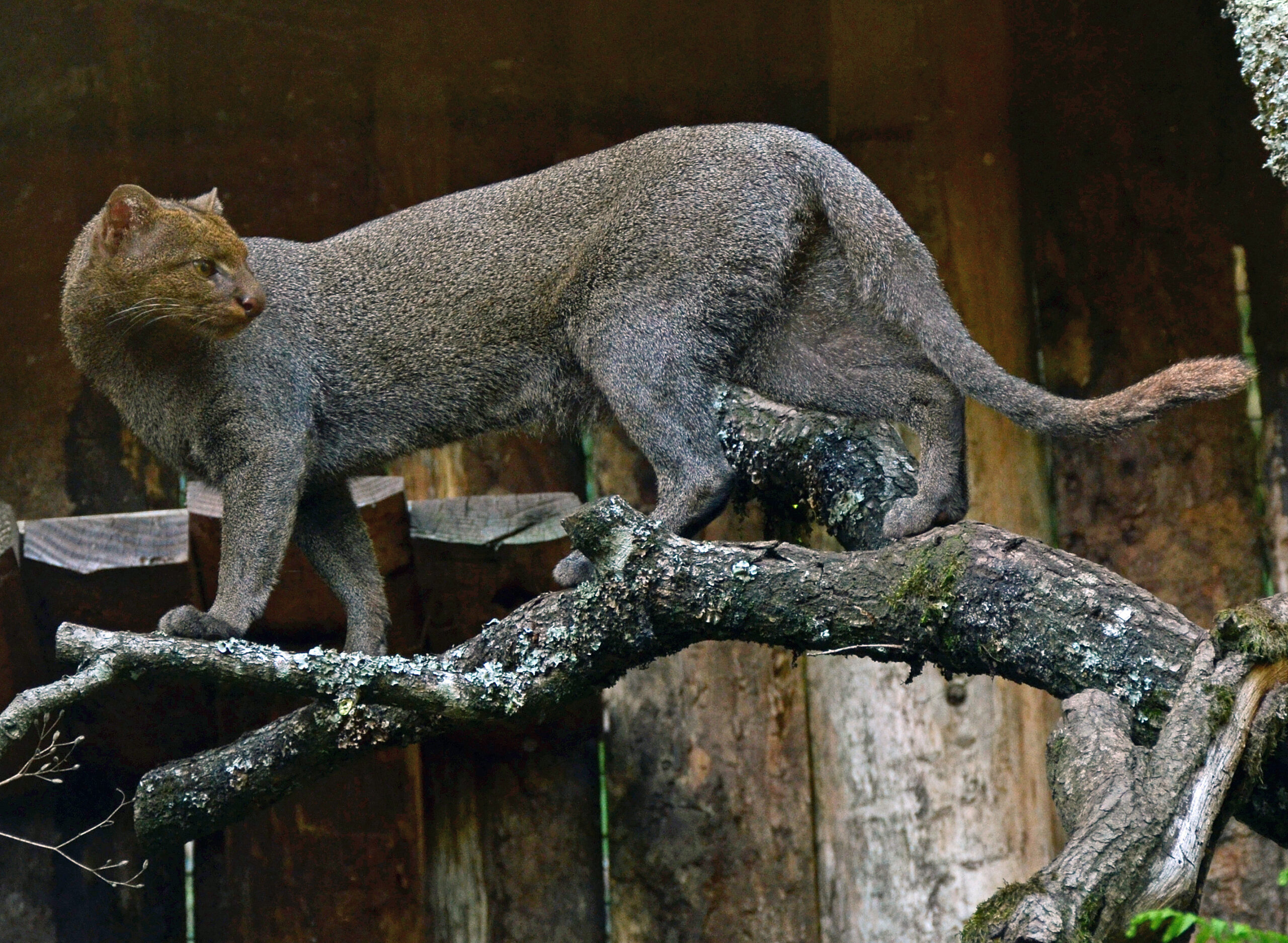
Jaguarundis are not much larger than an average house cat and weigh anywhere from 8-16 pounds. They have a solid coat that can range from a rusty-brown color to charcoal gray. This is the opposite of its relatives, which have spots and other intricate coat patterns. If you’ve never seen or heard of a jaguarundi, I strongly suggest looking up some videos of them because they move exactly like a weasel does. They have a wide-ranging diet that includes small mammals, birds, reptiles, and sometimes fish and they hunt mainly on the ground. These cats are solitary except during their mating season in November/December. They are diurnal but can also be active at night.
Since jaguarundis are extirpated in Texas, I thought that this species might be listed as endangered on the IUCN Redlist. This is an international list made available to the public that shows what species are endangered and what level of concern we currently assign to that species. When I looked up the jaguarundi, it told me that they were at the Least Concern level. However, other conservation entities like The Convention on International Trade in Endangered Species (CITES) states that North American and Central American jaguarundi are threatened with extinction and should be protected.
So, why are the jaguarundi population levels declining? They are wildcats that live in forests and shrublands, so habitat fragmentation is a big threat to them. The construction of railroads, commercial roads, and agricultural land encroach on their home ranges.
Additionally, they suffer from another problem called the Ocelot Effect. Ocelots are fierce competitors and bigger than most neotropical cats, so they outcompete the jaguarduni for resources. The jaguarundi isn’t the only cat that the ocelots rule over; they also dominate other species including Pampas Cat, Geoffrey’s Cat, Northern Tiger Cat, Southern Tiger Cat, and the Margay. The only neotropical cats that outcompete ocelots are pumas and jaguars, so the smaller neotropical cats have a much harder job finding resources. Hunting is also a threat to them and they are officially protected in the countries of Belize, Costa Rica, Guatemala, Honduras, Panama, and Mexico.
As always, thanks for reading and I hope you learned something new about wildcats! If you ever venture down to South Texas, keep an eye out for the mysterious jaguarundi. It’s very unlikely that you’ll actually see one, but there’s always hope!
Caption: The Jaguarundi isn’t much larger than a housecat.
Credit: Vassil, CC0, via Wikimedia Commons

