

By Ruth Ann Ruiz
The Post Newspaper Features Editor
The ancient art of riding waves on wooden boards began thousands of years ago in the Polynesian Islands. The Polynesians developed the first surfboards and perfected the skill of surfing. Hawaii, well known for its surfing culture, inherited the tradition centuries ago, and around the end of the 19th century and the beginning of the 20th century, riding the waves on surfboards crossed the Pacific and became a California tradition.
Though the waves off the shores of Texas undoubtedly can’t match the waves found on the Pacific Ocean, the culture and traditions of surfing have a living history in the Texas coastal region, and now a surf museum is open to the public in Galveston. It allows visitors to explore that Texas surf history.
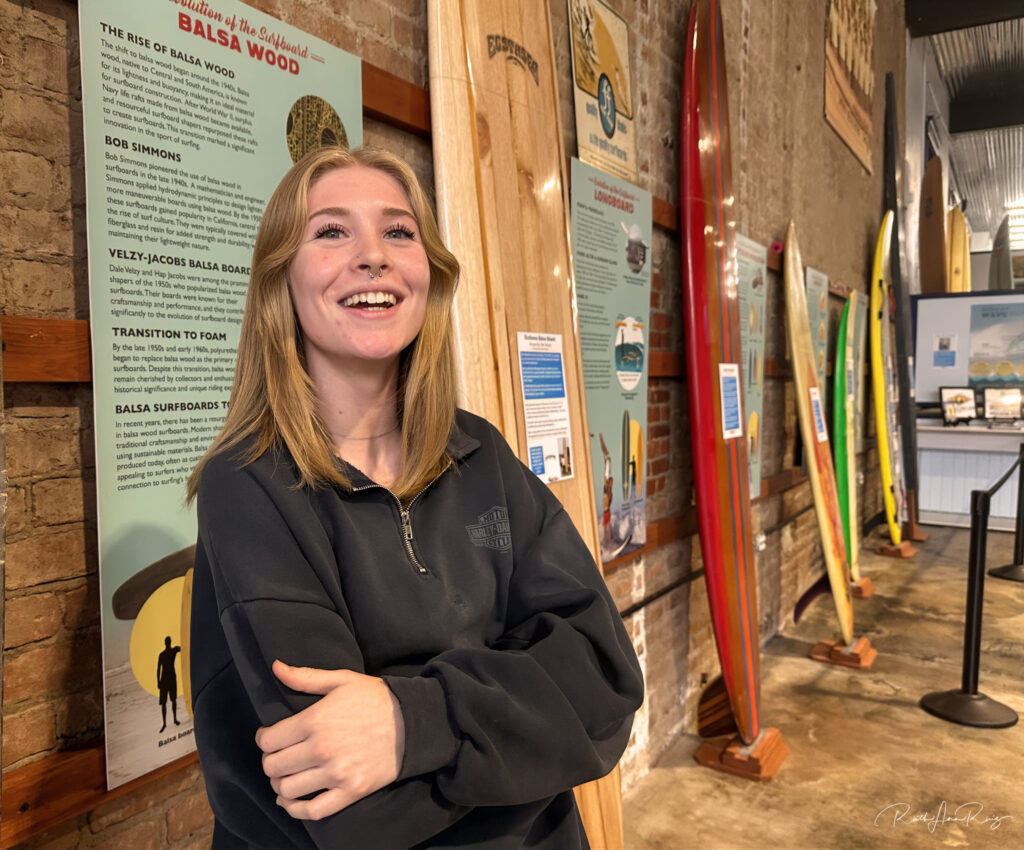
It’s light, airy, and relaxed when you step inside the Texas Surf Museum at 2110 Mechanic St. The bright colors on surfboards, along with the playful light blue walls with cobalt blue trim, bring out the sense of freedom and fun and an ocean of water.
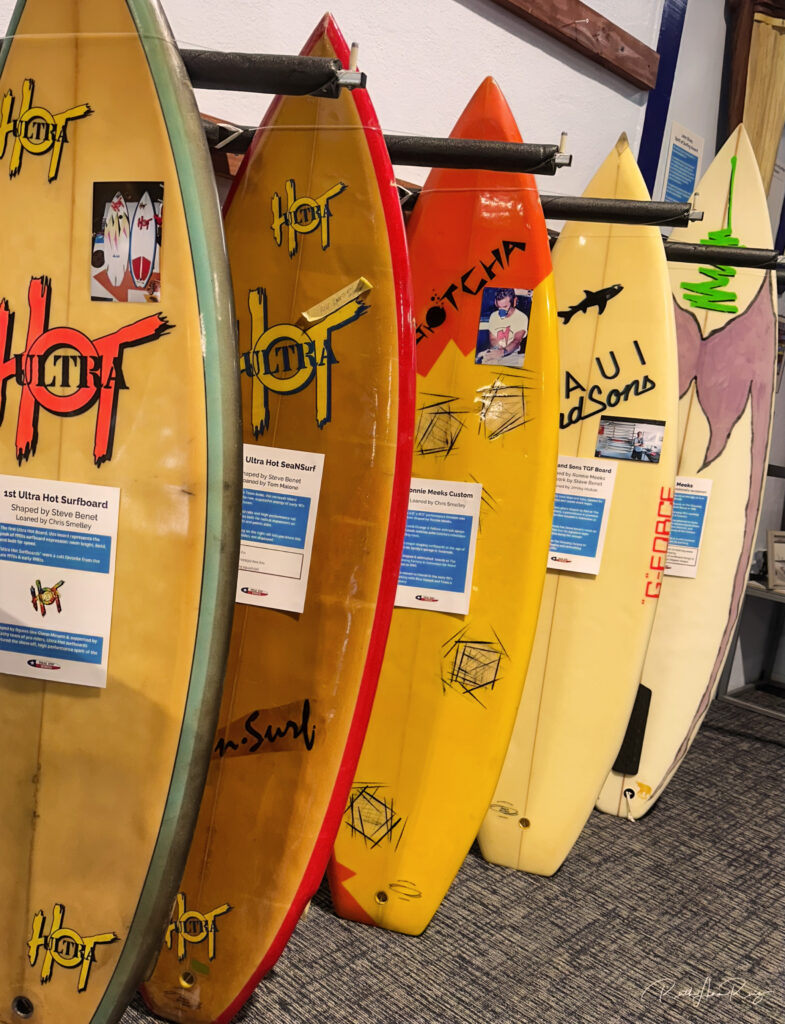
Historic surfboards are on display along several walls in the museum, and there is a special exhibit running until October that features surfboards crafted in Galveston by Galveston craftspeople.
“Everything inside the museum has been donated,” museum manager Eduardo Hernandez said.
An artifact the museum is particularly proud of is the first surfboard built in Texas.
R.W. Ellisor had a teenage moment watching Californians surfing in Galveston, and armed with a copy of Popular Mechanics that included design and construction plans for a Tom Blake surfboard, young Ellisor built his own surfboard.
Ellisor’s board is considered a longboard. A longboard is preferred for surfing in the smaller waves of Galveston.
Because of World War II, there wasn’t enough marine-grade plywood available, so Ellisor wrapped his board in muslin cloth and covered it with varnish to waterproof it.
This original Texas surfboard is only one of many surfing and beach artifacts collected in the museum. Another treasure that was recently donated is a 1950 beach patrol vest that was once worn by Aubrey Shapiro. His son brought it in for the museum to host and make available for visitors.
“This is a space for the surf community’s memories where they can be shared with others,” Hernandez said. “We are always accepting new donations.”
The museum is filled with the history of Texas surfing, coastal artwork created by Texas artists, countless surfboards, and homage is paid to the skateboard community with a skateboard exhibit.
Corey, who once worked as a lifeguard with the Galveston Beach Patrol, has been surfing Galveston waves since he was 15 years old. He has fond memories of his grandparents’ home in Jamaica Beach and recalls watching surfers and just feeling like it was something he wanted to do.
“It’s one of those things, you just see it and you like it,” Corey said. “It’s a sport for all ages, sizes, shapes, and genders.”
He is a retired Texas City Fire captain and continues to enjoy surfing Galveston and working at the museum.
Another staff member, Sara, grew up skateboarding. Though she has not yet tried surfing, she explains that she is drawn to the culture of the surf community, and she really likes the graphics of the surf culture.
Having worked for several years at the Galveston Children’s Museum, Sara brings her unique understanding of museums and children to the surf museum, which is a child-friendly zone.
In fact, children get in free, as long as they bring an adult with them.
Once inside, kids can freely explore the museum. They can hop and skip and move around with the carefree spirit of children, almost as though they were down on the beach.
Posing in front of the wave mural for photos or just standing on the surfboard painted on the floor is part of what children love about the museum. They also enjoy the interactive wave simulator where they are invited to experience dropping a surfboard into the water and watching it catch the wave.
The museum opened in March, and according to Hernandez, plans are in the works to turn it into a “world-class” museum with more experiential exhibits and to continue collecting surf memorabilia from the surfers and their families.
Though the museum does not sell wax or surfboards, you can look at the progression of surfboards and surf paraphernalia over time in the Texas Surf Museum. You also are invited to consider renting the space for your personal events or your organization’s events. Coming up, the museum will be hosting a reunion for the Galveston Beach Patrol. Hernandez promises to offer a discount to nonprofit organizations that elect to host an event at the Texas Surf Museum.
The Texas Surf Museum in Galveston is the only one in the state of Texas. If you would like to find out more about the museum, how you can donate surf items or maybe plan an event you can find them at: https://thetexassurfmuseum.org

