Hailey Burrow
Though human brains receive a variety of information from all of our sensory organs, we tend to rely heavily on vision. Like many other animals, we use vision to take in our surrounds, look for food, and keep an eye out for danger. So how do human eyes measure up against the best vision in the animal world?
A few factors influence what we might consider ‘good’ vision. One is the ability to see color. Humans are trichromats, which means that we have three types color receptors, known as cone cells. These color receptors allow us to perceive different combinations of the three primary colors of light: red, green, and blue. Through these different combinations we can perceive all the colors of the rainbow. We have most mammals beat in color vision; only a few species of primates and possibly marsupials are trichromats. Most mammals are dichromats; they have only two color receptors and see the world in shades of blue and yellow, similar to red-green color blindness in humans.
Outside of the mammal class, many other animals have our color vision beat. Many species of fish, bird, and reptile are tetrachromats, with four types of cone cells. These extra color receptors allow them to see ultraviolet light, another range of color we can only imagine. It doesn’t stop there though! There are many invertebrates with even more types of color receptors, most notable of which is the mantis shrimp. With 12 to 16 different types of cone cells, mantis shrimp have the most types of color receptors of any animal, with the ability to see deep into ultraviolet wave lengths. However, research has shown that even though their range of vision is great, the mantis shrimp’s ability to differentiate between similar colors is very poor.
Plenty of animals can beat us in color vision, but how do they measure up to our visual acuity—the clarity of our vision? In other words, how many letters would they be able to read on an eye chart (if they could read)? Human visual acuity is actually quite good compared to other animals. Details that are clear to us are often blurry or difficult to decipher for other creatures. Small animals and animals with compound eyes like insects and crustaceans have particularly poor visual acuity, but even larger animals might have very poor vision.
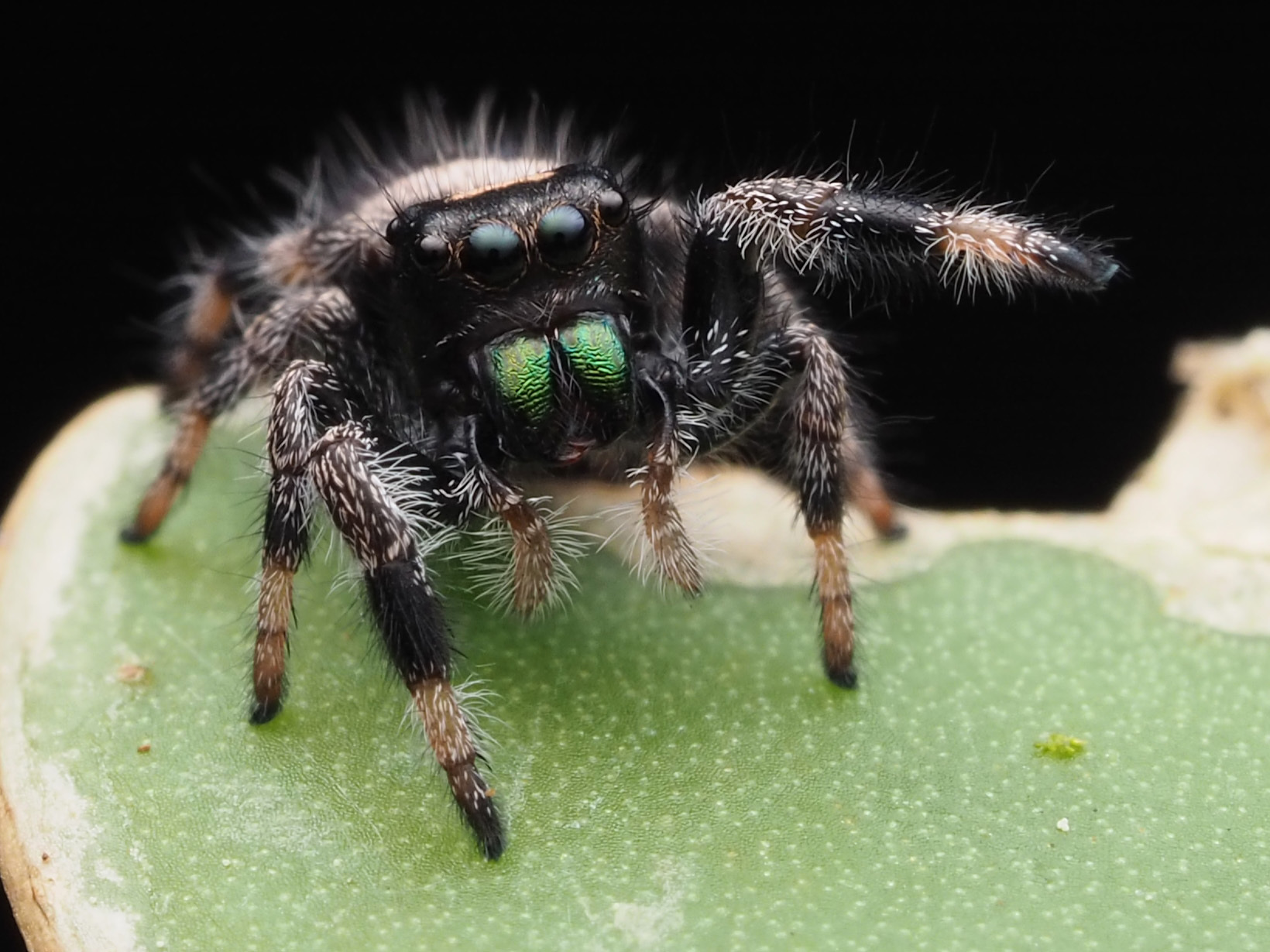
However, there are some animals that can match or surpass our visual acuity. One that might surprise you is the jumping spider. These species of tiny spiders have the some of the best vision among arthropods, even with their tiny eyes being less than an inch long. Their visual acuity is believed to be comparable with cats or elephants, with human vision being only 5 to 10 times better than the spider’s. This good vision is only limited to a couple of their eyes, however. Though their other eyes grant them a near 360-degree view of their surroundings, only the space they are pointing their two principle eyes toward will have color and clarity. Another set of impressive eyes can be found on sharks. Sharks have the best underwater vision, and are able to see several yards in clear water, and very well in very low light. Compare that to the last time you tried opening your eyes underwater with no goggles!
But the true champions of vision are birds, especially birds of prey. They have two fovea—a focal point with a high concentration of cones that provides the sharpest vision—while humans only have one. Combine this exceptional visual acuity with their impressive color vision, and binocular eye placement, and it’s easy to see why these predators have the best eyes. With all these adaptations working together, birds of prey can pick out details from miles away. So good luck to any prey that are trying to hide from them!
Photo: Immature male Regal Jumping Spider (Phidippus regius)
Credit: Zygy, CC0, via Wikimedia Commons

