By Caleb Clarkson
As the year progresses and temperatures drop, we occasionally get a cool, crisp break from what seems like the never-ending heat of summer. Even as Halloween decorations go up and pumpkins appear in stores, occasional hot days and the last throes of summer interrupt our slow transition to the holiday season and cooler days fondly called “sweater weather”. However, Texas wasn’t always this hot. Many years ago, roughly 11-12 thousand years ago, Texas was much bigger and considerably cooler.
Back then, around the end of the last ice age, Texas was still warm compared to the rest of the continent and was free of expansive, land-covering glaciers. The weather was more pleasant back then as Texas was about 10 degrees cooler throughout the year. These cooler temperatures changed what Texas looked like. The eastern pine forests would not only include cooler-weather trees like oak, elm, and maple, but these trees were likely dominant on the landscape. Trees that usually resided on the cool mountain tops of West Texas crept down the mountain slopes and into the valleys and grasslands. During this time, the ice age was almost over. As steadily rising temperatures slowly melted glaciers across North America, the thawing ice filled rivers and streams with huge amounts of water, and the plains became lush with prairies that some pretty amazing species called home.
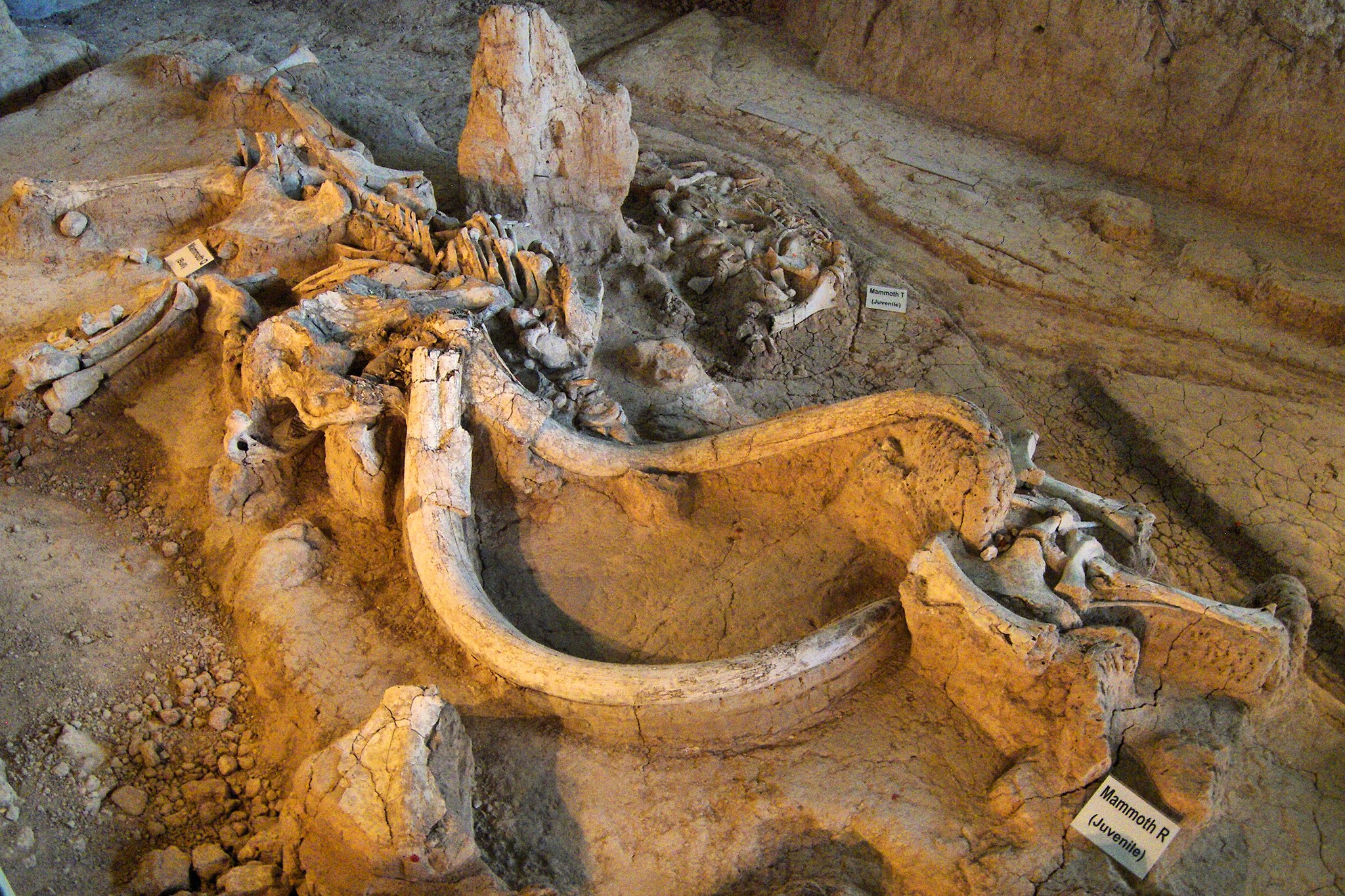
Columbian Mammoths, 20,000 pounds and even larger than the famous Wooly Mammoth, lived and moved in family units across Texas for tens of thousands of years before their extinction. The groups, likely matriarchal, would forage together and protect one another from threats. One threat, the saber-toothed cat, would prey on large slow-moving animals, such as the large sloths of the time, bison, and even young mammoths. The skilled hunters would lie and wait for an opportunity to ambush their prey, using their 7 to 8-inch long teeth to kill whatever was on the menu. Recently a saber-toothed cat fossil was found on the Texas Coast! Other amazing creatures roamed Texas at the time like, Volkswagen bug-sized armadillos, huge bears twice the size of grizzlies, and huge sloths with vicious claws. The original horses lived alongside camels before both became extinct.
Most species looked relatively the same back then, alligators were swimming in murky rivers with gar and catfish, and eagles were soaring high in the sky with geese and other birds. Javelina still ran away from coyotes, and mice ran away from snakes. Many species that we know today lived during that time, especially humans. Assumptions must be made about what life was like for humans back in the day, but evidence suggests that some of the earliest people in Texas were the Clovis. The Clovis groups are named after the type of spear points they made for hunting, also known as Clovis points, first found near Clovis, New Mexico. Those early Clovis groups likely used spear points to take down big game such as mammoths and bison, however, they also probably relied a fair amount on gathering and hunting smaller game. These groups were most likely nomadic and followed their food sources across the landscape. Evidence suggests there were humans in Texas even before the Clovis people too!
Around 10,000 years ago, the continent-spanning glaciers were mostly melted. Sea levels rose and salt water filled the low-laying river valleys along the Texas coast, forming many of the bays and estuaries we see along the Texas coast. Northern winds blew in warm dry air, warming the area of Texas into what it is today. The forests became piney and the trees in the west retreated to their mountain tops, and from a combination of many reasons, species went extinct. However life continued, the alligators still swam in the murky rivers with the catfish and the gar, eagles still soared with geese, and humans still did their best to survive.
Image caption: Columbian Mammoth remains at the Waco Mammoth National Monument.
Image credit: Larry D. Moore, CC BY 4.0 <https://creativecommons.org/licenses/by/4.0>, via Wikimedia Commons

